Dussehra Across India: Traditions, Stories & 10 Lines and a Short Essay on Dusshera
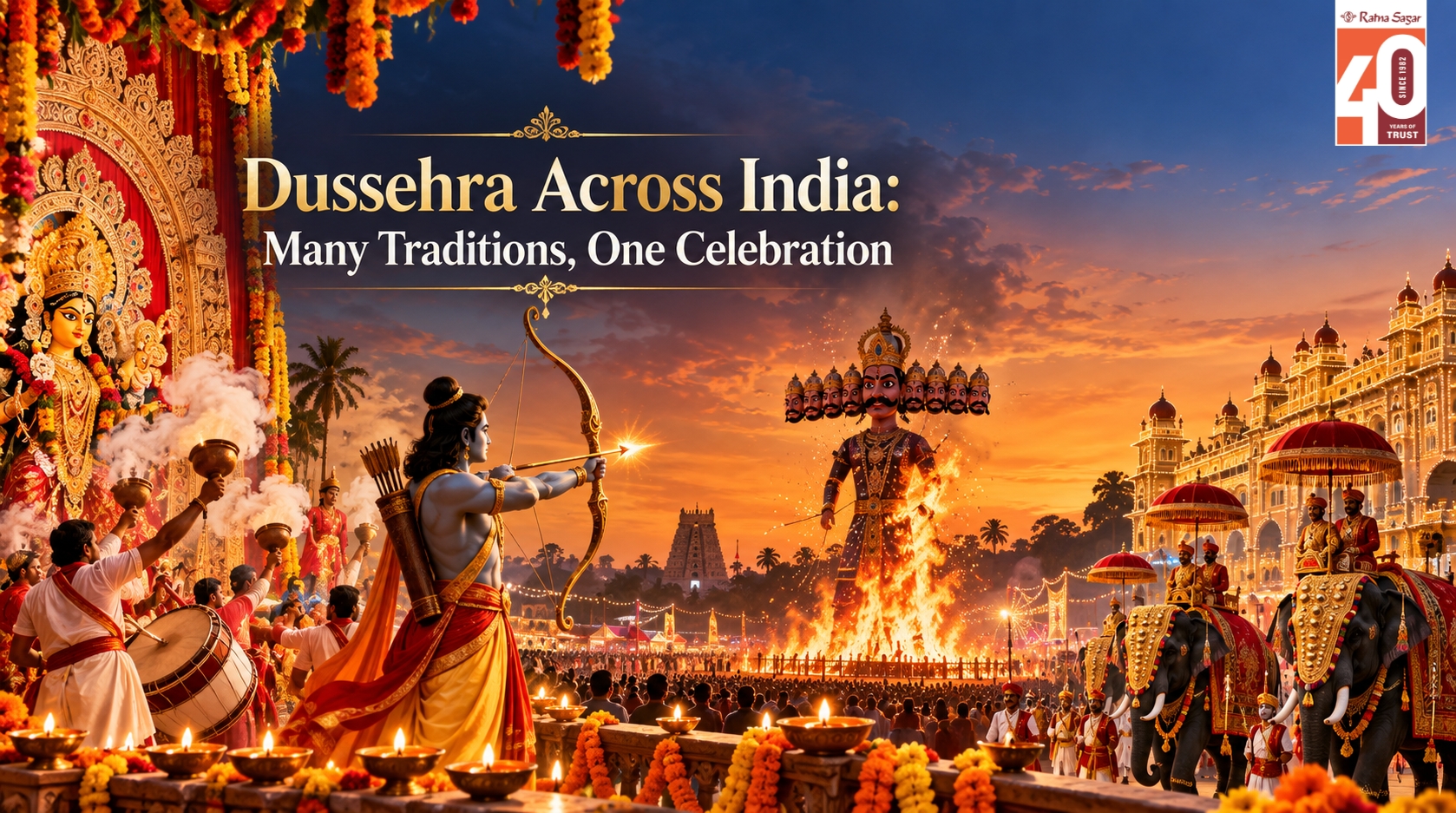
Dussehra Across India: Many Traditions, One Celebration
As autumn arrives in India, the air fills with the sound of drums, the glow of lamps, and the smell of festive sweets. Effigies rise in open grounds, pandals glitter with lights, and processions wind through city streets. This is Dussehra, one of the most widely celebrated festivals in the country. The name is heard everywhere, but the ways of celebrating it change from one region to the next.
This blog explores the meaning of the festival, the stories behind it, and the many ways India makes it its own.
What Is Dussehra?
Dussehra, also called Vijayadashami, falls on the tenth day of the bright half of the Hindu month of Ashwin, usually in September or October. It comes at the end of Navratri, the nine nights devoted to the worship of Goddess Durga. The word "Dussehra" is commonly linked to "Dasha-hara", meaning the removal of the ten heads of Ravana, while "Vijayadashami" means "the tenth day of victory".
The central message is the triumph of good over evil. Different regions tell different stories, but they all lead to the same idea: truth, courage, and righteousness prevail in the end.
Two Stories, One Message
Rama and Ravana. In much of northern, western, and central India, the festival honours Lord Rama's victory over the ten-headed demon king Ravana, who had abducted Sita. Rama's triumph is celebrated as the defeat of arrogance and injustice.
Durga and Mahishasura. In eastern and southern India, the festival marks Goddess Durga's victory over the buffalo demon Mahishasura. After a fierce battle lasting nine nights, she defeated him on the tenth day. This story celebrates Shakti, the divine feminine power.
How India Celebrates Dussehra
North India: Ramlila and Ravana Dahan
In the north, the festival is marked by Ramlila, dramatic performances of the Ramayana staged over several nights before Dussehra. Local performers, often amateurs, bring the story to life for the community. On Dussehra evening, giant effigies of Ravana, his brother Kumbhakarna, and his son Meghnad are set alight, often with fireworks. Delhi's Ramlila grounds and towns like Varanasi and Ayodhya draw large crowds. The Ramlila tradition is recognised by UNESCO as part of the world's intangible cultural heritage.
Kullu, Himachal Pradesh: A Festival of Gods
In the Kullu valley, Dussehra begins on the tenth day, when it ends elsewhere. Local deities from surrounding villages are carried in decorated palanquins to gather at the Dhalpur ground, led by Lord Raghunath. The celebration lasts about a week and features folk dances, music, and a colourful market. Ravana is not burnt in the usual way here, which makes the festival distinctive.
East India: Durga Puja
In West Bengal, Odisha, Assam, Bihar, and Jharkhand, the festival is celebrated as Durga Puja. Artisans create magnificent clay idols of the goddess, and elaborate pandals, often built around creative themes, draw visitors by the thousands. The festival includes rituals such as Sindoor Khela, where married women apply vermilion to one another. On the final day, idols are carried in processions and immersed in rivers, with a tearful and joyful farewell to the goddess. Kolkata's Durga Puja was inscribed on UNESCO's list of intangible cultural heritage in 2021.
Mysuru, Karnataka: The Royal Dasara
In Karnataka, the festival is known as Nada Habba (the state festival), and Mysuru hosts its grandest celebration. The tradition dates back to the Vijayanagara Empire and was continued by the Wadiyar rulers of Mysore. The Mysore Palace is lit with thousands of bulbs, and the festival culminates in the Jamboo Savari, a grand procession in which the idol of Goddess Chamundeshwari is carried on a decorated elephant, accompanied by tableaux, music, and dance troupes.
Gujarat and Maharashtra: Garba and Sonpapdi
In Gujarat, the nine nights before Dussehra are alive with Garba and Dandiya, folk dances performed in circles around a lamp or an image of the goddess. In Maharashtra, people exchange leaves of the apta tree as symbolic gold, and families enjoy festive sweets. Dussehra is also considered an auspicious day to begin new ventures.
South India: Golu and Ayudha Puja
In Tamil Nadu, Andhra Pradesh, and Telangana, homes display Golu (or Bommala Koluvu), tiered arrangements of dolls and figurines that tell stories from mythology and daily life. Families invite neighbours and friends to view them and share snacks. Ayudha Puja is another important tradition, in which tools, books, vehicles, and instruments are cleaned and worshipped as a mark of respect for knowledge and work. In Kerala, children are introduced to learning through Vidyarambham, when they write their first letters on Vijayadashami. In Telangana, women celebrate Bathukamma, arranging seasonal flowers into beautiful stacks.
10 Lines and a Short Essay on Dusshera
Students and teachers often look for 10 lines and a short essay on Dusshera for school assignments, speeches, and assembly talks. Here is a ready reference.
10 Lines on Dussehra
Dussehra is one of the major festivals of India.
It is also known as Vijayadashami.
It is celebrated on the tenth day of the month of Ashwin.
The festival marks the victory of good over evil.
It celebrates Lord Rama's victory over the demon king Ravana.
In some regions, it honours Goddess Durga's victory over Mahishasura.
Ramlila performances are held across northern India.
On Dussehra, effigies of Ravana, Kumbhakarna, and Meghnad are burnt.
Families gather, wear new clothes, and enjoy sweets.
The festival teaches us to defeat our inner evils, such as anger, greed, and pride.
Short Essay on Dussehra
Dussehra is a festival that celebrates the victory of good over evil. It is observed on the tenth day after Navratri and is also called Vijayadashami. In many parts of India, it commemorates Lord Rama's defeat of Ravana. In others, it honours Goddess Durga's victory over the demon Mahishasura. In the north, Ramlila plays are staged and huge effigies of Ravana are burnt. In West Bengal, people celebrate Durga Puja, while in Mysuru, a grand procession is held with the royal palace lit up. Though the customs differ, the message is the same: honesty and courage always win. Dussehra reminds us to give up our own weaknesses and to walk the path of goodness.
The Deeper Meaning: Burning the Ravana Within
Beyond the spectacle, Dussehra invites reflection. Ravana is often seen as a learned and powerful king who fell because of pride. The ten heads are sometimes read as ten vices, such as anger, ego, greed, and jealousy. Burning his effigy can serve as a reminder to look inward and let go of our own negative traits.
The festival also carries social lessons: the value of family gatherings, respect for tools and knowledge, and the importance of community. Whether we watch a play, join a dance, or share sweets with neighbours, Dussehra brings people together.
Celebrating Responsibly
Modern celebrations also call for care. Smaller, eco-friendly effigies, clay idols that do not pollute rivers, and reduced use of loud firecrackers all help protect the environment. Families and schools can encourage safe and sustainable practices so that traditions remain joyful for everyone.
Conclusion
From the Ramlila grounds of the north to the pandals of Kolkata, the palace lights of Mysuru, and the Golu displays of southern homes, Dussehra shows the many forms of a shared faith in goodness. The rituals differ, the languages change, and the food varies, but the heart of the festival stays the same. This Dussehra, along with celebrating, take a moment to ask which "Ravana" you can defeat in yourself. That may be the most meaningful victory of all.
Read more festival essays on the Ratna Sagar Blog: Janmashtami, Rath Yatra, Guru Purnima, and Onam.
Recent Posts
Planning a Picnic: Class 1 English Learning
13/10/2026
International Day of the Girl Child: 10 Lines & Essay
09/10/2026
R K Narayan Birth Anniversary: Malgudi, Books & Legacy
06/10/2026
Gandhi Jayanti: Truth, Non-Violence and Its Relevance Today
01/10/2026
Earth and Its Shapes: Facts for Kids | Classes 2–4
24/09/2026
International Sign Language Day: 10 Lines & Short Essay
18/09/2026Recommended Books