Onam: 10 Lines & Short Essay for Students
10 Lines and a Short Essay on Onam
Onam is one of the most colourful and joyous festivals celebrated in India, especially in the southern state of Kerala. It marks the homecoming of the legendary King Mahabali and celebrates the spirit of harvest, unity, and togetherness. For students, teachers, and parents looking for simple, exam-ready content, this blog brings together 10 lines on Onam and a short essay on Onam that are easy to read, remember, and reproduce.
Whether your child needs this for a school assignment, an elocution competition, or simply to learn about India's rich cultural diversity, this guide has everything you need in one place.
Why Onam Matters: A Quick Introduction
Onam is Kerala's biggest and most important festival, celebrated with great enthusiasm by people of all religions and communities. It usually falls in the Malayalam month of Chingam, which corresponds to August-September in the Gregorian calendar. The festival lasts for ten days, culminating in Thiru Onam, the most significant day of the celebrations.
At its heart, Onam is a harvest festival that gives thanks for a bountiful crop season. But it is also deeply rooted in mythology, folklore, art, and community spirit — making it a wonderful topic for young learners to explore.
10 Lines on Onam
Here are ten simple lines on Onam that are perfect for young students to read, learn, and write in their own words:
- Onam is a famous festival celebrated mainly in Kerala, India.
- It is celebrated to welcome King Mahabali, who is believed to visit his people once a year.
- Onam usually falls in the month of August or September.
- The festival lasts for ten days and is also known as the harvest festival of Kerala.
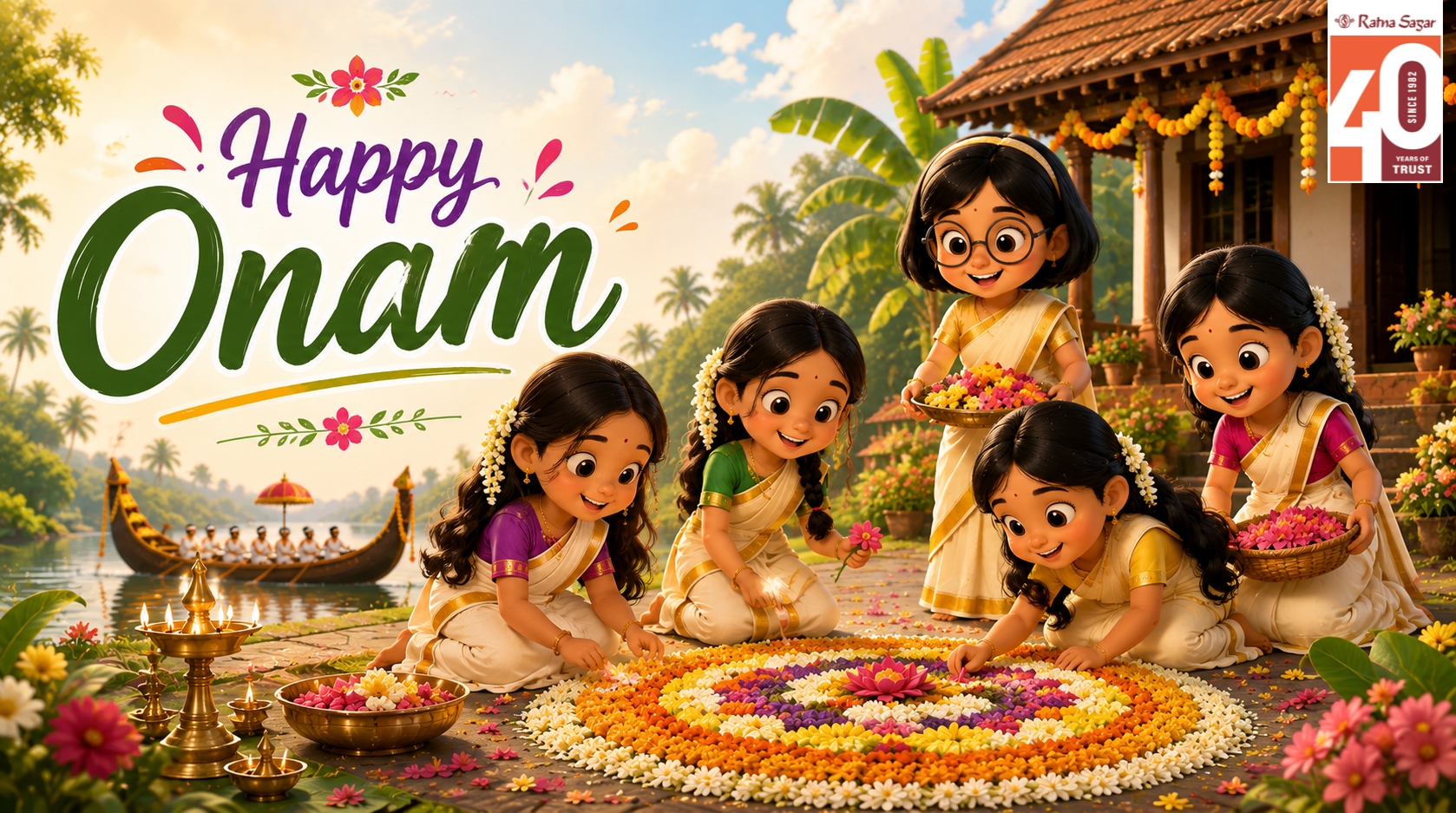
- People decorate their homes with beautiful flower carpets called Pookalam.
- A grand feast called Onam Sadya is prepared, which includes many delicious dishes served on a banana leaf.
- The famous Vallam Kali, or snake boat race, is one of the major attractions of Onam.
- People wear traditional attire, with women dressing in the elegant Kasavu saree.
- Onam brings together people from different castes, religions, and communities in a spirit of unity.
- It reflects the rich culture, traditions, and heritage of the state of Kerala.
These lines can also be used as a foundation for essay writing, storytelling, or classroom discussions on Indian festivals.
Short Essay on Onam
Onam is one of the most vibrant and widely celebrated festivals of Kerala. It holds a special place in the hearts of Malayalis, both in India and across the world. The festival is deeply connected to the legend of King Mahabali, a wise and generous ruler who was much loved by his subjects. According to mythology, Lord Vishnu, in his Vamana avatar, sent Mahabali to the underworld, but granted him a wish to visit his kingdom and people once every year. Onam celebrates this annual homecoming of the beloved king.
The festival begins with Atham and continues for ten days, ending with Thiru Onam, the most important day of the celebrations. During this period, homes across Kerala come alive with colour and joy. One of the most beautiful traditions of Onam is the creation of Pookalam, an intricate and vibrant flower carpet laid at the entrance of homes to welcome King Mahabali. Every day, new flowers are added, making the design grow larger and more elaborate.
No description of Onam is complete without mentioning the grand Onam Sadya, a traditional feast served on a banana leaf. This vegetarian meal includes a variety of dishes such as sambar, avial, thoran, pachadi, and the ever-popular payasam, a sweet dessert enjoyed by all. Families and communities come together to prepare and share this feast, reflecting the festival's spirit of togetherness and gratitude.
Another major highlight of Onam is the Vallam Kali, or snake boat race, held in the backwaters of Kerala. Long, decorated boats, rowed by hundreds of oarsmen, race against each other while spectators cheer enthusiastically from the banks. This event showcases the strength, discipline, and team spirit of the participants and is a major tourist attraction as well.
Cultural performances also play a significant role in the Onam celebrations. Traditional dance forms like Kaikottikali (also known as Thiruvathirakali) are performed by women dressed in the elegant white and gold Kasavu saree. Other festivities include Pulikali, where performers paint themselves as tigers and hunters, adding a dramatic and entertaining element to the celebrations.
What makes Onam truly special is its ability to unite people beyond religious and social boundaries. It is celebrated not just by Hindus but by people of all faiths in Kerala, symbolising equality, prosperity, and communal harmony — values that King Mahabali himself stood for during his reign.
In essence, Onam is much more than a harvest festival. It is a celebration of good governance, honesty, and the timeless bond between a ruler and his people. It teaches the importance of gratitude, unity, and cultural pride — lessons that remain relevant even today.
Conclusion
Onam beautifully captures the essence of Kerala's culture, heritage, and community spirit. From the colourful Pookalam and delicious Onam Sadya to the thrilling snake boat races, every element of this festival tells a story of tradition and togetherness. Learning about festivals like Onam helps students appreciate India's diverse cultural fabric and instils values of unity and gratitude from a young age.
For more engaging and well-researched content on Indian festivals, culture, and academic resources designed especially for young learners, explore the wide range of educational books and resources available at Ratna Sagar.
Recent Posts
Dussehra Across India: Traditions, Stories & 10 Lines and a Short Essay on Dusshera
15/10/2026
Did Mani Take a Bath? | Personal Hygiene for Kids
15/10/2026
Planning a Picnic: Class 1 English Learning
13/10/2026
International Day of the Girl Child: 10 Lines & Essay
09/10/2026
R K Narayan Birth Anniversary: Malgudi, Books & Legacy
06/10/2026
Gandhi Jayanti: Truth, Non-Violence and Its Relevance Today
01/10/2026
Earth and Its Shapes: Facts for Kids | Classes 2–4
24/09/2026Recommended Books