Janmashtami: 10 Lines & Short Essay for Students
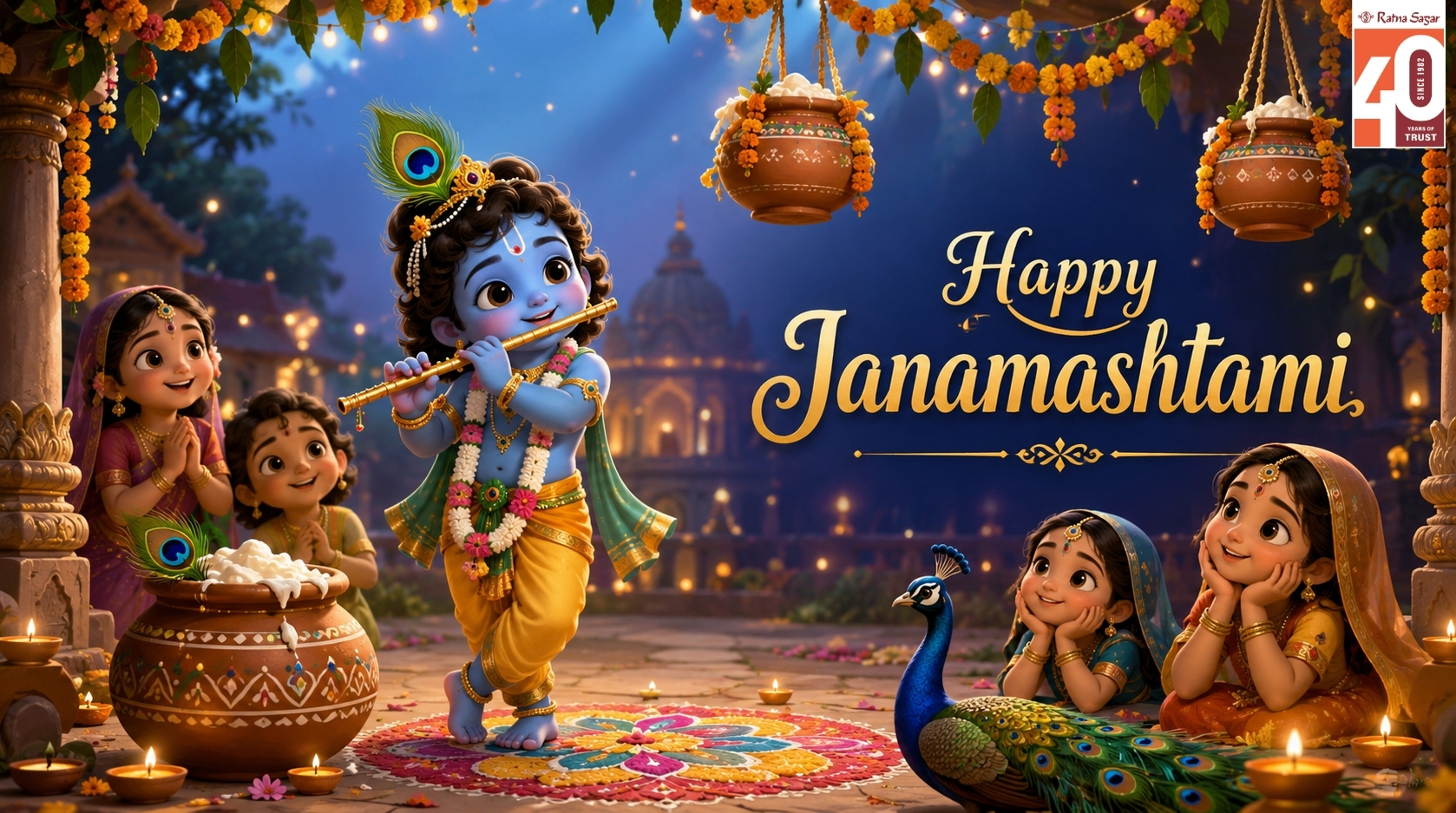
Happy Janmashtami
Janmashtami is one of the most joyous and widely celebrated festivals in India. It marks the birth of Lord Krishna, one of the most revered deities in Hinduism, and is observed with great devotion, fasting, singing, and dancing across the country. For students, Janmashtami is also a wonderful topic for school essays, speeches, and classroom discussions, as it teaches values of truth, courage, and love that Lord Krishna is known to represent.
In this blog, we bring you two easy-to-use resources: 10 simple lines on Janmashtami for younger students, and a short essay on Janmashtami for students who need a slightly detailed write-up for school assignments or competitions.
10 Lines on Janmashtami
- Janmashtami is celebrated to mark the birth of Lord Krishna.
- It usually falls in the month of August or September every year.
- Lord Krishna is believed to be the eighth avatar of Lord Vishnu.
- He was born at midnight in Mathura to Devaki and Vasudeva.
- Devotees observe a day-long fast and break it after midnight prayers.
- Temples and homes are beautifully decorated with flowers and lights.
- People sing devotional songs called bhajans and dance in celebration.
- A popular tradition called "Dahi Handi" is organized, where young boys form a human pyramid to break a pot of curd.
- Children dress up as Krishna and Radha and take part in cultural programs.
- Janmashtami teaches us the values of truth, love, and righteousness that Lord Krishna stood for throughout his life.
These 10 lines are easy to remember and are perfect for young students preparing for a speech, an exam, or a class assignment on Janmashtami.
Short Essay on Janmashtami
Janmashtami, also known as Krishna Janmashtami, is one of the most important festivals celebrated by Hindus all over the world. It celebrates the birth of Lord Krishna, who is considered the eighth incarnation of Lord Vishnu. According to Hindu mythology, Krishna was born in a prison in Mathura at midnight to save the world from the tyranny of his uncle, King Kansa.
The festival is celebrated with immense enthusiasm and devotion. Devotees keep a fast throughout the day and break it only after the midnight prayers, as it is believed that Krishna was born exactly at midnight. Temples and homes are decorated with flowers, lights, and images of baby Krishna, popularly known as "Bal Gopal" or "Laddu Gopal." People sing devotional songs, recite verses from the Bhagavad Gita, and narrate stories from Krishna's childhood, including his mischievous antics of stealing butter, which earned him the loving name "Makhan Chor."
One of the most exciting traditions of Janmashtami, especially in the state of Maharashtra, is the "Dahi Handi" celebration. In this event, a pot filled with curd, milk, and butter is hung high above the ground, and groups of young men and boys form human pyramids to reach and break the pot. This tradition symbolizes Krishna's playful habit of stealing butter as a child and is celebrated with great fervour, music, and community participation.
Janmashtami is not only a religious celebration but also an occasion that brings families and communities together. Schools and cultural organizations often conduct programs where children dress up as Krishna and Radha, perform dances, and participate in quizzes and storytelling sessions based on Krishna's life. This helps young students connect with Indian culture and mythology in a fun and engaging way.
The teachings of Lord Krishna, especially those mentioned in the Bhagavad Gita, continue to guide people even today. His message of performing one's duty without attachment to results, being fearless in the face of injustice, and standing up for truth are lessons that remain relevant across generations. Janmashtami, therefore, is not just about rituals and celebrations, but also about remembering and imbibing these timeless values.
In conclusion, Janmashtami is a festival that beautifully blends devotion, culture, and moral learning. Whether it is through fasting, singing bhajans, or enjoying the Dahi Handi festivities, the essence of the festival lies in celebrating goodness, wisdom, and divine love. For students, learning about Janmashtami is a lovely way to understand Indian traditions while also picking up valuable life lessons from the stories of Lord Krishna.
Why These Festival Essays Matter for Students
Learning to write clear, well-structured essays on festivals like Janmashtami helps students build strong language and comprehension skills from an early age. Well-curated content like this is especially useful for teachers and parents looking for reliable, age-appropriate reading material for children.
If you're looking for more such curated essays, story-based learning content, and educational resources designed specifically for school students, do explore Ratna Sagar's website. Ratna Sagar has been a trusted name in educational publishing, offering textbooks, workbooks, and learning resources that make festivals, values, and academic concepts easy and enjoyable for young learners.
Recent Posts
International Day of the Girl Child: 10 Lines & Essay
09/10/2026
R K Narayan Birth Anniversary: Malgudi, Books & Legacy
06/10/2026
Gandhi Jayanti: Truth, Non-Violence and Its Relevance Today
01/10/2026
Earth and Its Shapes: Facts for Kids | Classes 2–4
24/09/2026
International Sign Language Day: 10 Lines & Short Essay
18/09/2026