Chhath Puja: Significance, Traditions and Lessons Children Can Learn
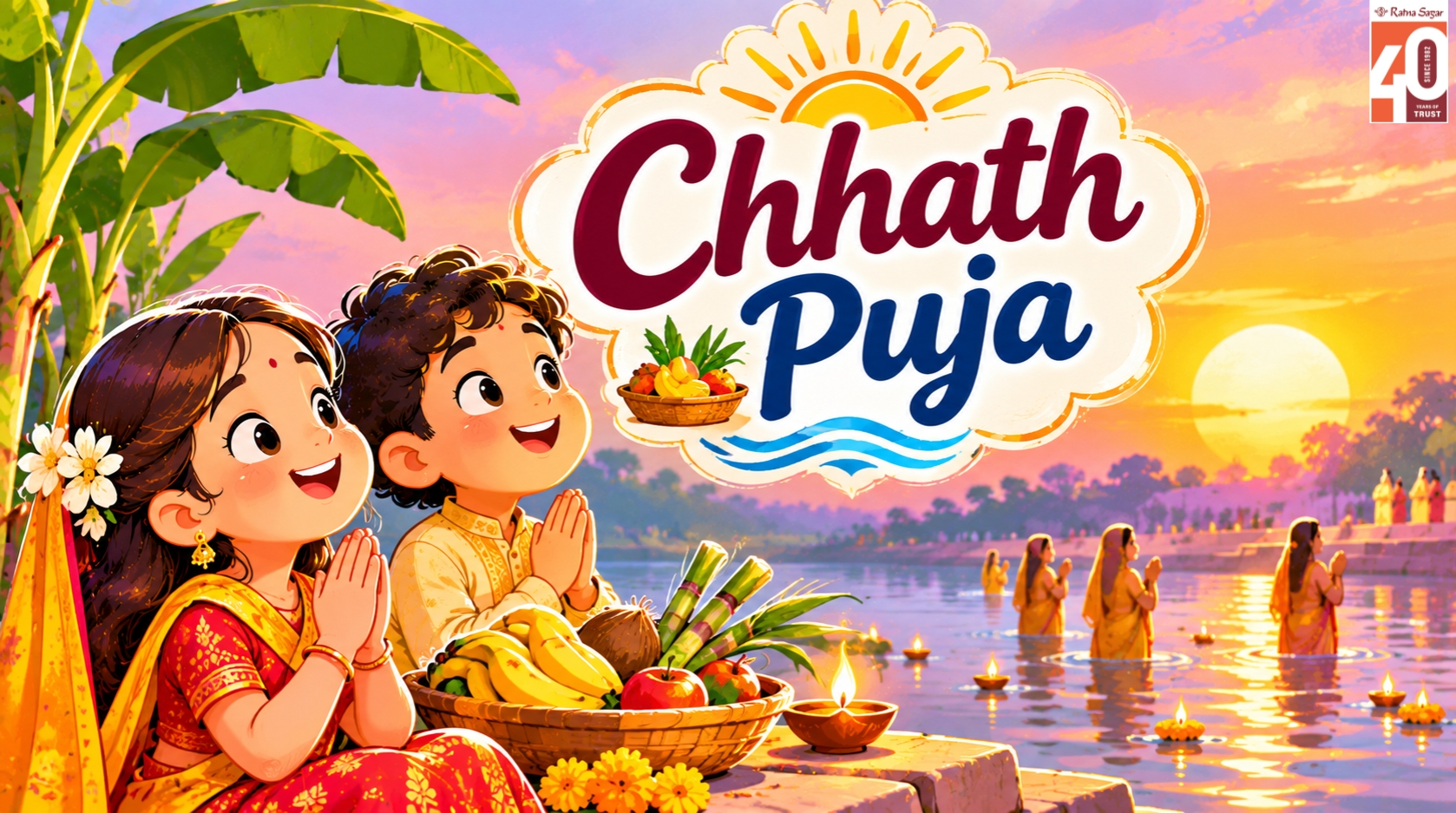
Chhath Puja: Celebrating Faith, Gratitude and the Beauty of Nature
India is a land of colourful festivals, beautiful traditions and rich cultural heritage. Every festival has a special meaning and teaches us something valuable. One such festival is Chhath Puja, a celebration of faith, gratitude, discipline and respect for nature.
Chhath Puja is one of the most important festivals celebrated in Bihar, Jharkhand, eastern Uttar Pradesh and parts of Nepal. Today, people celebrate it across India and in many other countries.
Unlike many festivals that involve elaborate decorations, Chhath Puja focuses on simplicity, devotion and appreciation for the natural world.
Let us explore the significance of Chhath Puja, its traditions and the valuable lessons students can learn from this beautiful festival.
What Is Chhath Puja?
Chhath Puja is a traditional Hindu festival dedicated to Surya Dev (the Sun God) and Chhathi Maiya, who is worshipped for the well-being and protection of families.
The word Chhath comes from Chhathi, meaning sixth. The main celebration takes place on the sixth day of the bright fortnight of the Hindu month of Kartik, usually in October or November.
During the festival, devotees express gratitude to the Sun for providing light, warmth and energy that support life on Earth.
The festival is also an occasion for families and communities to come together, share traditions and pray for happiness and prosperity.
Why Is Chhath Puja Celebrated?
Have you ever wondered what life would be like without the Sun?
There would be no daylight, plants would struggle to grow, and life as we know it would not be possible.
The Sun is essential to our planet. It provides energy for photosynthesis, the process through which green plants prepare their food. It also plays an important role in Earth's climate and water cycle.
Chhath Puja celebrates this life-supporting importance of the Sun.
The festival also encourages people to appreciate nature, practise self-discipline and remain thankful for the blessings in their lives.
Through prayers and traditional rituals, devotees seek blessings for their families' health, happiness and well-being.
The Four Days of Chhath Puja
One of the most interesting aspects of Chhath Puja is that it is celebrated over four days. Each day has its own traditions and significance.
Day 1: Nahay Khay
The festival begins with Nahay Khay, which means 'bathe and eat'.
Devotees take a ritual bath, clean their homes and prepare simple vegetarian meals.
This day represents cleanliness, purity and preparation for the days ahead.
Day 2: Kharna
The second day is called Kharna.
Devotees observe a fast during the day and prepare traditional food, including kheer made with jaggery, rice and milk.
After evening prayers, the food is offered as prasad and shared with family members.
Devotees then begin a demanding fast that traditionally continues until the final morning.
Day 3: Sandhya Arghya
The third day is one of the most important parts of the festival.
Families gather near rivers, ponds and other water bodies to offer prayers to the setting Sun.
Devotees carry fruits, sugarcane, coconuts and traditional sweets in bamboo baskets.
The offering made to the setting Sun is called Sandhya Arghya.
This ritual reminds us to appreciate every stage of life, including endings and new beginnings.
Day 4: Usha Arghya
On the final day, devotees gather before sunrise.
As the Sun rises, they offer prayers and water in a ritual known as Usha Arghya.
After the prayers, devotees end their fast and distribute prasad.
The festival concludes with happiness, gratitude and a renewed sense of hope.
Traditional Foods and Offerings of Chhath Puja
Food is an important part of Indian festivals, and Chhath Puja has its own traditional delicacies.
One of the most popular offerings is thekua, a sweet prepared using wheat flour, jaggery or sugar, and ghee.
Other offerings include bananas, coconuts, sugarcane, seasonal fruits and homemade kheer.
These offerings are often arranged in bamboo baskets, reflecting the festival's connection with traditional crafts and natural materials.
Many families prepare the prasad together, making the occasion a special time for sharing responsibilities and preserving family traditions.
What Can Students Learn from Chhath Puja?
Chhath Puja is more than a religious celebration. It also teaches values that are useful in everyday life.
1. Gratitude: The festival reminds us to appreciate the Sun, nature, our families and everything that supports our lives.
2. Discipline: The careful preparations and rituals demonstrate dedication, patience and self-control.
3. Respect for Nature: Prayers offered near natural water bodies encourage us to recognise the importance of clean rivers and a healthy environment.
4. Unity and Togetherness: Families, neighbours and communities work together during the celebrations, strengthening their relationships.
5. Respect for Traditions: Learning about festivals helps children understand India's cultural diversity and respect different beliefs and customs.
These lessons encourage students to become thoughtful, responsible and caring individuals.
Fun Chhath Puja Learning Activities for Students
Schools can make Chhath Puja an interesting learning experience through creative activities.
Poster Making: Create colourful posters highlighting the importance of the Sun and nature.
Creative Writing: Write a short paragraph on 'Why We Should Be Thankful to Nature'.
Science Activity: Learn how sunlight helps plants grow through photosynthesis.
Storytelling: Share stories about the traditions and celebrations of Chhath Puja.
Environmental Awareness: Organise a classroom discussion on keeping rivers and surroundings clean.
These activities combine cultural understanding with science, creativity and environmental education.
Learning About Indian Festivals with Ratna Sagar
Understanding Indian festivals is an important part of education. Festivals introduce children to the country's cultural diversity, traditions and values.
At Ratna Sagar, learning goes beyond memorising facts. Through educational books covering subjects such as Environmental Studies, Science, Social Science and Value Education, students can explore the world around them and develop a deeper understanding of society and nature.
For example, studying Chhath Puja can help students connect science lessons about the Sun with environmental awareness and India's cultural traditions.
Learning about festivals also builds curiosity, encourages meaningful discussions and helps children appreciate the beliefs of different communities.
Explore more educational resources and learning materials at www.ratnasagar.com.
Conclusion: A Festival of Gratitude and Togetherness
Chhath Puja beautifully brings together devotion, nature and cultural traditions.
From offering prayers to the setting and rising Sun to sharing traditional food with loved ones, every part of the festival carries a message of gratitude, discipline and unity.
For students, Chhath Puja is an opportunity to learn about India's rich heritage while understanding the importance of protecting nature and respecting traditions.
As we celebrate this meaningful festival, let us remember to be thankful for the natural world and work together to keep our environment clean and beautiful.
Ratna Sagar wishes everyone a happy and peaceful Chhath Puja!
May this festival bring happiness, harmony and new opportunities for learning.
Recent Posts
Chhath Puja: Significance, Traditions and Lessons Children Can Learn
17/11/2026
Children's Day 2026: Importance, History & Fun Activities
12/11/2026
Bhai Dooj: Celebrating the Special Bond Between Siblings
10/11/2026
National Education Day 2026: Importance of Education in India
10/11/2026
Diwali: Festival of Lights, Stories, Traditions & Activities for Kids
06/11/2026
C. V. Raman Birth Anniversary: Celebrating India's Great Scientist and His Discoveries
05/11/2026
Unity in Diversity: India's Strength, Culture & Unity
03/11/2026
The Night Sky for Kids | Class 1 English Animated Story
26/10/2026
My Family Animated Story for Kids | Ratna Sagar
22/10/2026Recommended Books