Diwali: Festival of Lights, Stories, Traditions & Activities for Kids
Diwali: Celebrating the Festival of Lights
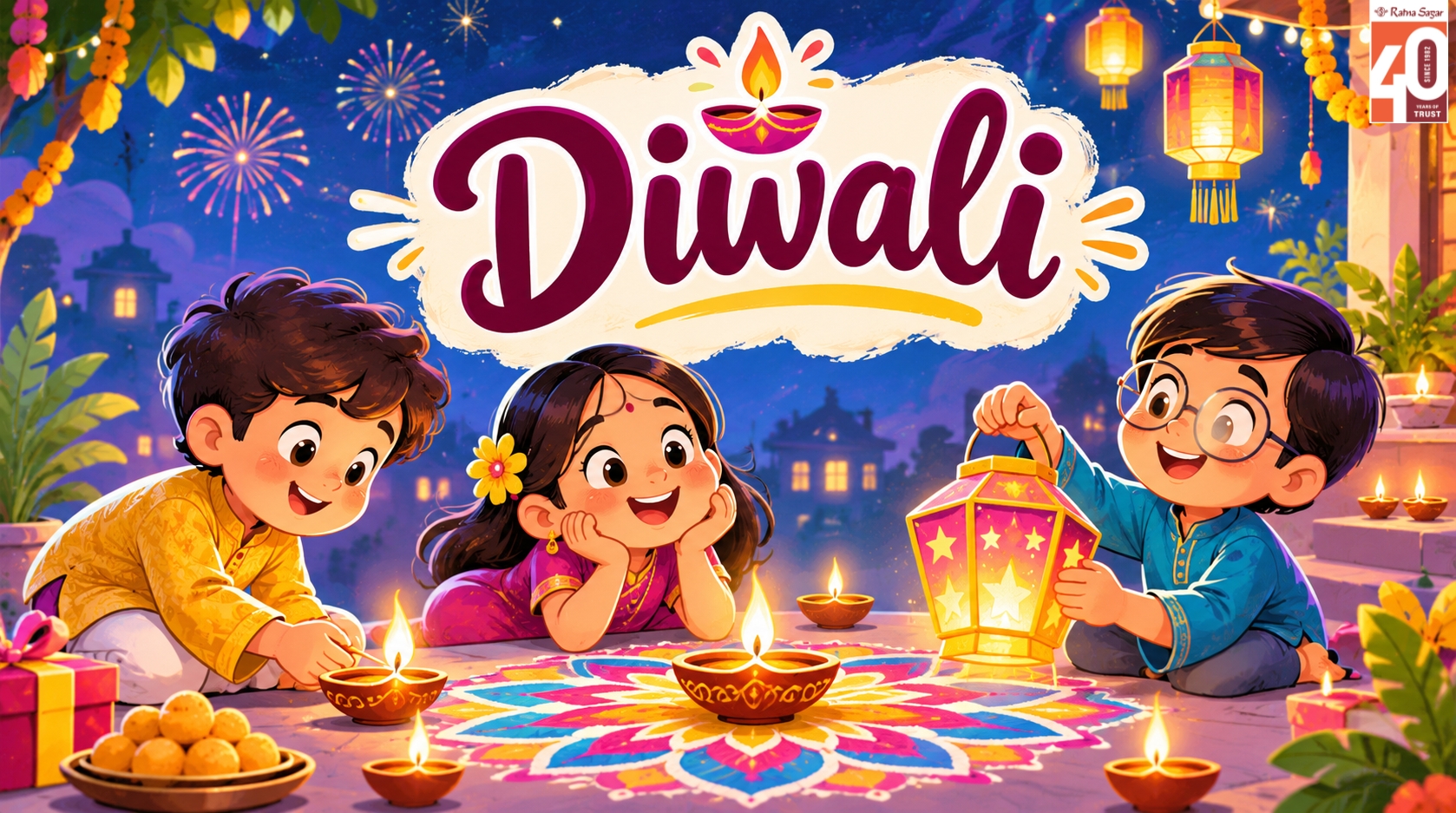
Imagine a night when homes sparkle with tiny lamps, colourful rangolis decorate doorsteps and the air is filled with laughter and excitement. Families come together, delicious sweets are shared and every corner glows with happiness. This is the magic of Diwali, the Festival of Lights!
Diwali, also known as Deepawali, is one of the most widely celebrated Indian festivals. It is a time of joy, togetherness and new beginnings. However, Diwali is much more than beautiful decorations and celebrations. It teaches us important lessons about kindness, courage, knowledge and the victory of good over evil.
Let us explore the fascinating stories, traditions and values that make Diwali such a special festival.
What Is Diwali and Why Is It Celebrated?
The word Deepawali comes from the Sanskrit words Deepa, meaning lamp, and Avali, meaning row. Together, they mean a row of lights.
Diwali usually falls in October or November, according to the Hindu lunar calendar. The festival is traditionally celebrated over five days, although customs and the duration of celebrations vary across regions.
The significance of Diwali lies in its powerful message: light represents knowledge, goodness and hope, while darkness symbolises ignorance and negativity.
Lighting a small diya reminds us that even a little goodness can make a big difference.
The Story Behind Diwali: The Return of Lord Rama
One of the most popular Diwali stories comes from the ancient Indian epic, the Ramayana.
According to Hindu tradition, Lord Rama, accompanied by Sita and Lakshmana, returned to Ayodhya after completing fourteen years of exile. During this time, Rama defeated Ravana, the king of Lanka, and rescued Sita.
The people of Ayodhya were delighted to welcome them home. They decorated their city with rows of glowing oil lamps to celebrate their return.
This story is especially associated with Diwali celebrations in northern India.
What can we learn from this story?
It teaches us that truth, courage, patience and righteousness are important qualities. Difficult situations may arise, but doing what is right helps us overcome challenges.
The Significance of Diwali Across India
One of the most interesting things about the Diwali festival in India is that different communities associate it with different stories and traditions.
Northern India: Many families celebrate Lord Rama's return to Ayodhya.
Southern India: Some traditions commemorate Lord Krishna's victory over Narakasura.
Western India: Diwali is associated with new beginnings, prosperity and, in some regions, King Bali.
Eastern India: Many communities worship Goddess Kali during this period.
Jainism: Diwali commemorates Lord Mahavira's attainment of nirvana.
Sikhism: Bandi Chhor Divas, often observed around Diwali, celebrates the release of Guru Hargobind Ji from imprisonment.
These different traditions make Diwali an important part of the cultural festivals of India, reflecting the country's rich diversity.
Five Days of Diwali Celebrations
In many parts of India, Diwali celebrations traditionally extend over five days. Each day has its own importance.
1. Dhanteras
The celebrations begin with Dhanteras. Families clean their homes, prepare for the festival and sometimes purchase utensils or other items as symbols of prosperity.
2. Naraka Chaturdashi or Chhoti Diwali
This day is associated with the victory of good over evil. People prepare festive decorations, light lamps and follow regional customs.
3. Diwali or Lakshmi Puja
The main festival day is celebrated with beautifully decorated homes, glowing diyas, prayers and family gatherings. Many families worship Goddess Lakshmi, who represents wealth and prosperity, along with Lord Ganesha.
4. Govardhan Puja or Annakut
In several communities, this day honours Lord Krishna and expresses gratitude for nature, food and its abundance.
5. Bhai Dooj
Bhai Dooj celebrates the loving relationship between brothers and sisters. Families exchange good wishes and spend meaningful time together.
The order and observance of these days may differ across regions.
Beautiful Diwali Traditions and Customs
The charm of Diwali lies in its colourful celebrations. Let us discover some popular Diwali traditions and customs.
Lighting Diyas
Traditional Diwali diyas are small earthen lamps filled with oil or ghee. Lighting them symbolises the removal of darkness and the spread of goodness.
Making Rangolis
Colourful rangolis made from flower petals, coloured powders or rice decorate entrances. They welcome guests and add beauty to the celebrations.
Sharing Sweets
No Diwali celebration feels complete without delicious Diwali sweets! Laddoos, barfis, kaju katlis and other festive treats are shared with family, friends and neighbours.
Decorating Homes
Beautiful Diwali decorations, including flowers, lanterns and lights, create a festive atmosphere. Families often work together to make their homes cheerful and welcoming.
Exchanging Gifts
Sharing gifts and greetings expresses love, gratitude and appreciation. It reminds us that happiness grows when we share it with others.
Fun and Meaningful Diwali Activities for Kids
Diwali is also a wonderful opportunity to explore creativity and learn something new.
Here are some enjoyable Diwali activities for kids:
Create a colourful rangoli: Use flower petals or coloured paper to make a beautiful design.
Decorate clay diyas: Paint earthen lamps with bright colours under adult supervision.
Make a Diwali greeting card: Write thoughtful messages for friends, teachers and family members.
Read a Diwali story: Discover fascinating tales from Indian mythology and learn the values behind them.
Prepare a festive poster: Illustrate how Diwali spreads happiness, peace and togetherness.
Perform an act of kindness: Donate books, share festive treats or help someone in need.
These Diwali celebrations for children make learning enjoyable while encouraging creativity, responsibility and kindness.
Celebrate a Safe and Eco-Friendly Diwali
Diwali becomes even more meaningful when we celebrate responsibly.
Children can help protect the environment by choosing reusable decorations, reducing waste and avoiding noisy and polluting firecrackers.
Using LED lights, decorating with flowers and choosing traditional clay diyas are thoughtful ways to celebrate. Children should always seek adult supervision when lighting diyas or candles.
A safe and eco-friendly Diwali brings happiness not only to our families but also to our communities, animals and the environment.
Important Diwali Values Every Student Should Learn
The true importance of Diwali goes beyond decorations, sweets and gifts.
The festival teaches us valuable lessons:
Kindness: Help others and spread happiness.
Honesty: Always choose truth over dishonesty.
Togetherness: Value family, friendship and community.
Gratitude: Appreciate the people and opportunities in your life.
Respect: Celebrate cultural diversity and honour different traditions.
Positivity: Face challenges with courage and hope.
These Diwali values can guide our actions throughout the year.
Learning Beyond the Classroom with Ratna Sagar
Festivals like Diwali offer wonderful opportunities to connect classroom learning with everyday experiences.
At Ratna Sagar, education goes beyond textbooks. Through engaging educational resources covering subjects such as English, Social Science, Environmental Studies, General Knowledge and Value Education, Ratna Sagar encourages students to explore the world around them.
Understanding Diwali helps children learn about India's cultural heritage, develop creativity, appreciate different traditions and practise important life values.
Activities such as storytelling, festive artwork, creative writing and discussions about responsible celebrations can make learning both meaningful and enjoyable.
Explore Ratna Sagar's educational books and learning resources to encourage curiosity, knowledge and a lifelong love for learning.
Conclusion: Let Your Inner Light Shine
Diwali reminds us that the brightest light is not always the one glowing in a diya. Sometimes, it is the kindness we show, the knowledge we share or the happiness we bring into someone's life.
This Festival of Lights, let us celebrate with love, respect, responsibility and gratitude.
Remember, every good deed is like a little diya that makes the world brighter.
Wishing everyone a joyful, safe and meaningful Diwali!
Recent Posts
Diwali: Festival of Lights, Stories, Traditions & Activities for Kids
06/11/2026
C. V. Raman Birth Anniversary: Celebrating India's Great Scientist and His Discoveries
05/11/2026
Unity in Diversity: India's Strength, Culture & Unity
03/11/2026
The Night Sky for Kids | Class 1 English Animated Story
26/10/2026
My Family Animated Story for Kids | Ratna Sagar
22/10/2026
Dussehra Across India: Traditions, Stories & 10 Lines and a Short Essay on Dusshera
15/10/2026
Did Mani Take a Bath? | Personal Hygiene for Kids
15/10/2026
Planning a Picnic: Class 1 English Learning
13/10/2026Recommended Books