Essay Writing Guide & Tips for Students | 10 Lines & Short Essay
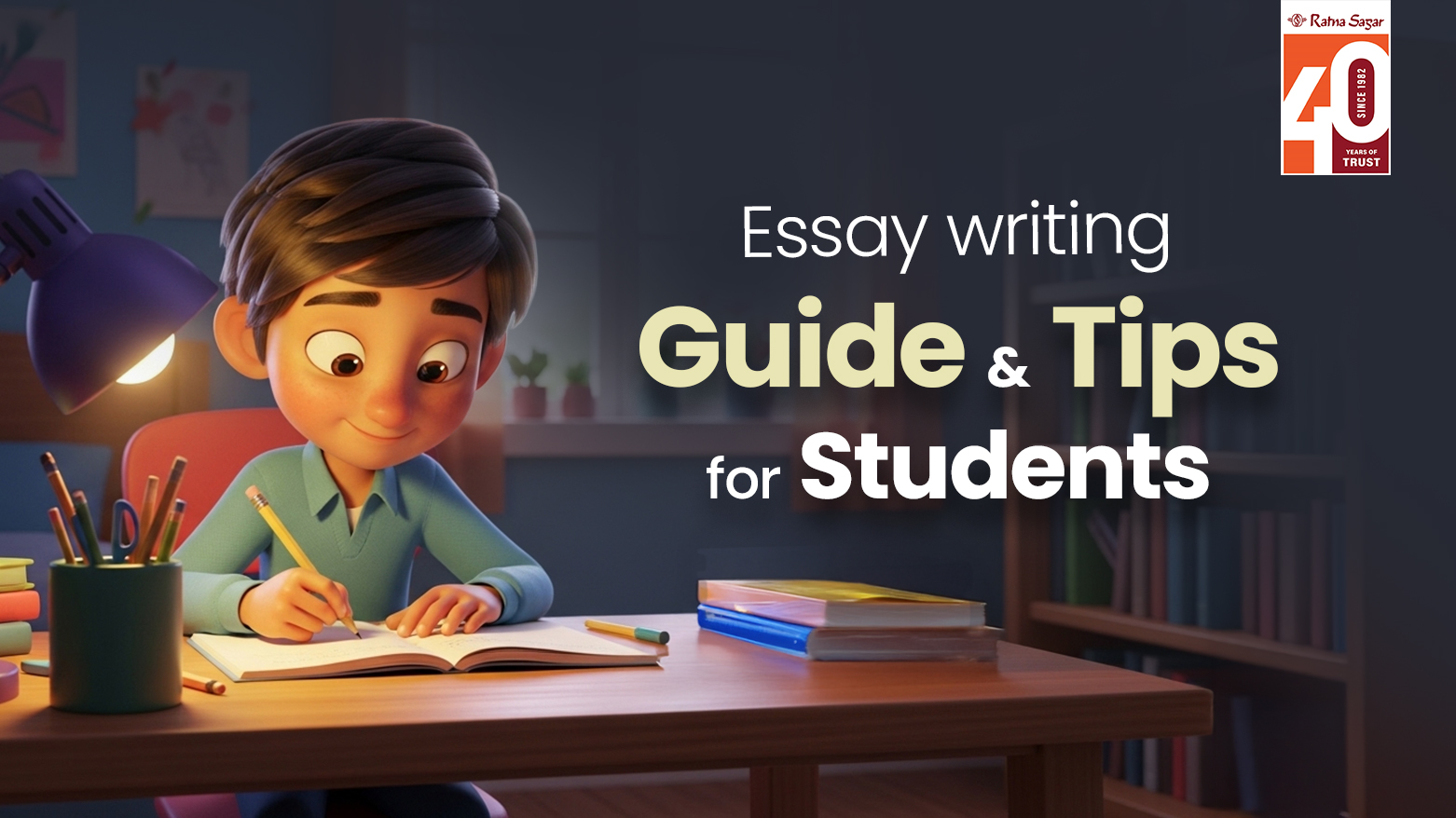
Essay Writing Guide & Tips for Students
Writing an essay feels like a big task for most students. You sit down with a blank page and suddenly everything you knew just disappears. Sound familiar? You are not alone. Almost every student goes through this at some point. The good news is that essay writing is a skill and like every skill it gets better with practice and the right guidance.
Whether you are writing for school exams, assignments or competitions, this essay writing guide and tips for students will help you understand the process from start to finish. Let us break it all down in a simple and easy way.
What Is an Essay?
An essay is a piece of writing where you share your thoughts, opinions or information about a particular topic in a structured way. It usually has three main parts: an introduction, a body and a conclusion. A good essay is clear, focused and well-organised.
10 Lines on Essay Writing Guide and Tips for Students
Before we go into the detailed guide, here are 10 quick and useful lines that sum up the basics of essay writing:
- Always read the topic carefully before you start writing.
- Plan your essay by making a rough outline or mind map.
- Begin with a strong and interesting introduction.
- Stick to the topic and avoid going off track.
- Use simple and clear language that the reader can understand easily.
- Divide your content into short paragraphs for better readability.
- Use facts, examples or real-life situations to support your points.
- Avoid repetition and use varied sentence structures.
- Write a conclusion that summarises your main points effectively.
- Always revise your essay once before submitting it.
These 10 lines serve as your checklist every time you sit down to write.
Short Essay on Essay Writing Guide and Tips for Students
Essay writing is one of the most important skills a student can develop. A well-written essay shows the examiner that you can think clearly, express your ideas in an organised manner and communicate effectively. But many students find it difficult because they do not follow a proper process.
The first step is understanding the topic. Do not rush. Read the question or topic at least twice. Think about what is being asked and what kind of essay it requires. Is it descriptive, argumentative, narrative or informative?
Once you understand the topic, spend two to three minutes planning. Write down the key points you want to cover. This plan does not have to be perfect. It just needs to give you direction so you do not lose your way while writing.
Start your essay with a strong introduction. The first few lines should grab the reader's attention. You can start with a question, a fact, a quote or a short story. Introduce the topic clearly so the reader knows what the essay is about.
The body of the essay is where you explain your ideas in detail. Each paragraph should talk about one main point. Support your points with examples or explanations. Keep your sentences clear and your language simple. Avoid using complicated words just to sound smart. Clarity always wins over complexity.
End your essay with a strong conclusion. Summarise the main points without simply copying them word for word. Your conclusion should give the reader a sense of completion. A good ending leaves a lasting impression.
Detailed Essay Writing Guide for Students
Step 1: Understand the Topic : This is where every great essay starts. Many students make the mistake of jumping straight into writing without truly understanding what the topic asks. Spend time reading and thinking. If it is an exam, underline the key words in the question.
Step 2: Research and Gather Information : For longer essays or assignments, gather relevant information from books, reliable websites and study material. Resources like Ratna Sagar offer excellent academic books and content that can help students build strong foundational knowledge across subjects.
Step 3: Create an Outline : An outline is a rough plan of your essay. Write down your main points in order. Decide what goes in the introduction, what fits in the body and what you will say in the conclusion. This step saves a lot of time and keeps you focused.
Step 4: Write the First Draft: Do not aim for perfection in the first draft. Just write. Get your ideas down on paper. You can always edit and improve later. The goal of the first draft is to create something you can work with.
Step 5: Use Transitions: Good essays flow naturally from one point to the next. Use transition words like "however", "furthermore", "for example" and "in conclusion" to connect your ideas smoothly.
Step 6: Revise and Edit : Read your essay out loud after writing. This helps you catch awkward sentences, spelling mistakes and grammar errors. Check whether each paragraph connects logically to the next. Cut out anything that feels unnecessary.
Step 7: Proofread : Proofreading is different from editing. When you edit, you look at the overall structure and content. When you proofread, you check for small errors like punctuation, spelling and grammar. Both steps are important.
Final Thoughts
Essay writing is not just an academic exercise. It teaches you how to think clearly, argue your point and communicate with confidence. These are skills you will use throughout your life. With the right essay writing guide and tips for students, even the most reluctant writer can improve and grow.
Start small. Write a short essay today. Use the 10 lines shared in this blog as your guide. Plan, write, revise and keep going. Every essay you write makes you better than you were before.
Recent Posts

The Night Sky for Kids | Class 1 English Animated Story
26/10/2026
My Family Animated Story for Kids | Ratna Sagar
22/10/2026
Dussehra Across India: Traditions, Stories & 10 Lines and a Short Essay on Dusshera
15/10/2026
Did Mani Take a Bath? | Personal Hygiene for Kids
15/10/2026
Planning a Picnic: Class 1 English Learning
13/10/2026
International Day of the Girl Child: 10 Lines & Essay
09/10/2026
R K Narayan Birth Anniversary: Malgudi, Books & Legacy
06/10/2026
Gandhi Jayanti: Truth, Non-Violence and Its Relevance Today
01/10/2026Recommended Books