Bhai Dooj: Celebrating the Special Bond Between Siblings
Bhai Dooj: Celebrating the Special Bond Between Brothers and Sisters
India is a land of colourful festivals, beautiful traditions and joyful celebrations. Every festival has a special meaning and teaches us important values. One such festival is Bhai Dooj, a wonderful occasion that celebrates the love, care and friendship shared between brothers and sisters.
From playful arguments to sharing secrets and supporting each other, siblings create countless memories together. Bhai Dooj reminds us that this special relationship deserves to be celebrated.
Let us explore the Bhai Dooj festival, its history, traditions and the valuable lessons it teaches us.
What Is Bhai Dooj and Why Is It Celebrated?
Bhai Dooj is an important Hindu festival celebrated after Diwali. It falls on the second lunar day of the bright fortnight of the Hindu month of Kartik, usually in October or November.
The word Bhai means brother, while Dooj refers to the second lunar day.
The festival celebrates the beautiful brother sister bond. Traditionally, sisters pray for their brothers' happiness, good health and long lives. Brothers express their affection through gifts, blessings and promises of support.
However, the true Bhai Dooj significance goes beyond rituals. It teaches us that siblings should always respect, encourage and care for one another.
The Beautiful Story Behind Bhai Dooj
Have you ever wondered why Bhai Dooj is celebrated?
According to Hindu mythology, one popular Bhai Dooj story is associated with Lord Yama, the god of death, and his sister Yamuna, the river goddess.
Yamuna loved her brother dearly and often invited him to visit her home. However, Yama remained busy with his responsibilities and could not visit her.
One day, Yama finally accepted her invitation.
Yamuna welcomed him with great happiness. She performed aarti, applied a tilak on his forehead and prepared a delicious meal.
Touched by his sister's affection, Yama offered her a blessing. According to tradition, he declared that brothers who visited their sisters on this special day and received their blessings would be protected from untimely death.
Since then, the occasion has been associated with the celebration of sibling love and is also known as Yama Dwitiya.
Another traditional story connects Bhai Dooj with Lord Krishna and his sister Subhadra, who welcomed him with affection after his victory over Narakasura.
Both stories highlight the importance of family relationships, kindness and love.
How Is Bhai Dooj Celebrated in India?
A typical Bhai Dooj celebration brings families together through meaningful customs and joyful moments.
Although traditions differ across regions, some common Bhai Dooj rituals include:
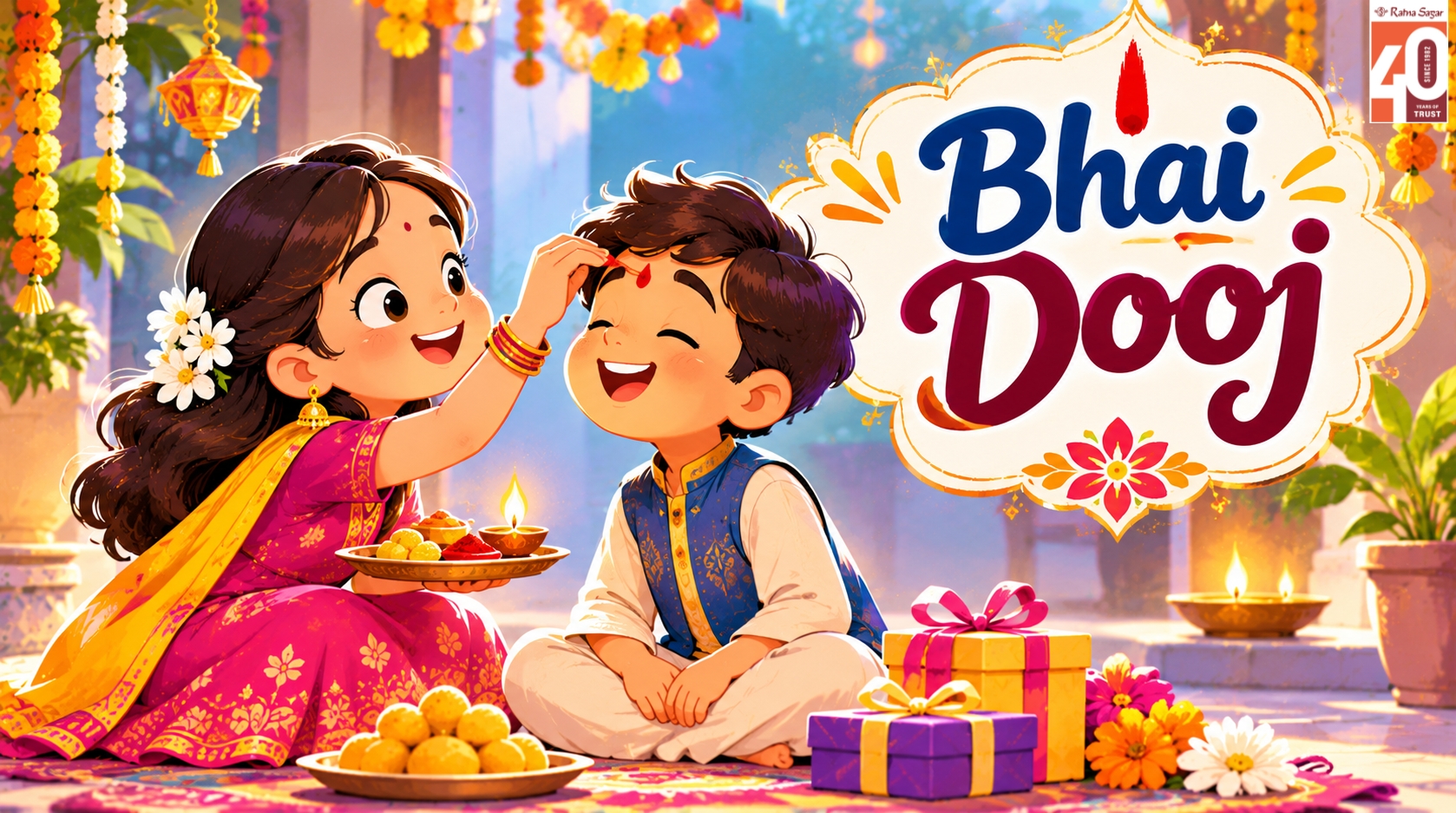
Preparing the Puja Thali: Sisters arrange a decorated plate containing a diya, roli, rice, flowers and sweets.
Applying Tilak: Sisters apply a tilak on their brothers' foreheads as a symbol of blessings and protection.
Performing Aarti: Aarti is performed while praying for the brothers' happiness and well-being.
Sharing Sweets: Brothers and sisters exchange sweets and enjoy festive dishes together.
Exchanging Gifts: Brothers traditionally offer gifts to their sisters as expressions of appreciation and affection.
Spending Family Time: Families share meals, stories, laughter and memorable moments.
These Bhai Dooj traditions remind us that the greatest gifts are love, care and time spent together.
Different Names, One Beautiful Celebration
India is known for its cultural diversity. One interesting feature of Indian festivals is that similar traditions are celebrated differently across regions.
Bhai Dooj is known by different names:
Bhai Dooj or Bhaiya Dooj: Popular in northern India.
Bhau Beej: Celebrated in Maharashtra.
Bhai Beej: Observed in Gujarat.
Bhai Phonta: Celebrated in West Bengal.
Bhai Tika: Celebrated in Nepal during Tihar.
Although the names and customs vary, the central message remains the same: celebrating the special relationship between siblings.
Such cultural celebrations help children understand the richness of Indian traditions and appreciate the diversity of our country.
Why Is Bhai Dooj Important?
The importance of Bhai Dooj lies in the valuable lessons it teaches us about relationships.
1. Love and Affection
The festival encourages brothers and sisters to express their love through thoughtful gestures.
2. Respect and Understanding
Siblings may have different interests and opinions, but respecting each other's feelings helps build stronger relationships.
3. Family Togetherness
Celebrating festivals together creates happy memories and strengthens family connections.
4. Kindness and Responsibility
Bhai Dooj reminds us to support and encourage our siblings during both happy and challenging times.
5. Appreciation of Indian Culture
Learning about festivals helps students understand traditional stories, customs and the values passed down through generations.
Fun Bhai Dooj Activities for Students
Festivals become even more meaningful when children participate creatively.
Here are some enjoyable activities students can try:
Create a Handmade Card: Write a heartfelt Bhai Dooj wish for your sibling.
Make a Memory Scrapbook: Collect photographs and write about your favourite moments together.
Design a Festive Thali: Decorate a paper thali using drawings and colourful craft materials.
Read a Festival Story: Explore traditional stories and discuss their messages with family members.
Share a Kindness Promise: Promise to help, encourage and respect your sibling throughout the year.
These activities encourage creativity, communication and meaningful family interactions.
Learning Values Through Festivals with Ratna Sagar
Festivals are not just occasions for celebration. They are also wonderful opportunities for learning.
At Ratna Sagar, education goes beyond textbooks. Learning about Indian festivals helps students connect classroom knowledge with everyday experiences.
Stories about festivals such as Bhai Dooj encourage children to develop empathy, respect, cultural awareness and strong family values.
Reading traditional stories can improve vocabulary, comprehension and imagination. Creative activities can develop artistic expression, while discussions about family relationships help strengthen emotional understanding.
By connecting education with real-life experiences, Ratna Sagar encourages children to become curious learners and responsible individuals who appreciate India's cultural heritage.
Conclusion: Celebrating a Bond That Lasts Forever
Bhai Dooj is more than a festival of tilak, sweets and gifts. It is a celebration of trust, friendship, respect and unconditional love.
The festival reminds us that siblings are our companions in childhood, our supporters during difficult times and our friends throughout life.
This Bhai Dooj, celebrate by sharing a smile, expressing gratitude and creating wonderful memories with your siblings.
Wishing everyone a Happy Bhai Dooj filled with love, laughter and togetherness!
Explore more educational resources and engaging learning experiences at www.ratnasagar.com.
Recent Posts
National Education Day 2026: Importance of Education in India
10/11/2026
Diwali: Festival of Lights, Stories, Traditions & Activities for Kids
06/11/2026
C. V. Raman Birth Anniversary: Celebrating India's Great Scientist and His Discoveries
05/11/2026
Unity in Diversity: India's Strength, Culture & Unity
03/11/2026
The Night Sky for Kids | Class 1 English Animated Story
26/10/2026
My Family Animated Story for Kids | Ratna Sagar
22/10/2026
Dussehra Across India: Traditions, Stories & 10 Lines and a Short Essay on Dusshera
15/10/2026
Did Mani Take a Bath? | Personal Hygiene for Kids
15/10/2026
Planning a Picnic: Class 1 English Learning
13/10/2026Recommended Books