World Environment Day: Essay 10 Lines & Importance for Students
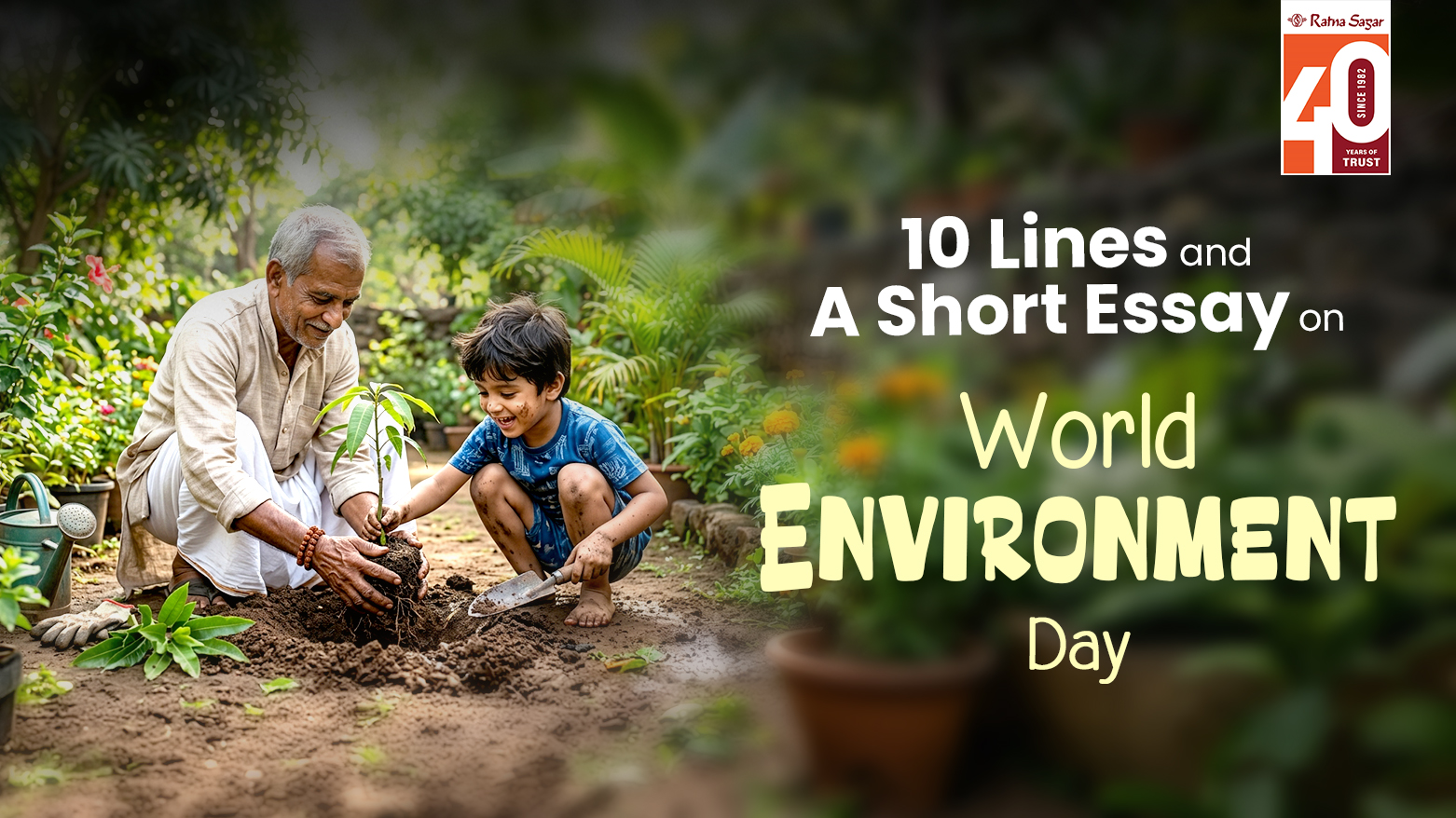
World Environment Day: Why Every Day Should Be Earth Day
Every year on 5th June, the world pauses to reflect on something that quietly sustains every breath we take, every drop of water we drink, and every meal we eat — our environment. World Environment Day is not just a date on the calendar; it is a powerful reminder that the planet we call home needs our attention, our care, and our action.
Whether you are writing a World Environment Day essay, looking for 10 lines on World Environment Day, or exploring this topic as a student, this blog has everything you need to understand, celebrate, and contribute to this important global occasion.
What is World Environment Day?
World Environment Day is the United Nations' principal vehicle for encouraging awareness and action for the protection of our environment. It was first celebrated in 1974, following the Stockholm Conference of 1972, and has since grown into the largest global platform for environmental public outreach — celebrated by millions of people across more than 143 countries.
The day is hosted by a different country each year, with a unique theme to focus the world's attention on a pressing environmental issue. Past themes have ranged from combating plastic pollution to ecosystem restoration and land restoration.
The Importance of World Environment Day for Students
For students, World Environment Day holds special significance. It is a day to step out of textbooks and connect learning with real-world responsibility. Schools across India and the world organise essay competitions, poster-making activities, plantation drives, and awareness rallies — all centred around environmental consciousness.
Understanding the environment is not just a chapter in a science textbook. It is about recognising that the air quality in Delhi, the shrinking Himalayan glaciers, the dying coral reefs in the Andaman Sea, and the disappearing forests of the Western Ghats are all connected — and that young people today are inheriting these challenges.
When students engage with topics like climate change, biodiversity loss, water scarcity, and sustainable living, they are not just preparing for exams. They are preparing to be informed citizens of a planet that urgently needs thoughtful stewardship.
10 Lines on World Environment Day
For students who need a quick, concise reference, here are 10 lines on World Environment Day:
- World Environment Day is celebrated every year on 5th June across the globe.
- It was established by the United Nations in 1972 and first celebrated in 1974.
- The day aims to raise awareness about critical environmental issues affecting our planet.
- Each year, a new theme and a host country are chosen to lead global celebrations.
- Activities like tree plantation, clean-up drives, and recycling campaigns are organised on this day.
- It serves as a reminder that protecting the environment is everyone's responsibility.
- Over 143 countries participate in World Environment Day events and programmes.
- Issues like climate change, deforestation, plastic pollution, and water scarcity are highlighted.
- Students, teachers, governments, and organisations all play a role in observing this day meaningfully.
- The ultimate goal of World Environment Day is to inspire real, lasting environmental action.
A World Environment Day Essay: Our Planet, Our Responsibility
The environment is the foundation of all life on Earth. From the tiniest microorganism in the soil to the tallest mountain peak wrapped in snow, every element of nature is part of a delicate, interconnected web. World Environment Day, observed on 5th June every year, is a global call to action — a day to remind humanity that this web is fraying, and that we must work together to repair it.
The Challenges We Face
Our environment today faces threats on multiple fronts. Climate change is perhaps the most urgent. Rising global temperatures are causing glaciers to melt, sea levels to rise, and weather patterns to become increasingly unpredictable. Droughts are more frequent in some regions, while others face devastating floods.
Deforestation is another crisis. Millions of hectares of forests are cleared every year for agriculture, urban development, and industry. Forests are not just trees — they are habitats for countless species, carbon sinks that absorb CO₂, and water catchment areas that sustain rivers and groundwater.
Plastic pollution has invaded every corner of the natural world. From the deepest ocean trenches to the peaks of the Himalayas, microplastics have been found in alarming quantities. Marine life, birds, and even humans are ingesting plastic particles without fully understanding the long-term consequences.
Biodiversity loss is accelerating at a rate that scientists describe as the sixth mass extinction. Thousands of species disappear every year, disrupting ecosystems that took millions of years to evolve.
What Can We Do?
The good news is that action — at every level — makes a real difference.
At the individual level, small but consistent changes have a cumulative impact. Reducing single-use plastic, conserving water, choosing public transport or cycling, eating more plant-based meals, and composting food waste are all practical steps. Being mindful of one's carbon footprint and making conscious consumer choices sends a signal to industries and governments about what people value.
At the community level, initiatives like neighbourhood clean-up drives, community gardens, rainwater harvesting, and tree-plantation programmes build a culture of environmental responsibility. Schools and colleges can lead by example — reducing paper waste, setting up green committees, and educating younger children about sustainable practices.
At the national and global level, strong environmental policies, international agreements like the Paris Accord, and investment in renewable energy are essential. Transitioning from fossil fuels to solar, wind, and hydropower is not just an environmental necessity — it is an economic opportunity.
The Role of Education
Education is one of the most powerful tools in the fight for environmental protection. When children learn about the water cycle, food chains, ecosystems, and the impact of human activity on nature, they develop a sense of connection with the natural world. This connection is the foundation of responsible behaviour.
Books, teachers, and educational publishers have a vital role to play in nurturing this awareness. Presenting environmental topics not as abstract science but as lived reality — as the story of the river near your town, the tree in your schoolyard, the air your family breathes — makes the subject deeply personal and profoundly motivating.
Conclusion
World Environment Day is more than a celebration. It is a commitment — a collective promise to the generations that will come after us that we did not look away. Every tree planted, every piece of plastic refused, every light switched off thoughtfully, and every child educated about the natural world is a small act of courage in the face of a large challenge.
On 5th June and every day that follows, let us choose the planet. Let us choose the future.
Recent Posts

My Family Animated Story for Kids | Ratna Sagar
22/10/2026
Dussehra Across India: Traditions, Stories & 10 Lines and a Short Essay on Dusshera
15/10/2026
Did Mani Take a Bath? | Personal Hygiene for Kids
15/10/2026
Planning a Picnic: Class 1 English Learning
13/10/2026
International Day of the Girl Child: 10 Lines & Essay
09/10/2026
R K Narayan Birth Anniversary: Malgudi, Books & Legacy
06/10/2026
Gandhi Jayanti: Truth, Non-Violence and Its Relevance Today
01/10/2026Recommended Books