The Night Sky for Kids | Class 1 English Animated Story
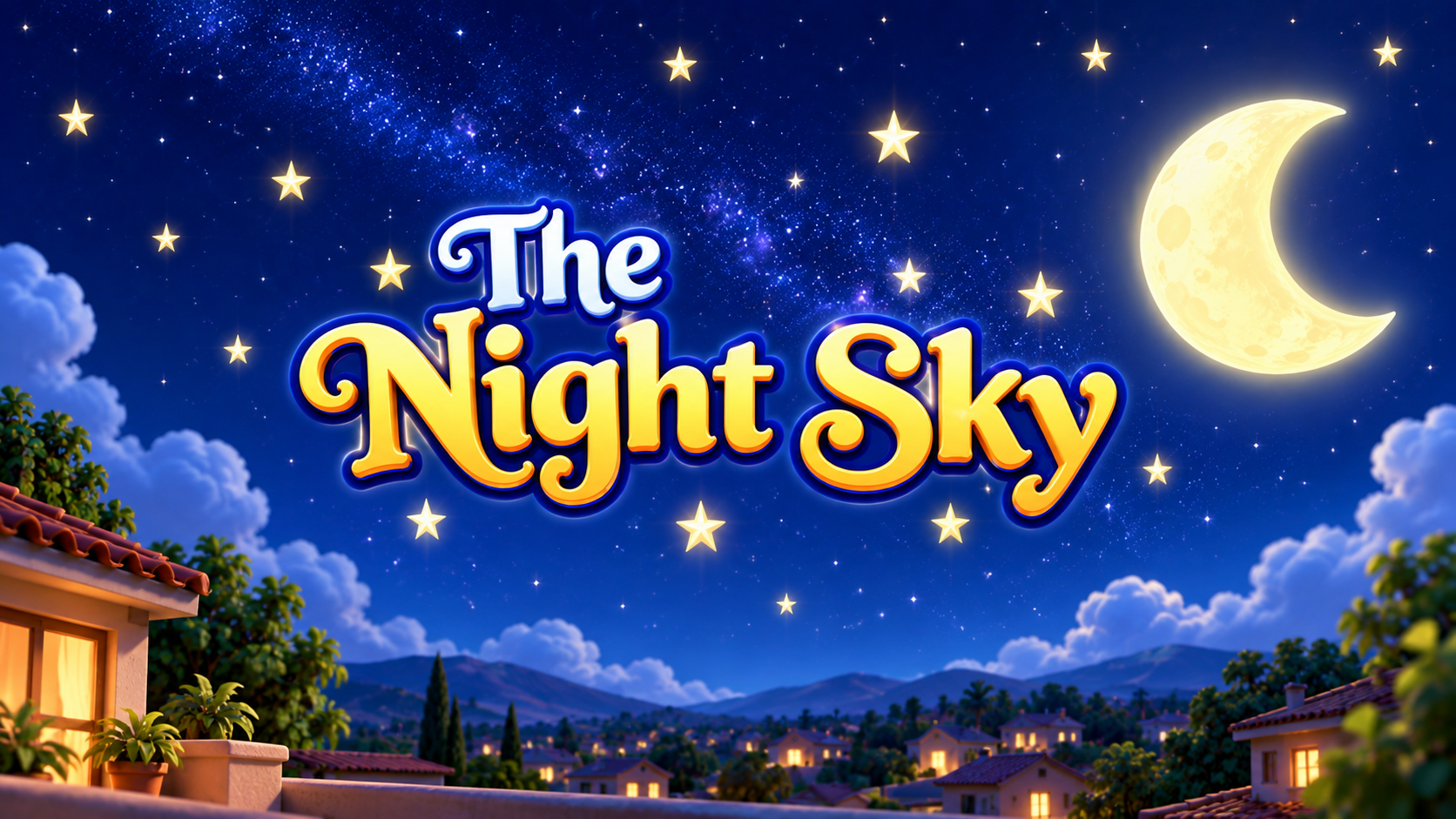
The Night Sky | Ratna Sagar | Animated Story
Have you ever looked up at the night sky and wondered why the stars twinkle or how the moon shines so brightly? The night sky is full of fascinating sights that spark curiosity and imagination, especially among young children. From the glowing moon to countless twinkling stars, there is so much to observe, discover and learn.
For Class 1 students, understanding the world around them begins with simple observations and questions. Exploring the night sky is a wonderful way to introduce children to basic science concepts while developing their language and thinking skills.
The Night Sky, an animated educational video by Ratna Sagar, inspired by ICSE Focus English Book 1, encourages young learners to explore the beauty of the moon, stars and wonders of space. Through visual storytelling, children can develop curiosity about nature while strengthening their listening and English comprehension skills.
What Can We See in the Night Sky?
When the sun sets and darkness spreads across the sky, a beautiful world of celestial objects becomes visible.
The night sky offers many interesting things for children to observe and discuss.
1. The Moon
The moon is one of the most noticeable objects in the night sky. Sometimes it appears round and bright, while on other nights, only a small part is visible. These changing appearances are called the phases of the moon.
2. Twinkling Stars
Stars appear like tiny shining dots scattered across the sky. They are enormous balls of hot gases that produce their own light. Although stars are extremely large, they look small because they are very far away from Earth.
3. Planets
Some bright objects visible in the night sky are planets. Unlike stars, planets do not produce their own light. They reflect sunlight, making them visible from Earth.
Introducing these simple facts helps children become familiar with the wonders of space and encourages them to observe their surroundings more carefully.
Why Does the Night Sky Fascinate Children?
Children are naturally curious about things they do not completely understand. The night sky, with its glowing moon and mysterious stars, offers endless opportunities to ask questions.
Why does the moon change its shape? Why do stars shine at night? Where does the sun go after sunset?
Such questions form the foundation of scientific thinking.
When parents and teachers encourage children to explore these questions, they help develop observation, reasoning and problem-solving skills.
Learning about the night sky for kids does not require complicated scientific explanations. Simple conversations, pictures, animated stories and observation activities can make the subject interesting and accessible.
Through these experiences, children begin understanding that learning is not limited to textbooks. The world around them is equally full of valuable lessons.
Watch The Night Sky Animated Story by Ratna Sagar
Stories are a wonderful way to introduce young learners to new concepts. When storytelling is combined with animation, children can connect words, visuals and ideas more easily.
The Night Sky | Ratna Sagar | Animated Story introduces children to the beauty of the night sky and encourages them to discover the moon, stars and wonders of space.
The video is associated with ICSE Focus English Book 1 by Ratna Sagar, making it a useful supplementary resource for Class 1 English learning.
Watch The Night Sky | Ratna Sagar | Animated Story on YouTube
Parents can watch the video with their children and encourage them to describe the moon, stars and other objects associated with the night sky.
Teachers can use it to introduce vocabulary, encourage classroom discussions and develop listening comprehension.
By connecting educational videos with classroom activities, children can learn English while exploring interesting ideas about the natural world.
How The Night Sky Helps Children Learn English
Animated stories for kids support language development by combining familiar experiences with meaningful vocabulary.
The topic of the night sky introduces several useful words, including moon, stars, sky, darkness, bright, shine, twinkle and space.
Teachers can encourage children to use these words in simple sentences such as:
The moon shines in the night sky.
The stars twinkle brightly.
The sky looks dark at night.
I love watching the beautiful moon.
These activities help children practise sentence formation, improve pronunciation and express their observations confidently.
Story-based learning can also strengthen reading comprehension because children practise identifying details, remembering information and explaining ideas.
As their confidence grows, they can begin expressing their thoughts through short written compositions.
For additional writing practice, parents and educators can explore Ratna Sagar's Essay Writing Guide: Tips for Students, which provides helpful guidance for developing writing skills.
Connecting The Night Sky with Science Education
Learning about the moon and stars also introduces children to basic astronomy.
Astronomy is the study of objects and phenomena beyond Earth's atmosphere, including the sun, moon, planets and stars.
At the Class 1 level, astronomy can begin with simple observations rather than complex explanations.
Children can learn that the Earth rotates, causing day and night. They can also discover that the moon reflects sunlight and that stars are located far away in space.
Such concepts encourage young learners to develop an interest in science.
Teachers can organise simple observation activities, use pictures of the solar system or encourage children to discuss what they notice in the sky.
This curiosity can gradually develop into an interest in scientific discoveries and exploration.
To encourage children to learn more about science, teachers can also introduce Ratna Sagar's article on National Science Day: 10 Lines and Short Essay.
Connecting English lessons with scientific concepts helps children recognise how different subjects relate to everyday life.
The Night Sky and Emotional Well-Being
Observing the night sky can also provide a peaceful opportunity for children to slow down and connect with nature.
Looking at the moon and stars with parents can encourage quiet conversations, imagination and a sense of wonder.
Such shared experiences may help children relax and express their thoughts and feelings.
Parents can ask questions such as, "How do you feel when you look at the stars?" or "What would you like to discover in space?"
These conversations encourage emotional expression while strengthening parent-child communication.
Creating supportive learning environments is important for children's overall development.
Parents and teachers interested in this subject can explore Ratna Sagar's article on Mental Health for Students: 10 Lines and Short Essay.
Combining curiosity, creativity and emotional understanding helps make learning a more balanced experience.
Five Fun Night Sky Activities for Class 1 Students
Learning becomes more meaningful when children participate in activities connected to what they have watched or read.
Here are five simple night sky activities for children.
1. Draw the Night Sky
Ask children to draw the moon, stars and a dark sky. Encourage them to describe their artwork using simple English sentences.
2. Create a Moon Observation Diary
With adult supervision, children can observe the moon on different evenings and draw its changing appearance.
3. Count the Stars
Use a picture of the night sky and ask children to count the stars. This combines observation with basic numeracy skills.
4. Write Five Lines on the Night Sky
Encourage children to write short sentences about the moon, stars and their favourite things about the night sky.
5. Imagine a Space Adventure
Ask children to imagine travelling through space. Where would they go? What would they see? This activity encourages storytelling and creative thinking.
These simple exercises can reinforce vocabulary, observation and imagination while keeping children interested in learning.
Discover ICSE Focus English Book 1 by Ratna Sagar
Building strong English skills during the early years requires regular reading, listening, speaking and writing practice.
ICSE Focus English Book 1 by Ratna Sagar provides learning material for children developing foundational English language skills.
Educational videos such as The Night Sky can complement textbook learning by bringing familiar topics and ideas to life through animation.
When teachers combine stories with classroom discussions, drawing activities and vocabulary exercises, children receive additional opportunities to understand and practise English.
Parents looking for an English learning resource for Class 1 can explore the book online.
Buy ICSE Focus English Book 1 by Ratna Sagar on Amazon
Conclusion
The night sky is more than a beautiful sight. It is a wonderful starting point for curiosity, imagination and discovery.
From observing the glowing moon to learning why stars twinkle, every experience can encourage children to ask questions and explore the world around them.
Through The Night Sky animated story, Ratna Sagar helps make learning about the moon, stars and space more engaging for young learners.
By combining storytelling, educational videos and interactive activities, parents and teachers can support English language development while nurturing children's natural curiosity.
Explore ICSE Focus English Book 1 by Ratna Sagar and discover how simple stories can inspire meaningful learning experiences.
Watch, learn and explore the wonders of the night sky with Ratna Sagar!
Recent Posts
The Night Sky for Kids | Class 1 English Animated Story
26/10/2026
My Family Animated Story for Kids | Ratna Sagar
22/10/2026
Dussehra Across India: Traditions, Stories & 10 Lines and a Short Essay on Dusshera
15/10/2026
Did Mani Take a Bath? | Personal Hygiene for Kids
15/10/2026
Planning a Picnic: Class 1 English Learning
13/10/2026
International Day of the Girl Child: 10 Lines & Essay
09/10/2026
R K Narayan Birth Anniversary: Malgudi, Books & Legacy
06/10/2026
Gandhi Jayanti: Truth, Non-Violence and Its Relevance Today
01/10/2026Recommended Books