My Family Animated Story for Kids | Ratna Sagar
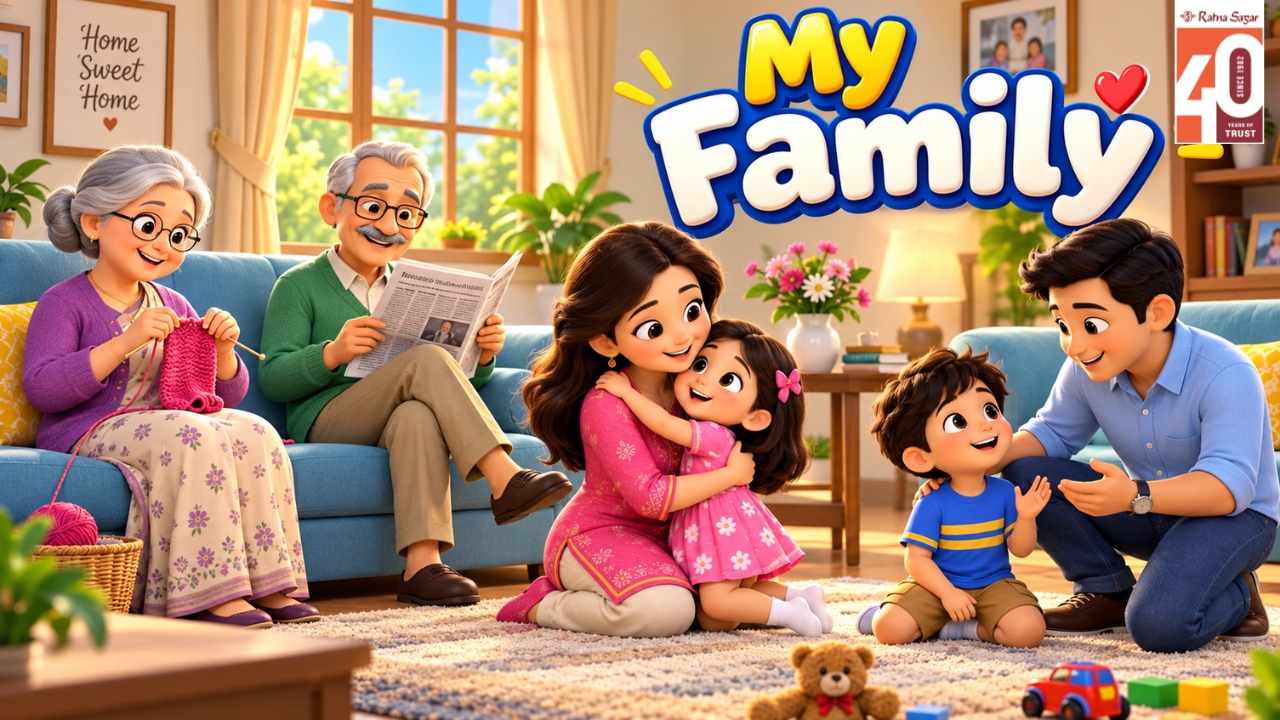
My Family: A Heartwarming Animated Story About Love, Care and Togetherness
What makes a family special? Is it the people we live with, the memories we create, or the love we share every day?
For children, family is often their first introduction to love, kindness, trust and belonging. From bedtime stories and shared meals to little acts of care, everyday family experiences teach valuable life lessons.
My Family, an animated story by Ratna Sagar, introduces young learners to the beautiful bonds that connect family members. Through engaging storytelling, children can explore the importance of love, respect, care and togetherness.
Whether you are a parent looking for meaningful learning activities or a teacher introducing the topic of family in the classroom, this animated story is a wonderful starting point.
Watch My Family: Animated Story by Ratna Sagar
Discover the joy of family relationships through Ratna Sagar's animated story, My Family.
Watch the animated story here:
My Family | Ratna Sagar | Animated Story
The video provides an opportunity for children to think about their own families and understand how everyday gestures of love and support make relationships meaningful.
After watching, parents and teachers can encourage children to share their favourite family memories and talk about the people who make them feel loved.
What Is a Family? Understanding Family Relationships
A family is a group of people connected through love, care, responsibility and belonging. Families come in different forms, and each one is unique.
Some children live with their parents and siblings, while others grow up with grandparents, relatives, guardians or other caring adults.
What truly makes a family special is not its size or structure but the support and affection its members share.
Family relationships introduce children to important values such as:
Love: Caring for one another through words and actions.
Respect: Listening to and appreciating every family member.
Kindness: Helping others without expecting something in return.
Responsibility: Participating in everyday household activities.
Togetherness: Making time to connect and create memories.
These values help children build meaningful relationships beyond their homes, including friendships at school.
Why Is Family Important in a Child's Life?
Family plays an important role in a child's emotional, social and personal development. A supportive home environment can help children feel secure, appreciated and confident.
1. Family Provides Love and Emotional Support
Children experience different emotions as they grow. They may feel excited about making friends, nervous before examinations or disappointed when something does not go as planned.
Having trusted family members who listen and offer reassurance can help children understand and manage these feelings.
Emotional well-being is an important part of growing up. Parents and teachers can explore this topic further through Ratna Sagar's blog on Mental Health for Students: 10 Lines & Short Essay.
2. Family Teaches Kindness and Respect
Children often learn by observing the people around them. When family members treat one another with kindness, share responsibilities and respect different opinions, children see these values in action.
Appreciating the contributions of mothers, grandmothers, sisters and other women in the family also encourages children to understand equality and respect.
To extend the conversation about kindness & respect, explore 10 Lines and a Short Essay on International Women's Day, which introduces students to the importance of respecting and celebrating women.
3. Family Helps Children Understand Their Identity
Family traditions, languages, celebrations and stories help children understand their cultural roots.
Listening to grandparents' childhood memories or learning traditional songs can introduce children to their heritage in a personal and meaningful way.
Language is particularly important because it connects generations and preserves family traditions.
Learn more through Ratna Sagar's educational article on International Mother Language Day: 10 Lines and Essay for Students.
The Importance of Spending Quality Time with Family
In busy daily routines, finding time to connect with loved ones can sometimes be difficult. However, meaningful family moments do not always require elaborate plans.
Simple activities such as reading together, playing indoor games, cooking or going for an evening walk can create lasting memories.
School holidays also provide opportunities for children to strengthen family relationships. Visiting relatives, helping grandparents and enjoying shared hobbies can make vacations both enjoyable and educational.
Children can practise expressing these experiences through creative writing. For inspiration, read How I Spent My Summer Vacation: 10 Lines and Short Essay for Students.
Such writing exercises encourage students to reflect on their experiences while improving vocabulary and communication skills.
What Can Children Learn from the My Family Animated Story?
Animated stories make learning more engaging by combining visuals, narration and familiar situations.
Ratna Sagar's My Family can be used to introduce several meaningful ideas to young learners.
Understanding relationships: Children can discuss different family members and the roles they play in one another's lives.
Expressing gratitude: The story can encourage children to appreciate the people who care for them.
Developing empathy: Conversations about family help children recognise that everyone has different feelings and needs.
Building communication skills: Talking about the story gives children opportunities to form sentences, express opinions and share personal experiences.
Rather than simply watching the animation, children can turn it into an interactive learning experience through discussion and storytelling.
Fun Family Activities for Kids After Watching the Story
Parents and teachers can extend the learning with a few simple activities.
Draw Your Family
Ask children to draw the people they consider part of their family. Encourage them to describe each person and share something they enjoy doing together.
Create a Family Memory Book
Children can collect drawings, photographs or short descriptions of their favourite family moments. This activity encourages creativity and personal expression.
Make a Kindness Chart
Invite children to record one thoughtful action each day, such as helping with household tasks, thanking a family member or sharing something with a sibling.
Talk About Family Traditions
Encourage children to ask family members about their favourite celebrations, childhood experiences or traditional stories.
These conversations can strengthen relationships while developing listening and speaking skills.
Learning Through Stories with Ratna Sagar
At Ratna Sagar, learning extends beyond memorising information. Stories, illustrations and interactive experiences can help children connect classroom concepts with everyday life.
The My Family animated story offers teachers and parents a relatable way to introduce family relationships, social values and emotional understanding.
By combining storytelling with thoughtful discussions and creative activities, children can develop language skills while learning to appreciate the people around them.
Explore more engaging educational resources at Ratna Sagar and discover animated learning videos on the Ratna Sagar YouTube channel.
Conclusion: Family Is Where Love and Learning Begin
Every family has its own story, traditions and special memories. What matters most is the kindness, understanding and support people share.
Through My Family, Ratna Sagar encourages young learners to recognise the value of family relationships and appreciate everyday moments of togetherness.
Watch My Family by Ratna Sagar and start a meaningful conversation with your child about love, care and belonging.
Recent Posts
My Family Animated Story for Kids | Ratna Sagar
22/10/2026
Dussehra Across India: Traditions, Stories & 10 Lines and a Short Essay on Dusshera
15/10/2026
Did Mani Take a Bath? | Personal Hygiene for Kids
15/10/2026
Planning a Picnic: Class 1 English Learning
13/10/2026
International Day of the Girl Child: 10 Lines & Essay
09/10/2026
R K Narayan Birth Anniversary: Malgudi, Books & Legacy
06/10/2026
Gandhi Jayanti: Truth, Non-Violence and Its Relevance Today
01/10/2026
Earth and Its Shapes: Facts for Kids | Classes 2–4
24/09/2026Recommended Books