Mental Health for Students: 10 Lines & Short Essay
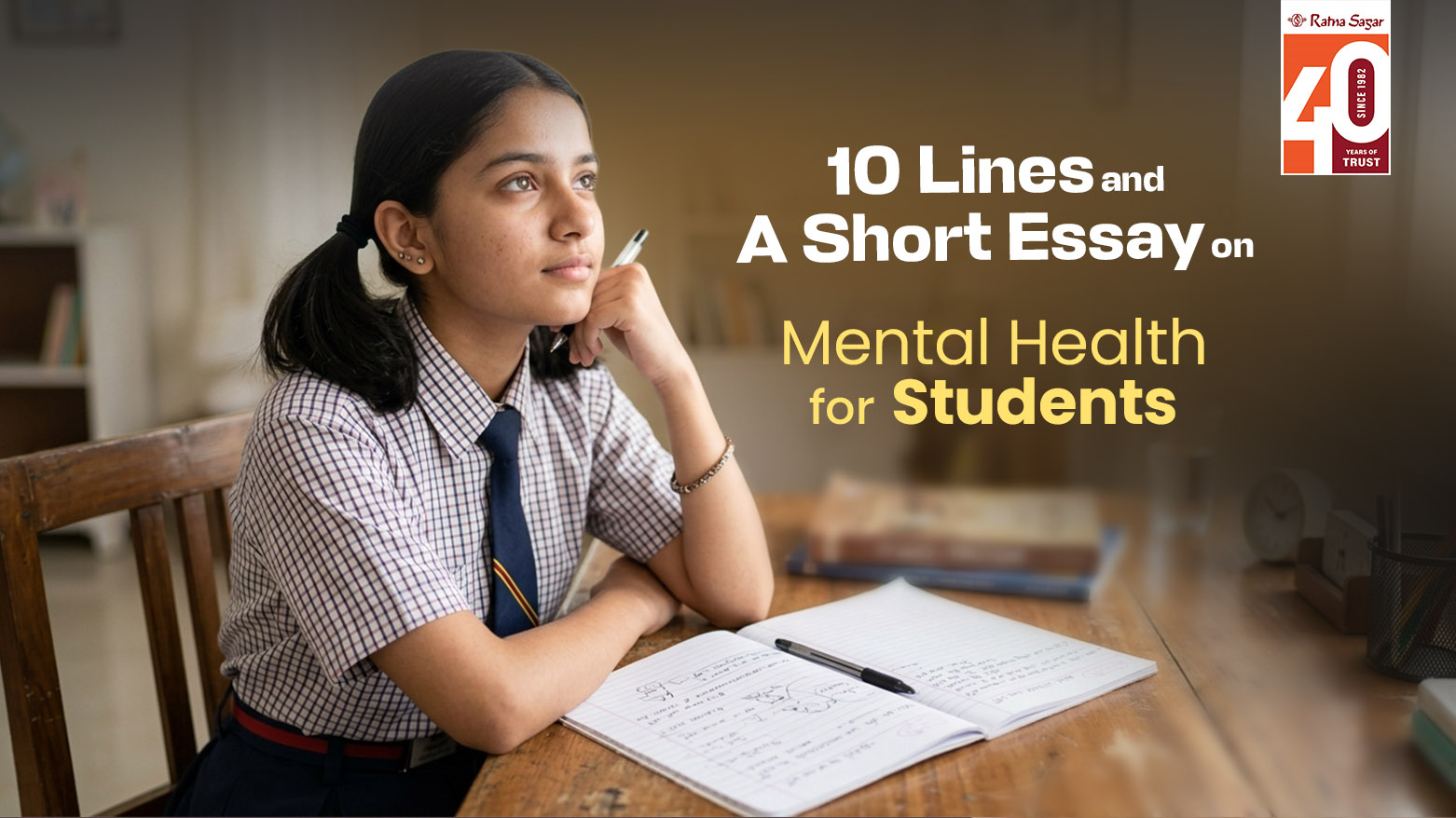
Play-Based Learning vs Traditional Teaching: What Indian Research and NCF 2022 Say
Walk into a traditional nursery classroom in India and you'll likely see rows of children copying letters into notebooks, reciting tables aloud, or completing homework for nursery class the night before. Walk into a play-based classroom and you'll see something very different — children building with blocks, sorting objects by colour, drawing stories and learning through doing.
Both approaches claim to prepare children for life. But what does the evidence actually say? And more importantly, what does India's own National Curriculum Framework (NCF 2022) recommend?
What Is Play-Based Learning, Really?
Play-based learning isn't about letting children run around without structure. It is a carefully designed approach where learning goals are embedded within activities that children find naturally engaging. Counting pebbles teaches mathematics for nursery class. Pretend play builds language. Building a tower develops spatial reasoning and early engineering thinking.
This approach recognises that children under the age of eight learn best through direct experience — touching, moving, imagining and experimenting — rather than through passive instruction or memorisation.
What Indian Research Tells Us
Indian educational researchers have been documenting the limitations of rote-based early education for decades. Studies from NCERT and independent academics consistently show that children who enter formal schooling too early — with heavy focus on writing, worksheets and test preparation — often show higher anxiety, reduced curiosity and weaker problem-solving skills by Class 3.
A 2019 field study across government preschools in Maharashtra found that children in activity-based classrooms demonstrated better vocabulary, stronger peer interaction and more confidence during assessments compared to peers in drill-based settings. The findings weren't surprising to early childhood educators — but they were important for policymakers to hear.
Research also highlights a deeper concern. When the preschool curriculum focuses heavily on "academic" skills too early, children from lower-income households — who may not have books, drawing tools, or educational support at home — are disproportionately disadvantaged. Play levels the field in ways worksheets often cannot.
NCF 2022: A Clear Shift in Direction
The National Curriculum Framework for Foundational Stage (NCF-FS 2022) is perhaps the clearest official signal India has ever sent about early childhood education. Developed under the NEP 2020 framework, it firmly repositions play as the primary vehicle for learning in the 3–8 age group.
Key recommendations from NCF 2022 include:
- Learning through play, art, stories and movement — not rote repetition
- Reducing emphasis on formal writing before children are developmentally ready
- Integrating home languages and cultural contexts into learning
- Focusing on competencies (curiosity, communication, collaboration) over content coverage
- Encouraging teachers to observe and guide rather than instruct and evaluate
NCF 2022 explicitly states that the nursery class curriculum syllabus should prioritise experiential learning, joyful discovery and social development. The framework pushes back against the pressure to "accelerate" children into academic readiness before they are cognitively or emotionally prepared.
Importantly, the CBSE Nursery Syllabus 2025-26 also reflects these shifts — with updated guidelines asking schools to reduce written tasks and increase hands-on activities across subjects, including early number work and language exposure.
The Pressure Parents and Schools Face
Despite policy progress, on-the-ground reality is complex. Parents — especially in urban India — often equate rigorous homework and filled notebooks with "good schooling." Schools feel this pressure and respond by loading nursery children with worksheets, even when educators privately know it isn't developmentally appropriate.
This is where curriculum design becomes critical. A thoughtfully designed preschool curriculum acts as a bridge — it reassures parents that children are learning while ensuring that learning actually happens through the right methods.
Where Calyx Gets It Right
This tension between parent expectations and child-centred pedagogy is exactly what the Calyx Curriculum for Preschool, Nursery & Play School addresses. Built with NCF 2022 alignment at its core, the Calyx curriculum weaves structured learning goals into play-based activities — giving educators a clear framework and giving parents visible evidence of progress.
Rather than flooding three-year-olds with printed pages, Calyx builds early mathematics for nursery class through sorting games, pattern recognition and storytelling with numbers. Language development happens through songs, puppet play and peer conversation — not just tracing alphabets.
The curriculum is structured enough to give teachers confidence and flexible enough to respect each child's natural pace. It's the kind of design NCF 2022 envisions but rarely sees executed well.
You can explore more at calyx
So, Which Approach Wins?
The honest answer is: it was never a fair competition.
Traditional rote teaching in early childhood produces short-term results that look impressive in a notebook but leave gaps in deep understanding, creativity and love of learning. Play-based learning, when properly structured and curriculum-backed, builds the foundations that make children genuinely capable — not just compliant.
Indian research supports this. NCF 2022 mandates it. And children, when given the choice, vote with their feet every single time.
The goal of early education was never to fill notebooks. It was always to fill minds.
Choosing the right school for your child starts with understanding what happens inside the classroom. Look for a school whose curriculum reflects joy, curiosity and intention — not just completed homework sheets.
Recent Posts
Planning a Picnic: Class 1 English Learning
13/10/2026
International Day of the Girl Child: 10 Lines & Essay
09/10/2026
R K Narayan Birth Anniversary: Malgudi, Books & Legacy
06/10/2026
Gandhi Jayanti: Truth, Non-Violence and Its Relevance Today
01/10/2026
Earth and Its Shapes: Facts for Kids | Classes 2–4
24/09/2026
International Sign Language Day: 10 Lines & Short Essay
18/09/2026Recommended Books