Constitution Day 2026 (Samvidhan Divas): History & Importance
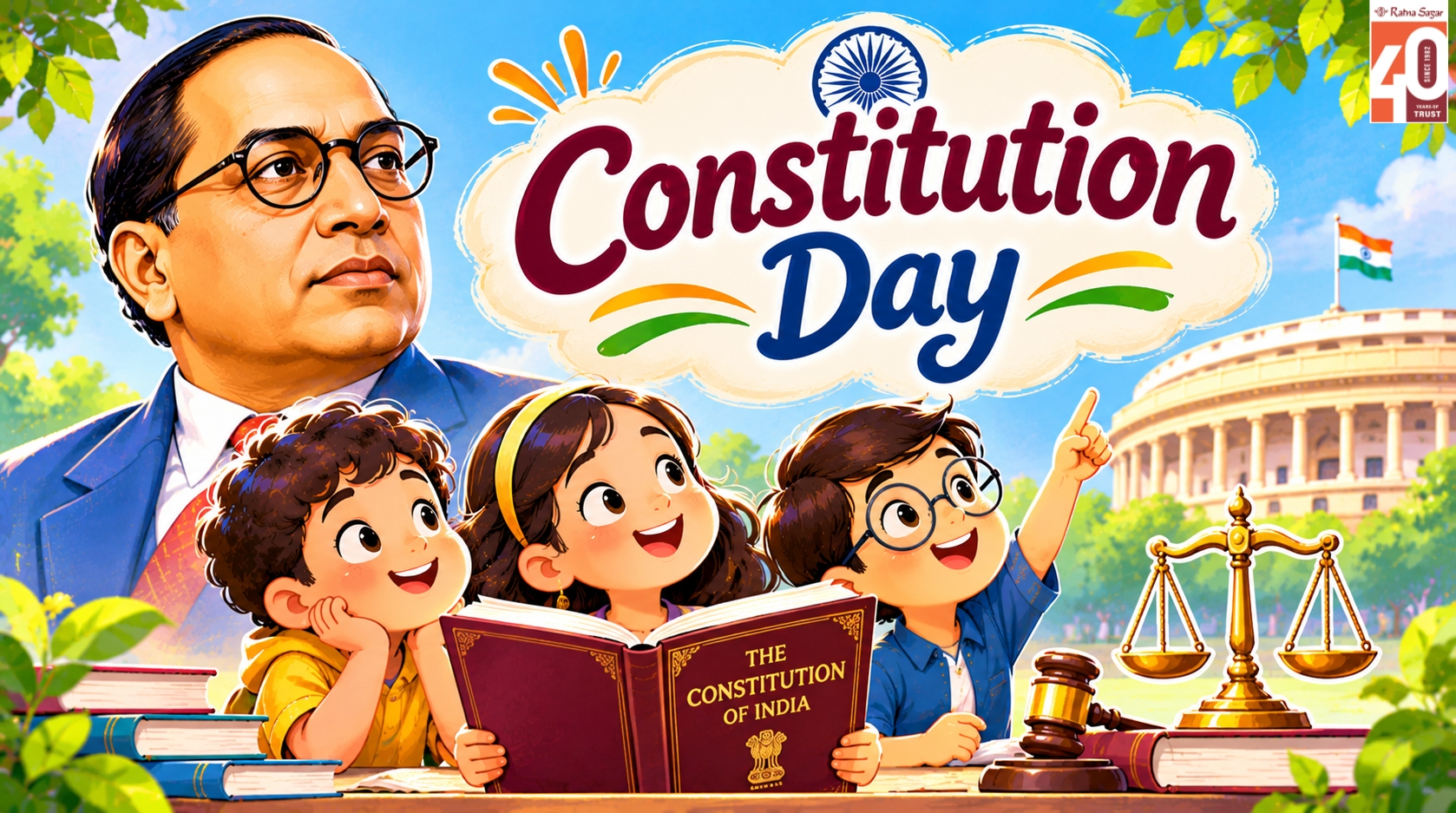
Constitution Day 2026: Celebrating the Values That Unite India
Imagine a school without rules. What would happen if everyone could do whatever they wanted? There might be confusion, disagreements and unfair treatment. Just as schools need rules to function smoothly, countries need laws and principles to ensure fairness, equality and justice.
In India, these important principles are found in the Constitution of India.
Every year, 26 November is celebrated as Constitution Day, also known as Samvidhan Divas. This special occasion reminds us of the values that guide our nation and the responsibilities we share as Indian citizens.
As we celebrate Constitution Day 2026, let us explore the history of the Indian Constitution, the people who helped create it and why its principles remain important today.
What Is Constitution Day and Why Is It Celebrated?
Constitution Day of India is observed annually on 26 November to commemorate the adoption of the Indian Constitution by the Constituent Assembly on 26 November 1949.
However, the Constitution came into full effect on 26 January 1950, the day India became a republic.
This is why India celebrates two important national occasions:
- 26 November – Constitution Day: Marks the adoption of the Constitution.
- 26 January – Republic Day: Marks the day the Constitution came into effect.
Before 2015, 26 November was also observed as Law Day in India. In 2015, the Government of India officially designated the date as Constitution Day to promote awareness of constitutional values.
The occasion encourages citizens, especially students, to understand their rights, respect others and contribute towards a fair and responsible society.
History of the Indian Constitution
After gaining independence on 15 August 1947, India needed a Constitution that would establish the principles of its government and protect the rights of its people.
The responsibility of preparing this document belonged to the Constituent Assembly, which first met on 9 December 1946.
Its members discussed several important questions, including how India should be governed, how citizens' rights should be protected and how equality could be promoted.
After nearly three years of discussions and careful planning, the Constitution was adopted on 26 November 1949.
The Indian Constitution established the foundation of the world's largest democracy, ensuring that the country would be governed according to constitutional principles rather than the wishes of any single individual.
Dr. B.R. Ambedkar: The Architect of the Indian Constitution
One of the most important personalities associated with Constitution Day is Dr. Bhimrao Ramji Ambedkar, popularly known as Babasaheb Ambedkar.
He served as the Chairman of the Drafting Committee of the Constituent Assembly and played a leading role in preparing the Constitution.
Dr. Ambedkar strongly believed in equality, education, social justice and human dignity. He worked to create a constitutional framework that would protect citizens' rights and oppose discrimination.
His contributions earned him recognition as the chief architect of the Indian Constitution.
For students, Dr. Ambedkar's life offers an important lesson: education, determination and courage can help bring positive change to society.
Understanding the Preamble of the Constitution
The Preamble of the Constitution is its introductory statement. It explains the ideals and objectives upon which the Indian Republic is based.
It begins with three powerful words:
"WE, THE PEOPLE"
These words remind us that the authority of the Constitution comes from the people of India.
The Preamble describes India as a sovereign, socialist, secular, democratic republic and highlights four essential values:
1. Justice
Justice means ensuring fairness and protecting people from discrimination.
For students, this means treating classmates fairly and standing against bullying.
2. Liberty
Liberty means freedom of thought, expression, belief, faith and worship.
It teaches us that people can have different opinions and beliefs while respecting one another.
3. Equality
Equality means that everyone deserves equal status and opportunities.
In school, this means including everyone in activities, regardless of their background.
4. Fraternity
Fraternity means brotherhood, mutual respect and a sense of unity.
It encourages us to care for others and celebrate India's diversity.
Together, these values help build a peaceful, inclusive and democratic nation.
Fundamental Rights and Duties: What Students Should Know
The Indian Constitution provides Fundamental Rights that help protect the freedom and dignity of individuals.
These include the Right to Equality, Right to Freedom, Right against Exploitation, Right to Freedom of Religion, Cultural and Educational Rights, and Right to Constitutional Remedies.
Along with rights, citizens also have Fundamental Duties.
These duties encourage us to respect the Constitution, protect the environment, preserve India's cultural heritage and promote harmony.
Students can practise these responsibilities by keeping their surroundings clean, respecting national symbols, helping others and treating everyone with kindness.
Being a responsible citizen begins with small, meaningful actions.
How Is Constitution Day Celebrated in Schools?
Constitution Day of India 2026 offers students an opportunity to learn about democracy through engaging activities.
Schools can organise:
- Preamble Reading: Students read the Preamble together and discuss its meaning.
- Constitution Quiz: Interactive questions about Dr. B.R. Ambedkar, the Constituent Assembly and India's democracy.
- Poster-Making Competitions: Creative posters highlighting justice, liberty, equality and fraternity.
- Role-Play Activities: Students recreate discussions from the Constituent Assembly.
- Classroom Discussions: Teachers encourage students to share examples of fairness, freedom and responsibility.
These activities help children understand that constitutional values are not limited to textbooks. They are reflected in everyday decisions.
Learning Constitutional Values with Ratna Sagar
Understanding the Constitution is an important part of social science and civic education.
At Ratna Sagar, learning goes beyond remembering facts. It also involves developing awareness, curiosity and responsible thinking.
Through educational resources and subjects such as History, Civics and Social Science, Ratna Sagar supports students in exploring India's democratic institutions, national heritage and responsibilities as citizens.
Students and teachers can explore educational books and resources through the Ratna Sagar Book Catalogue.
By connecting classroom learning with real-life examples, students can understand how constitutional values shape their everyday experiences.
Conclusion: The Constitution Belongs to Every Indian
Constitution Day 2026 is more than a celebration of a historic document. It is a reminder of India's commitment to democracy, equality, freedom and justice.
The Constitution guides our nation, protects our rights and reminds us of our responsibilities towards others.
As students and future citizens, we can honour its values by being fair, respectful, responsible and kind.
This 26 November, let us remember the contributions of Dr. B.R. Ambedkar and the members of the Constituent Assembly, and promise to uphold the principles of our Constitution.
A stronger India begins with informed, responsible and compassionate citizens.
Keep learning, keep questioning and keep growing with Ratna Sagar.
Recent Posts
Constitution Day 2026 (Samvidhan Divas): History & Importance
28/11/2026.jpg)
National Milk Day 2026: Celebrating the Birth Anniversary of Dr. Verghese Kurien
27/11/2026
The Pencil Story: A Moral Story for Kids
24/11/2026
Guru Nanak Jayanti 2026: Date, Significance & Celebrations
20/11/2026
Chhath Puja: Significance, Traditions and Lessons Children Can Learn
17/11/2026
Children's Day 2026: Importance, History & Fun Activities
12/11/2026
Bhai Dooj: Celebrating the Special Bond Between Siblings
10/11/2026
National Education Day 2026: Importance of Education in India
10/11/2026
Diwali: Festival of Lights, Stories, Traditions & Activities for Kids
06/11/2026
C. V. Raman Birth Anniversary: Celebrating India's Great Scientist and His Discoveries
05/11/2026
Unity in Diversity: India's Strength, Culture & Unity
03/11/2026Recommended Books