10 Lines & Essay on Swami Dayanand Saraswati Birth Anniversary
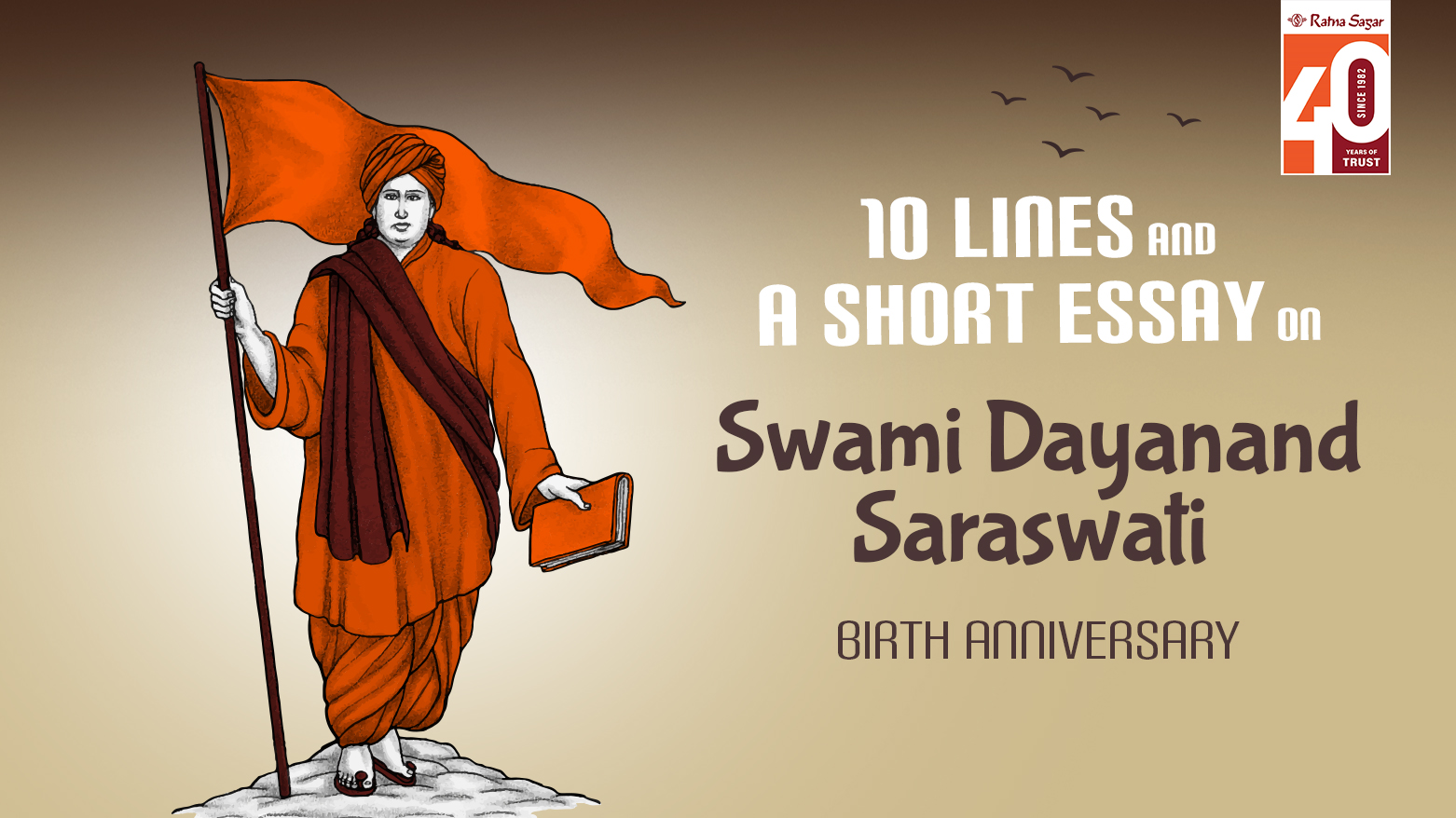
Birth Anniversary of Swami Dayanand Saraswati
Swami Dayanand Saraswati, one of India's greatest social and religious reformers, was born on February 12, 1824, in Tankara, Gujarat. His birth anniversary is celebrated with reverence across India, commemorating his immense contributions to social reform, women's empowerment and the revival of Vedic wisdom. This article presents 10 lines and a short essay on the Birth Anniversary of Swami Dayanand Saraswati to help students understand his remarkable legacy.
10 Lines on Swami Dayanand Saraswati Birth Anniversary
- Swami Dayanand Saraswati was born on February 12, 1824, in Tankara, Gujarat, during the Maha Shivaratri festival.
- He founded the Arya Samaj in 1875, a reform movement that promoted Vedic teachings and social equality.
- His birth anniversary is celebrated annually to honor his contributions to Indian society and religious reform.
- Swami Dayanand advocated for women's education and their right to study the Vedas at a time when it was revolutionary.
- He strongly opposed idol worship, caste discrimination, child marriage and other social evils prevalent in 19th-century India.
- His famous slogan "Back to the Vedas" inspired millions to return to the original teachings of ancient Indian scriptures.
- He authored "Satyarth Prakash" (The Light of Truth), which remains one of the most influential books on Vedic philosophy.
- Swami Dayanand promoted Hindi as a national language and encouraged education in Indian languages.
- Schools and educational institutions organize special programs on his birth anniversary to spread awareness about his teachings.
- His legacy continues to inspire social reformers and educationists working toward building an equitable society.
Short Essay on Birth Anniversary of Swami Dayanand Saraswati
Introduction
The birth anniversary of Swami Dayanand Saraswati, observed on February 12 each year, marks the commemoration of a visionary leader who transformed Indian society through his progressive ideas and unwavering commitment to truth. Born as Mool Shankar Tiwari in 1824, he renounced worldly life to become one of India's most influential spiritual and social reformers. This essay on Swami Dayanand Saraswati Birth Anniversary explores his life, teachings and enduring impact on modern India.
Early Life and Spiritual Journey
Swami Dayanand Saraswati's transformation from Mool Shankar to a great reformer began with a personal tragedy. Witnessing the death of his younger sister and experiencing disillusionment during a Maha Shivaratri vigil, he questioned traditional religious practices. At the age of 21, he left home in search of truth and spent years studying under various gurus, eventually mastering the Vedas under Swami Virajananda in Mathura.
Founding of Arya Samaj
In 1875, Swami Dayanand established the Arya Samaj in Mumbai, a socio-religious reform movement that became a catalyst for change in Indian society. The organization was built on ten fundamental principles emphasizing monotheism, rejection of idol worship and the authority of the Vedas as the ultimate source of knowledge. Arya Samaj established schools, colleges and orphanages, spreading education and social awareness throughout India.
Social Reforms and Contributions
Swami Dayanand's birth anniversary reminds us of his tireless efforts to eradicate social evils. He championed women's rights, advocating for their education and equal participation in religious ceremonies. He vehemently opposed the caste system based on birth, arguing that caste should be determined by one's actions and qualities rather than heredity. His stance against child marriage, sati (widow burning) and untouchability was revolutionary for his time.
He promoted widow remarriage and fought against superstitions that had crept into Hindu practices. His progressive views on social equality laid the groundwork for future reform movements and influenced leaders like Lala Lajpat Rai, Swami Shraddhanand and even Mahatma Gandhi.
Literary Contributions
"Satyarth Prakash" (The Light of Truth), written in Hindi, remains Swami Dayanand's most celebrated work. This comprehensive text critiques various religious beliefs and social practices while presenting his vision of a reformed society based on Vedic principles. He also wrote several other books and commentaries on Vedic texts, making ancient wisdom accessible to common people. His emphasis on using Hindi and regional languages for education helped democratize knowledge.
Educational Legacy
Education was central to Swami Dayanand's reform agenda. He believed that true knowledge could only come from studying the Vedas in their original Sanskrit form, free from later interpolations and misinterpretations. The Arya Samaj established numerous educational institutions, including the renowned DAV (Dayanand Anglo-Vedic) schools and colleges, which continue to provide quality education to millions of students across India.
Relevance in Modern Times
The Birth Anniversary of Swami Dayanand Saraswati serves as an important reminder of values that remain relevant today. His emphasis on scientific thinking, rational inquiry and social equality resonates with contemporary challenges. His teachings on environmental consciousness, derived from Vedic wisdom, align with modern sustainability movements. His advocacy for gender equality and education for all continues to inspire social reformers worldwide.
Conclusion
Swami Dayanand Saraswati's birth anniversary is not merely a ceremonial occasion but a call to action for building a more just and enlightened society. His life exemplifies courage, intellectual rigor and unwavering commitment to truth. By studying 10 lines and a short essay on the Birth Anniversary of Swami Dayanand Saraswati, students can draw inspiration from his teachings and apply his principles of rational thinking, social equality and moral integrity in their own lives. As we commemorate his birth, we must strive to uphold the values he championed and work toward the progressive, educated and equitable society he envisioned.
Looking for more such school essays and study content? Check out the Ratna Sagar Blog.
Recent Posts

10 Lines & Essay on Holi | Ratna Sagar
03/03/2026
10 Lines & Essay on National Science Day | Ratna Sagar
27/02/2026
10 Lines & Essay on International Mother Language Day for Students
20/02/2026
10 Lines & Essay on Sarojini Naidu Birth Anniversary | Women's Day
12/02/2026
10 Lines & Essay on Swami Dayanand Saraswati Birth Anniversary
11/02/2026