10 Lines & Essay on Holi | Ratna Sagar
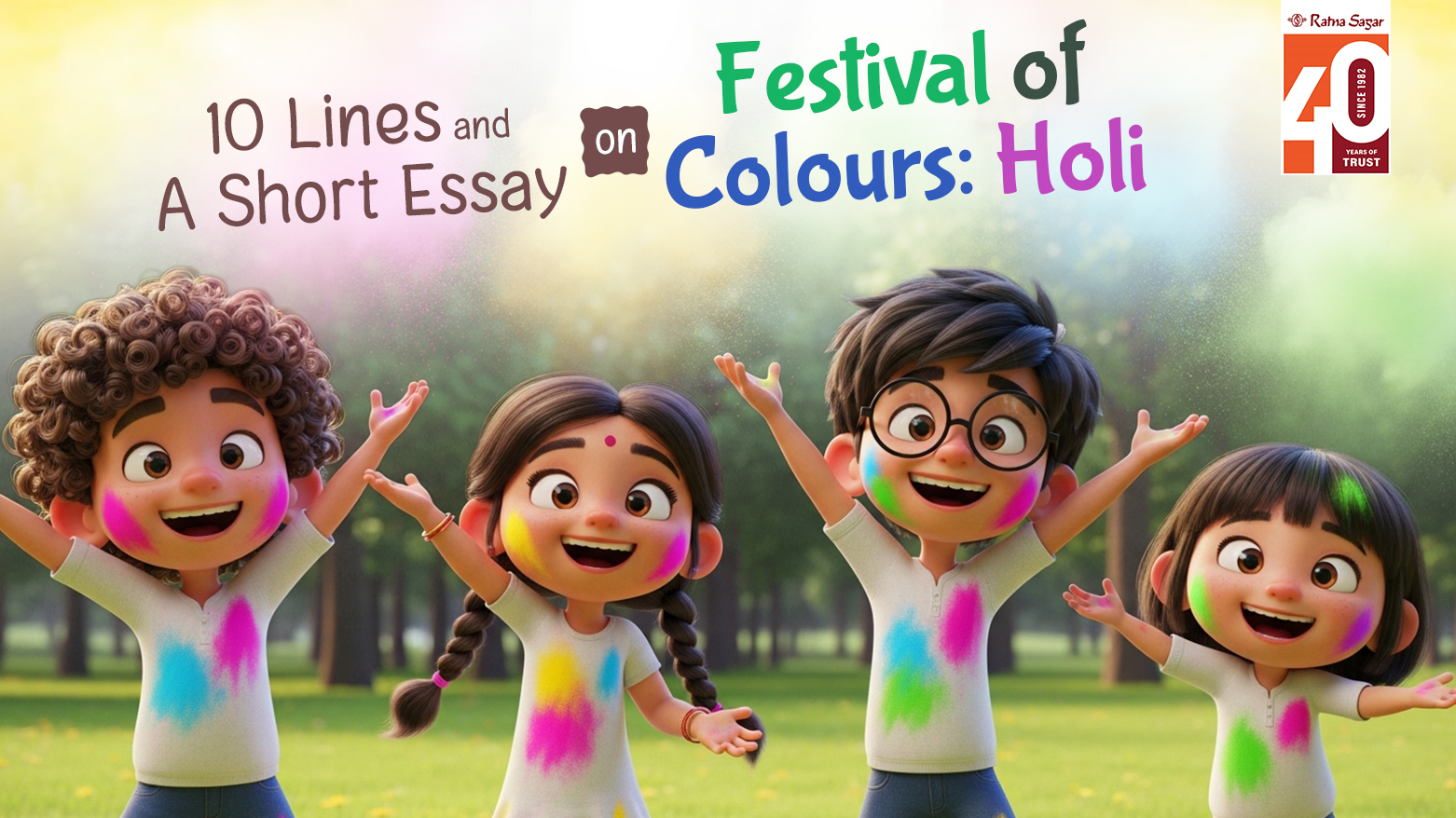
Holi, the vibrant Festival of Colour, bursts onto the scene every spring, filling India with laughter, rainbows of powder, and sweet memories. If you're searching for 10 Lines and A Short Essay on Holi, you've come to the right place! At Ratna Sagar, we love celebrating our rich cultural festivals through fun learning. Whether it's for school projects, homework help, or family storytelling sessions, these simple 10 lines on Holi and a heartfelt short essay on Holi will spark joy. Perfect for kids aged 5-12, this guide draws from our educational books on Indian festivals. Let's dive into the colours!
10 Lines on Holi: Simple and Fun for Kids
Looking for a quick 10 lines and a short essay on Holi? Start with these easy-to-remember lines. They're ideal for primary school essays or class presentations. Recite them with your little ones while playing with eco-friendly colours!
Holi is a colourful Hindu festival celebrated in March, marking the arrival of spring.
It symbolises the triumph of good over evil, commemorating Lord Krishna's playful antics.
People smear gulal (coloured powder) on each other's faces and throw water balloons.
Holika Dahan, the bonfire on the eve of Holi, burns away negativity.
Families gather to eat gujiya, a sweet stuffed with khoya and nuts.
In Mathura and Vrindavan, it's grander with folk dances like Raslila.
Holi promotes forgiveness, new beginnings, and unity among communities.
Eco-friendly celebrations use natural dyes from flowers and herbs.
Children love pichkari sprays and getting drenched in fun.
Wishing everyone a "Happy Holi" spreads cheer far and wide!
These 10 lines on Holi are short, punchy, and packed with facts.
A Short Essay on Holi: Celebrating the Festival of Colour
Now, for a short essay on Holi that goes a bit deeper—perfect for classes 3 to 6. Imagine the air buzzing with excitement as spring whispers through the trees. Holi isn't just a festival; it's a burst of joy that paints our lives in every hue of the rainbow.
Holi falls on the full moon day of Phalgun (February-March), heralding the end of winter and the bloom of flowers. Rooted in ancient myths, it celebrates the victory of Prahlad over the demoness Holika, whose fire failed to harm the devotee of Lord Vishnu. That's why we light the Holika bonfire—symbolising the destruction of evil and the warmth of goodness.
The main day, Dhulandi, is pure magic! Streets turn into playgrounds where friends and strangers alike chase each other with fistfuls of gulal—pink, blue, green, and yellow powders that stick like happy memories. Laughter echoes as water guns squirt coloured water, turning everyone into walking rainbows. In Braj lands like Vrindavan, Krishna's flute calls devotees to dance the Raslila, reenacting divine love stories.
Food is Holi's sweetest sidekick. Thandai, spiked with almonds and cardamom, refreshes the soul. Gujiya, malpua, and papri chaat vanish faster than colours in the rain. It's a time for mending fences—elders forgive grudges, and children forget squabbles.
But Holi teaches more than fun. In today's world, we embrace eco-Holi with herbal colours from tesu flowers and beetroot, protecting our skin and Mother Earth. It unites Hindus, Muslims, Sikhs, and more in shared revelry, reminding us that love knows no boundaries.
Why Holi Matters for Children and Families
Holi isn't only about play; it's a lesson in culture and kindness. Through our 10 lines and a short essay on Holi, kids learn history, empathy, and sustainability.
In schools across India, teachers weave Holi into lessons on Indian heritage. It fosters creativity, just like Ratna Sagar's activity books that blend fun with facts.
Recent Posts
Birth Anniversary of Mahadevi Verma: 10 Lines & Short Essay for Students
25/03/2026
Eid ul-Fitr 2025: History, Significance & 10 Lines Essay on Eid for Students
20/03/2026
Navroz 2026: History, Significance & 10 Lines and A Short Essay on Navroz | Ratna Sagar
19/03/2026
10 Lines and a Short Essay on Ugadi / Gudi Padwa | Festival Essay for Students
18/03/2026
10 Lines & Short Essay on International Women's Day for Students | History & Importance
06/03/2026
10 Lines & Essay on Holi | Ratna Sagar
03/03/2026