10 Lines & Essay on Sarojini Naidu Birth Anniversary | Women's Day
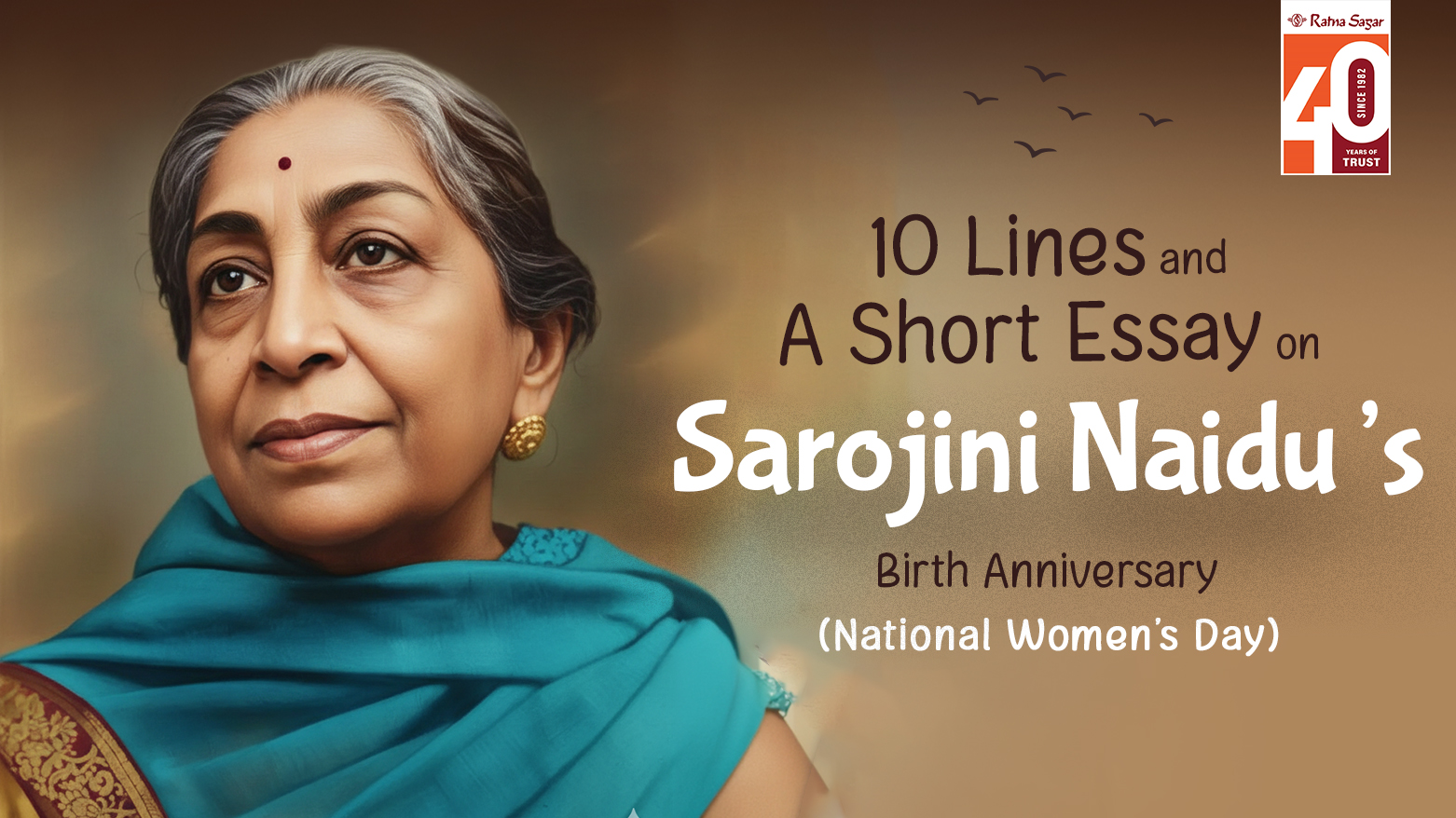
Sarojini Naidu’s Birth Anniversary (National Women’s Day)
February 13 marks the birth anniversary of Sarojini Naidu, one of India's most celebrated freedom fighters, poets and women's rights advocates. This day is also observed as National Women's Day in India, honoring her extraordinary contributions to the nation's independence and women's empowerment. This article provides 10 lines and a short essay on Sarojini Naidu's Birth Anniversary (National Women's Day) to help students understand the legacy of the "Nightingale of India."
10 Lines on Sarojini Naidu's Birth Anniversary (National Women's Day)
- Sarojini Naidu was born on February 13, 1879, in Hyderabad and her birth anniversary is celebrated as National Women's Day in India.
- She was a renowned poet, known as the "Nightingale of India" for her beautiful verses about nature, love and patriotism.
- Sarojini Naidu became the first Indian woman to become the President of the Indian National Congress in 1925.
- She was also the first woman to become the Governor of an Indian state, serving as Governor of Uttar Pradesh from 1947 to 1949.
- National Women's Day on February 13 celebrates her achievements and honors the contributions of women to Indian society.
- She actively participated in the freedom struggle alongside Mahatma Gandhi and championed the causes of women's rights and education.
- Her famous poetry collections include "The Golden Threshold," "The Bird of Time," and "The Broken Wing."
- Sarojini Naidu played a crucial role in the Civil Disobedience Movement and the Quit India Movement.
- Schools and colleges across India organize special programs on National Women's Day to celebrate her legacy and promote gender equality.
- Her life continues to inspire millions of women to pursue education, leadership roles and social activism.
Short Essay on Sarojini Naidu's Birth Anniversary (National Women's Day)
Introduction
Sarojini Naidu's birth anniversary, celebrated as National Women's Day on February 13, represents more than just a tribute to one remarkable woman—it symbolizes the celebration of courage, creativity and the relentless pursuit of equality. Born in 1879 in Hyderabad, Sarojini Naidu broke barriers in multiple domains: literature, politics and social reform. This essay on Sarojini Naidu's Birth Anniversary (National Women's Day) explores her multifaceted personality and lasting impact on Indian society.
Early Life and Education
Sarojini Naidu was born into an enlightened Bengali family in Hyderabad. Her father, Aghore Nath Chattopadhyay, was a scientist and educator who founded the Nizam College in Hyderabad, while her mother, Barada Sundari Devi, was a poet. Sarojini showed exceptional talent from childhood, mastering multiple languages including English, Urdu, Telugu, Persian and Bengali.
At the age of 12, she topped the matriculation examination at Madras University. Her academic brilliance earned her a scholarship to study at King's College, London and later at Girton College, Cambridge. During her time in England, she met prominent literary figures and began her journey as a poet, publishing her first collection, "The Golden Threshold," in 1905.
The Nightingale of India: Her Literary Excellence
Sarojini Naidu earned the title "Nightingale of India" for her lyrical poetry that captured the essence of Indian culture, traditions and natural beauty. Her poems resonated with themes of love, death, nature and patriotism, written in simple yet evocative English that made Indian imagery accessible to global audiences.
Her major works—"The Bird of Time" (1912) and "The Broken Wing" (1917)—showcased her mastery over language and her deep emotional connection to India. Through her poetry, she painted vivid pictures of Indian bazaars, festivals and landscapes, contributing significantly to Indian English literature. Her literary achievements alone would have secured her place in history, but Sarojini Naidu's ambitions extended far beyond the written word.
Champion of India's Freedom Struggle
Sarojini Naidu's transformation from poet to freedom fighter began when she met Mahatma Gandhi and Gopal Krishna Gokhale. Deeply moved by their vision for independent India, she joined the Indian National Congress in 1914 and became one of its most vocal and effective leaders.
She participated actively in the Non-Cooperation Movement, Civil Disobedience Movement and Quit India Movement. Her oratory skills and charisma made her an influential speaker who could mobilize masses. In 1925, she made history by becoming the first Indian woman President of the Indian National Congress, breaking gender barriers in political leadership.
During the Salt Satyagraha in 1930, she marched alongside Gandhi and was arrested multiple times for her participation in various movements. Her courage and dedication earned her immense respect from both leaders and common citizens.
Advocate for Women's Rights
National Women's Day on Sarojini Naidu's birth anniversary particularly honors her tireless work for women's empowerment. She believed that true independence could only be achieved when women had equal rights and opportunities. She advocated for women's education, their right to vote and their participation in public life.
Sarojini Naidu traveled extensively across India, delivering speeches that inspired women to step out of traditional roles and contribute to nation-building. She worked to abolish the purdah system and fought against child marriage and other social evils affecting women. Her appointment as the first woman Governor of Uttar Pradesh in 1947 was a testament to her capabilities and the breaking of the ultimate glass ceiling in Indian politics.
Legacy and National Women's Day Celebration
Sarojini Naidu's Birth Anniversary is celebrated as National Women's Day to acknowledge her pioneering role in empowering Indian women. Educational institutions organize essay competitions, poetry recitations, debates and seminars highlighting her contributions. The day serves as a reminder of the progress women have made and the work that still needs to be done to achieve complete gender equality.
Her life demonstrates that women can excel in multiple fields simultaneously—literature, politics and social activism. She proved that intellect, courage and compassion could coexist and create transformative change in society.
Conclusion
The celebration of 10 lines and a short essay on Sarojini Naidu's Birth Anniversary (National Women's Day) helps students understand that one person's dedication can inspire generations. Sarojini Naidu was not just a freedom fighter or poet; she was a symbol of what women could achieve when given opportunities and support. As we observe National Women's Day on February 13, we honor her memory by continuing her work toward gender equality, education for all and social justice. Her words, "We want deeper sincerity of motive, a greater courage in speech and earnestness in action," remain as relevant today as they were during her lifetime, inspiring us to build a more equitable and just society.
Frequently Asked Questions (FAQs)
Q1. Why is February 13 celebrated as National Women's Day in India?
A: February 13 is celebrated as National Women's Day in India to commemorate the birth anniversary of Sarojini Naidu, who was born on this day in 1879. She was a pioneering freedom fighter, poet and women's rights advocate who broke numerous gender barriers and inspired generations of Indian women.
Q2. What were Sarojini Naidu's major contributions to India's freedom struggle?
A: Sarojini Naidu actively participated in the Non-Cooperation Movement, Civil Disobedience Movement and Quit India Movement. She became the first Indian woman President of the Indian National Congress in 1925, worked closely with Mahatma Gandhi and used her oratory skills to mobilize masses for independence.
Q3. Why was Sarojini Naidu called the "Nightingale of India"?
A: Sarojini Naidu earned the title "Nightingale of India" due to her beautiful lyrical poetry that captured the essence of Indian culture, nature and traditions. Her poems were melodious and evocative, much like a nightingale's song and she is considered one of the finest Indian English poets.
Q4. What are some famous works of Sarojini Naidu?
A: Sarojini Naidu's famous poetry collections include "The Golden Threshold" (1905), "The Bird of Time" (1912) and "The Broken Wing" (1917). Her poems covered themes of love, nature, patriotism and Indian culture, making her an important figure in Indian English literature.
Q5. How can students celebrate National Women's Day meaningfully?
A: Students can celebrate National Women's Day by learning about Sarojini Naidu's life and contributions, participating in essay and poetry competitions, organizing discussions on women's empowerment, reading her poetry and pledging to support gender equality in their daily lives. Schools can arrange special assemblies featuring her speeches and poems to inspire young minds.
Recent Posts
Birth Anniversary of Mahadevi Verma: 10 Lines & Short Essay for Students
25/03/2026
Eid ul-Fitr 2025: History, Significance & 10 Lines Essay on Eid for Students
20/03/2026
Navroz 2026: History, Significance & 10 Lines and A Short Essay on Navroz | Ratna Sagar
19/03/2026
10 Lines and a Short Essay on Ugadi / Gudi Padwa | Festival Essay for Students
18/03/2026
10 Lines & Short Essay on International Women's Day for Students | History & Importance
06/03/2026
10 Lines & Essay on Holi | Ratna Sagar
03/03/2026