Eid ul-Fitr 2025: History, Significance & 10 Lines Essay on Eid for Students
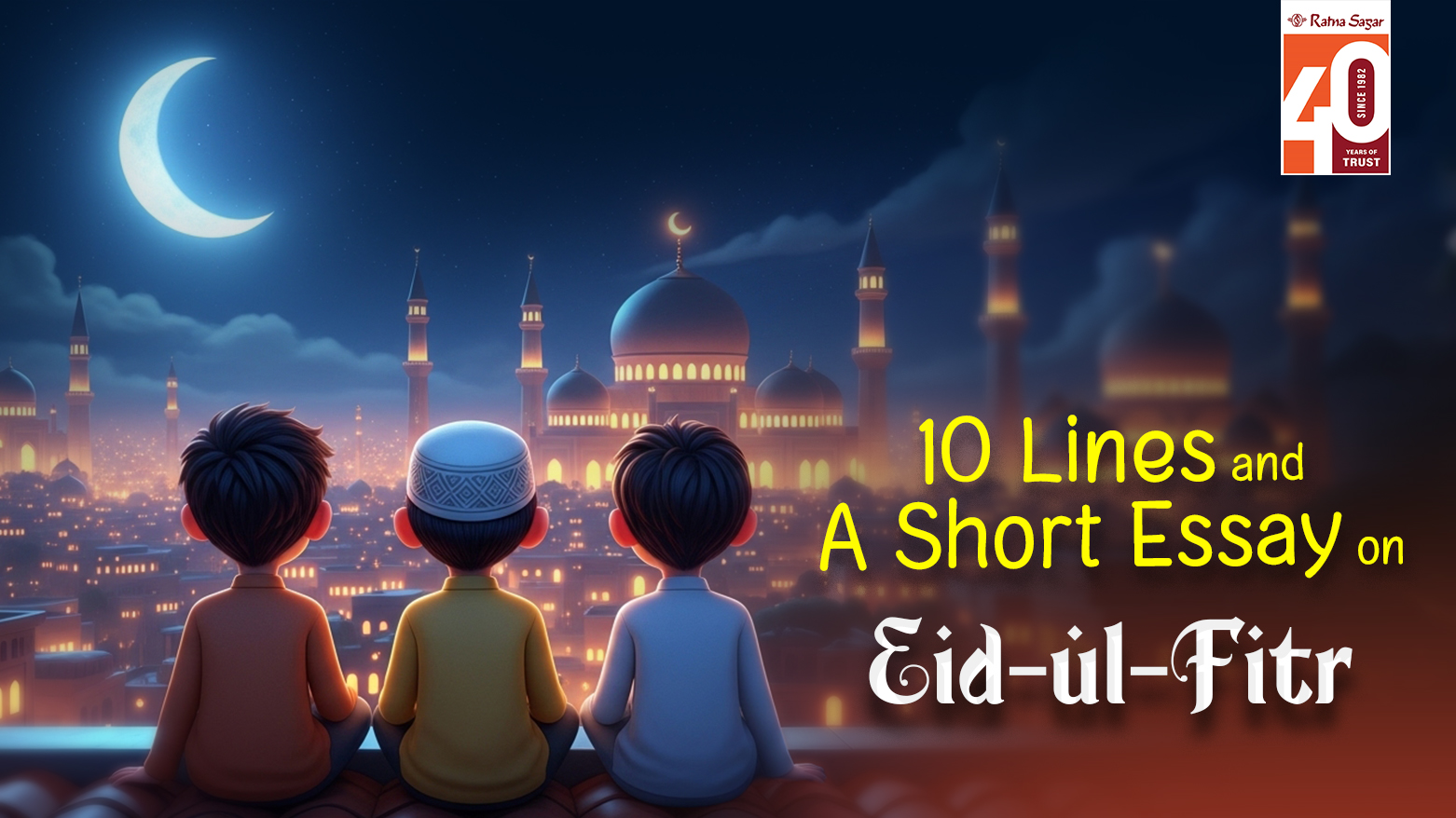
Eid ul-Fitr: History, Traditions, and the Spirit of Togetherness
Few festivals in the world carry the warmth, generosity, and sense of community that Eid ul-Fitr does. Celebrated by over 1.8 billion Muslims around the globe, Eid is a time of gratitude, prayer, feasting, and togetherness. Whether you are a student looking for 10 lines and a short essay on Eid, a teacher preparing classroom material, or a curious reader keen to understand one of the world’s most joyous celebrations, this blog brings you everything you need — in a simple, engaging, and informative way.
What is Eid?
The word "Eid" comes from the Arabic language and means "festival" or "feast." There are two major Eid celebrations in Islam: Eid ul-Fitr and Eid ul-Adha. Eid ul-Fitr, often called the "Festival of Breaking the Fast," is celebrated at the end of Ramadan — the holy month of fasting, prayer, and reflection. Eid ul-Adha, known as the "Festival of Sacrifice," honours the willingness of Prophet Ibrahim (Abraham) to sacrifice his son in obedience to God.
This blog focuses on Eid ul-Fitr, the more widely celebrated of the two, which marks the conclusion of a month-long period of spiritual discipline and devotion. It is a day of immense joy, gratitude to Allah (God), and celebration with family and community.
History and Origin of Eid
The origins of Eid ul-Fitr trace back to the early days of Islam. According to Islamic tradition, the Prophet Muhammad (Peace Be Upon Him) instituted Eid ul-Fitr after migrating from Mecca to Medina in 622 CE. The Prophet observed that the people of Medina had two days of festivity and declared that Allah had replaced those days with two better days — Eid ul-Fitr and Eid ul-Adha.
The first Eid prayer is believed to have been offered by the Prophet himself in 624 CE, following the Battle of Badr. Since then, Eid has been an integral part of the Islamic calendar, observed on the first day of Shawwal — the month that follows Ramadan. The sighting of the new moon marks the end of Ramadan and the beginning of Eid celebrations.
Over the centuries, Eid traditions have evolved and absorbed local customs across different regions, making each country’s celebration uniquely flavoured while retaining the core spirit of faith, gratitude, and community.
How is Eid Celebrated in India?
India is home to one of the largest Muslim populations in the world, and Eid celebrations here are a spectacular blend of devotion, culture, and festivity. From the lanes of Old Delhi to the shores of Kerala, Eid is celebrated with equal fervour across the country. Here is how the festival typically unfolds:
- Eid Namaz (Prayer): The day begins early with a special congregational prayer called the Eid Namaz or Salat al-Eid, offered at mosques or open grounds called Eidgahs. It is a time of unity, as thousands of people stand shoulder to shoulder in prayer.
- Moon Sighting: The previous evening, families and communities eagerly await the sighting of the crescent moon (Hilal), which officially marks the beginning of Eid.
- New Clothes and Grooming: People wear new clothes, often in traditional styles such as kurta-pyjama for men and salwar-kameez or lehenga for women. Many apply mehndi (henna) and ittar (perfume) as part of the tradition.
- Sewaiyyan and Feasts: Sweet vermicelli cooked in milk and sugar, known as sewaiyyan or sheer khurma, is the quintessential Eid dish. Families also prepare biryani, kebabs, korma, and a variety of sweets.
- Eidi — The Gift of Joy: Elders give younger family members a gift of money or sweets called Eidi, which children eagerly look forward to every year.
- Zakat ul-Fitr (Charity): Before the Eid prayer, Muslims are required to give a form of charity known as Zakat ul-Fitr or Sadaqah al-Fitr, ensuring that even the poor can celebrate the festival.
- Visiting Family and Friends: After prayers and the morning feast, families visit relatives, neighbours, and friends to exchange greetings of ‘Eid Mubarak’ — meaning ‘Blessed Eid.’
10 Lines on Eid
Here are 10 lines and a short essay on Eid for students seeking help with school assignments, speeches, or projects:
- Eid ul-Fitr is one of the most important festivals in Islam, celebrated by Muslims all over the world.
- The word ‘Eid’ means ‘festival’ or ‘feast’ in Arabic, and Fitr means ‘breaking the fast.’
- It is celebrated on the first day of Shawwal, the tenth month of the Islamic lunar calendar.
- Eid marks the end of Ramadan, the holy month of fasting, prayer, and spiritual reflection.
- Muslims begin the day by offering a special prayer called the Eid Namaz at mosques or open grounds.
- Giving charity (Zakat ul-Fitr) before the Eid prayer is an important religious duty observed by all Muslims.
- People wear new clothes, apply mehndi, and greet each other with the words ‘Eid Mubarak.’
- Special dishes like sewaiyyan, biryani, and sheer khurma are prepared and shared on this day.
- Elders give younger family members a gift of money or sweets called Eidi as a token of love and blessings.
- Eid teaches the values of gratitude, generosity, brotherhood, and compassion for all.
A Short Essay on Eid
This short essay on Eid is suitable for students of Classes 3 to 8, and can be used for school projects, morning assemblies, or competitive essays.
Eid ul-Fitr: The Festival of Gratitude and Joy
Eid ul-Fitr is one of the most joyous and widely celebrated festivals in the world. Observed by over 1.8 billion Muslims across the globe, it marks the end of Ramadan — the sacred month of fasting, prayer, and spiritual growth. The word ‘Eid’ means ‘festival’ in Arabic, and ‘Fitr’ means ‘breaking the fast,’ making Eid ul-Fitr a celebration of perseverance, devotion, and gratitude to God.
The festival has its roots in the earliest days of Islam. It was instituted by the Prophet Muhammad (Peace Be Upon Him) and has been celebrated by Muslims for over 1,400 years. Eid begins with the sighting of the new crescent moon, which signals the end of Ramadan. The next morning, Muslims rise early, dress in their finest clothes, and proceed to the mosque or Eidgah for the special Eid prayer.
One of the most beautiful aspects of Eid is the emphasis on charity and giving. Before the prayer, every Muslim who is able to do so must give Zakat ul-Fitr — a form of charitable donation — so that even the poorest members of the community can enjoy the celebration. This act of giving reflects the core Islamic values of compassion and brotherhood.
After the prayers, families come together for a grand feast. The most beloved dish of the day is sewaiyyan — sweet vermicelli cooked in milk, sugar, and dry fruits. Homes are filled with the aroma of biryani, kebabs, and an assortment of sweets. Children receive Eidi — gifts of money or sweets from elders — which makes the day even more magical for young ones.
Eid is not just a religious occasion; it is a celebration of human values — unity, generosity, forgiveness, and love. In India, Eid is celebrated with great enthusiasm across the country, with people of all faiths joining in the spirit of goodwill. It is a festival that reminds us that joy is multiplied when it is shared, and that the greatest gift we can give is kindness.
The Significance of Eid in Modern Times
In today’s fast-paced and often divided world, Eid carries a powerful message of unity. It brings together people from different backgrounds, nationalities, and social classes under one roof — the mosque — to pray, reflect, and celebrate together. The practice of Zakat (giving to the poor) built into the very fabric of Eid serves as a reminder that prosperity should be shared and that no one should be left behind.
In India, Eid is a public holiday and is celebrated not just by Muslims but by people of all communities who join their neighbours and friends in the festivities. It is a shining example of India’s composite culture, where festivals become bridges of understanding and affection across communities.
Interesting Facts About Eid
- Eid ul-Fitr is celebrated on different dates each year because Islam follows the lunar (Hijri) calendar, which is about 11 days shorter than the solar calendar.
- The Eid prayer is considered a Wajib (obligatory) act for all adult Muslims.
- In some countries, Eid celebrations last for three days, not just one.
- The traditional Eid greeting ‘Eid Mubarak’ translates to ‘Blessed Eid’ or ‘Happy Eid.’
- Countries like Indonesia, Pakistan, Bangladesh, and Egypt have some of the largest Eid celebrations in the world, with millions gathering for open-air prayers.
Conclusion
Eid ul-Fitr is far more than a day of feasting and new clothes — it is a profound celebration of faith, gratitude, and human connection. After a month of fasting and self-discipline during Ramadan, Eid arrives like a beautiful sunrise, filling hearts with joy and homes with warmth.
Whether you came here looking for 10 lines and a short essay on Eid, or to deepen your understanding of this magnificent festival, we hope this blog has given you a richer appreciation of Eid ul-Fitr and the values it represents. At Ratna Sagar, we believe that learning about the festivals and traditions of all communities helps young minds grow into compassionate, curious, and open-hearted individuals.
Eid Mubarak to all who celebrate! May this day bring peace, happiness, and countless blessings to you and your family.
Recent Posts
Eid ul-Fitr 2025: History, Significance & 10 Lines Essay on Eid for Students
20/03/2026
Navroz 2026: History, Significance & 10 Lines and A Short Essay on Navroz | Ratna Sagar
19/03/2026
10 Lines and a Short Essay on Ugadi / Gudi Padwa | Festival Essay for Students
18/03/2026
10 Lines & Short Essay on International Women's Day for Students | History & Importance
06/03/2026
10 Lines & Essay on Holi | Ratna Sagar
03/03/2026
10 Lines & Essay on National Science Day | Ratna Sagar
27/02/2026