10 Lines and a Short Essay on Ugadi / Gudi Padwa | Festival Essay for Students
10 Lines and a Short Essay on Ugadi / Gudi Padwa
Celebrating the Hindu New Year with Joy, Tradition and New Beginnings
Spring in India is more than a change of season — it is a reason to celebrate. Ugadi and Gudi Padwa are two names for the same joyous occasion: the Hindu New Year. Observed with great enthusiasm across Maharashtra, Karnataka, Andhra Pradesh and Telangana, this festival marks the beginning of a new lunar calendar year. It is a time for fresh starts, family gatherings and timeless customs passed down through generations.
10 Lines on Ugadi / Gudi Padwa
- Ugadi and Gudi Padwa are celebrated as the Hindu New Year in several states of India.
- The festival falls on the first day of the Hindu month of Chaitra, usually in March or April.
- Gudi Padwa is the name used in Maharashtra, while Ugadi is celebrated in Karnataka, Andhra Pradesh and Telangana.
- "Ugadi" comes from two Sanskrit words — Yuga (era) and Adi (beginning), meaning "the start of a new era."
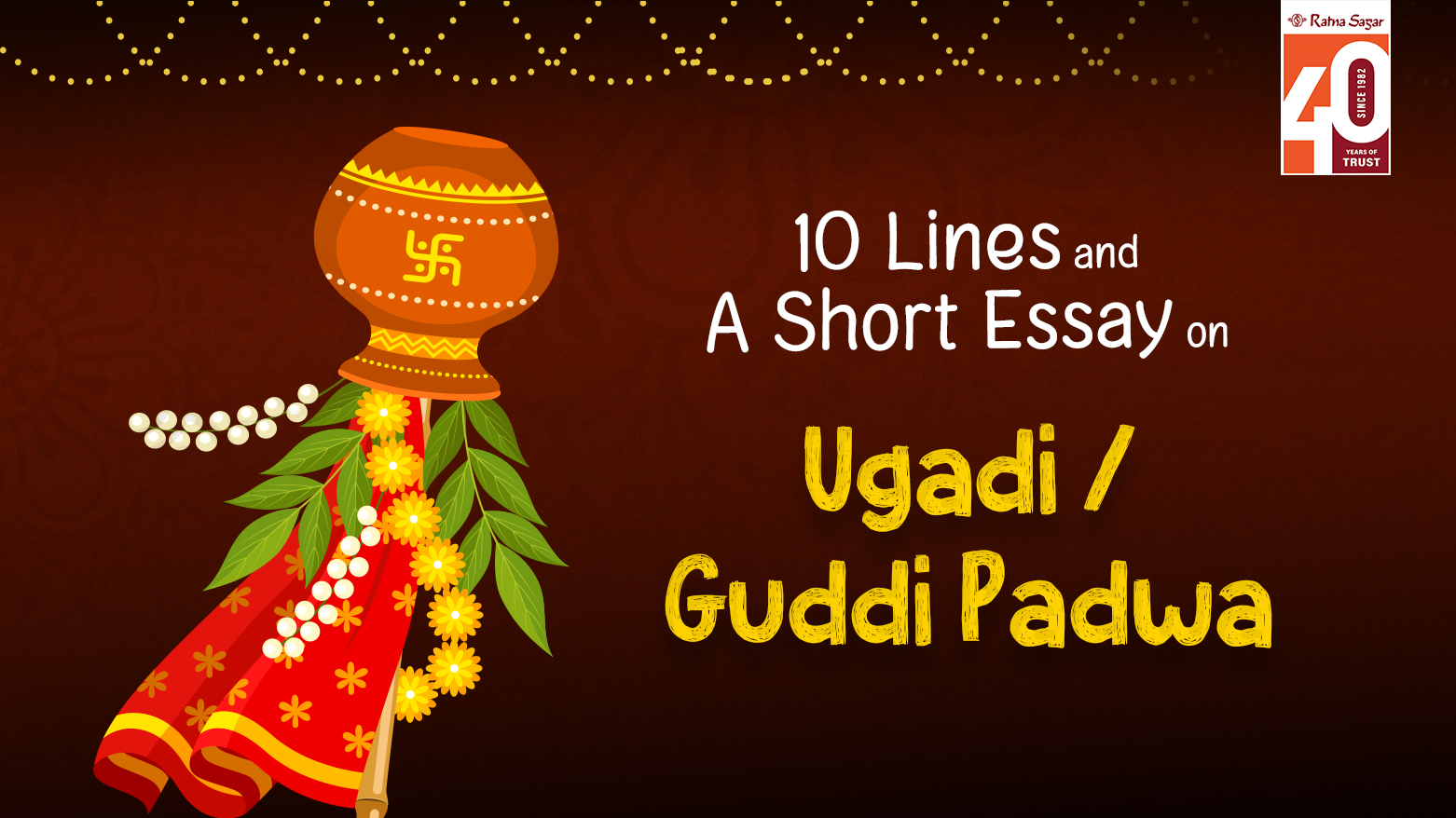
- A Gudi — a bright silk cloth tied to a bamboo stick and topped with a copper pot — is hoisted outside homes in Maharashtra as a symbol of victory and prosperity.
- A special dish called Ugadi Pachadi is made with six distinct flavours — sweet, sour, bitter, salty, spicy and tangy — representing the many emotions of life.
- Homes are cleaned, decorated with mango leaves and adorned with colourful rangoli on this day.
- People wear new clothes, offer prayers and listen to the Panchanga Sravanam — a reading of the year's astrological forecast.
- The festival teaches us to welcome every experience in life — both good and difficult — with equal grace.
- Ugadi and Gudi Padwa remind us that every new year brings with it the hope of happiness, health and success.
A Short Essay on Ugadi / Gudi Padwa
India is a land of festivals and among the most culturally rich is Ugadi — known as Gudi Padwa in Maharashtra. Celebrated on the first day of the Hindu month of Chaitra, this festival ushers in a new year full of hope and happiness. It is one of those rare occasions that blends religious significance with cultural colour, making it special for every member of the family.
Historical and Cultural Significance
According to Hindu tradition, Ugadi is believed to be the day Lord Brahma created the universe. It is also said that the great poet Kalidasa composed his works in honour of this day and that the legendary king Shalivahana began his calendar — known as the Shalivahana Shaka — on this very date. In Maharashtra, the hoisting of the Gudi is linked to the victories of the Maratha king Chhatrapati Shivaji Maharaj, symbolising triumph and good fortune.
How the Festival is Celebrated
Preparations for Ugadi begin days in advance. Houses are scrubbed clean and decorated with mango leaf torans (strings) hung across doorways, signifying auspiciousness and abundance. Intricate rangoli patterns brighten up courtyards and the air fills with the scent of fresh flowers and incense.
On the morning of the festival, families wake up early, take a ritual oil bath and dress in new clothes. In Maharashtra, a Gudi — a bamboo pole draped with a bright silk cloth, adorned with neem leaves, a garland of flowers and a kalash (copper or silver pot) at the top — is raised outside homes and balconies. It faces the sky as a beacon of joy and prosperity.
The most iconic element of Ugadi is Ugadi Pachadi, a chutney made with raw mango, tamarind, jaggery, neem flowers, salt and green chilli. Each ingredient represents a different emotion — from joy and sorrow to anger and surprise. Eating this dish is a gentle reminder that life is a mix of all experiences and we must embrace them all with an open heart.
The day is also marked by the Panchanga Sravanam, where priests read the astrological almanac for the coming year. Families gather to hear predictions about harvests, weather and events — a tradition that connects the community to the cosmos.
Food and Festivities
Beyond Ugadi Pachadi, the festival table is a feast of seasonal delights. In Karnataka, Obbattu (a sweet flatbread stuffed with jaggery and lentils) is a must-have. Maharashtra celebrates with Puran Poli — a rich flatbread with a sweet filling of jaggery and gram flour. Families share meals together, visit temples, exchange sweets with neighbours and spend the day in each other's company.
Ugadi in Schools and Modern Celebrations
In schools across South India and Maharashtra, Ugadi is celebrated with cultural programmes, recitations and rangoli competitions. Children learn about the festival's importance through songs, skits and storytelling. Even in cities, where traditions sometimes fade into the background of busy schedules, Ugadi brings communities together — whether through local processions, cultural events, or simply a shared festive meal.
Conclusion
Ugadi and Gudi Padwa are more than just New Year celebrations — they are a philosophy. The tradition of eating Ugadi Pachadi, with its six contrasting flavours, is a beautiful life lesson: that sweetness and bitterness, joy and sorrow, are all part of the same journey. As the Gudi is raised towards the sky and homes ring with laughter and prayers, we are reminded to welcome the new year — and everything it may bring — with courage, gratitude and a joyful heart.
Recent Posts
Navroz 2026: History, Significance & 10 Lines and A Short Essay on Navroz | Ratna Sagar
19/03/2026
10 Lines and a Short Essay on Ugadi / Gudi Padwa | Festival Essay for Students
18/03/2026
10 Lines & Short Essay on International Women's Day for Students | History & Importance
06/03/2026
10 Lines & Essay on Holi | Ratna Sagar
03/03/2026
10 Lines & Essay on National Science Day | Ratna Sagar
27/02/2026
10 Lines & Essay on International Mother Language Day for Students
20/02/2026