Navroz 2026: History, Significance & 10 Lines and A Short Essay on Navroz | Ratna Sagar
Navroz: History, Traditions, and Significance of the Parsi New Year
Every year, as the world moves through the rhythm of seasons, a joyous and ancient festival lights up the lives of millions — Navroz. Celebrated as the Parsi New Year, Navroz is one of the oldest festivals in the world, steeped in culture, tradition, and deep spiritual meaning. Whether you are a student looking for 10 lines and a short essay on Navroz, a teacher searching for classroom material, or simply a curious reader, this blog offers a complete, engaging, and SEO-friendly overview of everything you need to know about Navroz.
What is Navroz?
Navroz, also spelled Nowruz, Navruz, or Nauroz, comes from the Persian words "Nav" (new) and "Roz" (day) — meaning "New Day." It marks the beginning of the Persian New Year and falls on the spring equinox, usually around March 20 or 21 each year. In India, it is most closely associated with the Parsi community, followers of the ancient Zoroastrian religion who migrated from Persia (modern-day Iran) to the Indian subcontinent over a thousand years ago.
Navroz is not just a festival — it is a celebration of renewal, hope, and the victory of light over darkness. It symbolises the arrival of spring, the season of bloom and beginning, making it one of the most universally resonant festivals across cultures.
History and Origin of Navroz
The origins of Navroz date back more than 3,000 years. According to ancient Persian legend, the festival was first celebrated by the mythical King Jamshid, who is said to have built a magnificent throne and was carried aloft by demons on this day, causing the sun to shine brilliantly upon him — a moment that was celebrated as a new day for the world.
Historically, Navroz was the official new year of several Persian empires, including the Achaemenid, Parthian, and Sassanid dynasties. Even after the Arab conquest of Persia in the 7th century, Navroz survived and continued to be celebrated, transcending religious boundaries to become a shared cultural heritage.
In 2010, UNESCO inscribed Navroz on the Representative List of the Intangible Cultural Heritage of Humanity, recognising its universal significance.
How is Navroz Celebrated in India?
In India, the Parsi community celebrates Navroz with great enthusiasm, especially in Mumbai, Surat, and Pune — cities with a significant Parsi population. Here is how the festival typically unfolds:
Prayers at the Fire Temple (Agiary): Parsis visit their sacred fire temples to offer prayers and seek blessings for the new year.
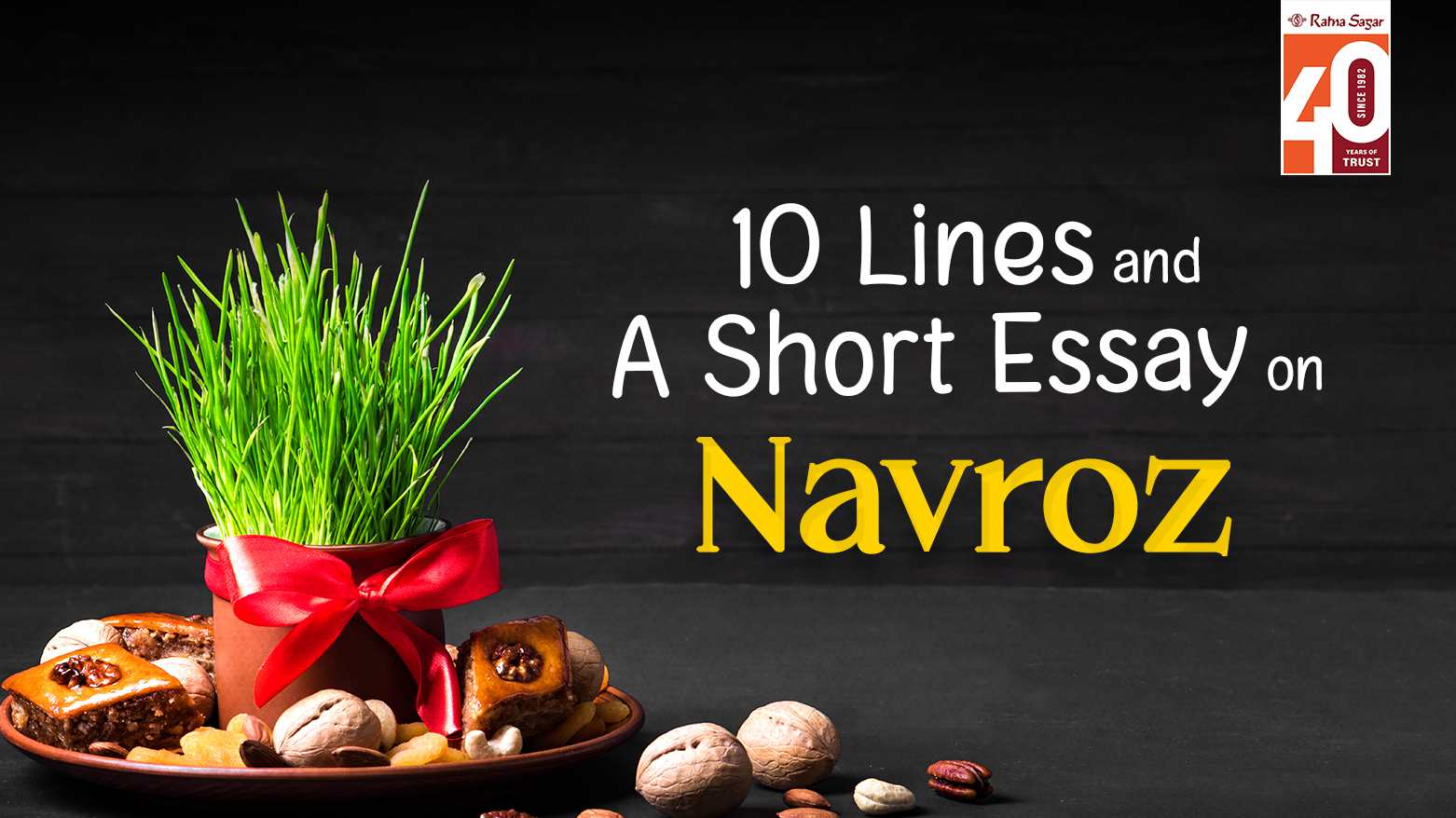
The Haft-Seen Table: Families set up a traditional table display called Haft-Seen, featuring seven symbolic items that begin with the Persian letter ‘S’, including sabzeh (sprouts), seeb (apple), serkeh (vinegar), and more. Each item carries a special meaning related to prosperity, health, and happiness.
Traditional Attire: People dress in white or new traditional clothes, symbolising purity and a fresh start.
Feasts and Sweets: Special Parsi dishes such as sali boti, patra ni machhi, dhansak, and ravo (a sweet semolina pudding) are prepared and shared with family and friends.
Home Decoration: Houses are cleaned thoroughly and decorated with Flowers, especially roses and jasmine, to welcome the new year.
Charitable Acts: Giving to the poor and helping those in need is considered especially auspicious during Navroz.
10 Lines on Navroz
If you are looking for 10 lines and a short essay on Navroz for school assignments or speeches, here is a simple and informative 10-line set on Navroz:
1. Navroz, meaning ‘New Day’ in Persian, is the celebration of the Parsi New Year.
2. It is observed on the spring equinox, usually on March 20 or 21 every year.
3. Navroz is one of the oldest festivals in the world, with a history of over 3,000 years.
4. It is primarily celebrated by followers of the Zoroastrian faith, especially the Parsi community in India.
5. The festival marks the arrival of spring and symbolises renewal, hope, and new beginnings.
6. Parsis visit fire temples to offer prayers and seek blessings from Ahura Mazda (God) on this day.
7. A traditional Haft-Seen table is arranged with seven symbolic items starting with the letter ‘S’.
8. Special Parsi dishes like dhansak, patra ni machhi, and ravo are prepared and enjoyed.
9. Navroz is also celebrated in Iran, Central Asia, Afghanistan, and parts of South Asia.
10. In 2010, UNESCO recognised Navroz as an Intangible Cultural Heritage of Humanity.
A Short Essay on Navroz
This short essay on Navroz is suitable for students of Classes 3 to 8, and can be used for school projects, assemblies, or competitive essays.
Navroz: The Festival of New Beginnings
Navroz, also known as Nowruz, is a beautiful festival celebrated by the Parsi community and millions of people across the world. The word ‘Navroz’ comes from the Persian language and means ‘New Day.’ It marks the beginning of the Persian New Year and is celebrated on the first day of spring, known as the spring equinox, which falls around March 20 or 21 each year.
The festival has a rich history dating back over 3,000 years. It originated in ancient Persia and was celebrated by kings and commoners alike. Today, it is observed in many countries, including India, Iran, Afghanistan, and several Central Asian nations. In India, the Parsi community — descendants of Persian Zoroastrians who settled in India centuries ago — celebrate Navroz with great joy and devotion.
On the day of Navroz, people wake up early, wear new or white clothes, and visit fire temples (called Agiaries) to pray and give thanks. Families come together to set up a special decorative table called the Haft-Seen, which holds seven items beginning with the letter ‘S’ in Persian, each symbolising something positive like health, wealth, or love.
Delicious food plays a big role in Navroz celebrations. Traditional Parsi dishes such as dhansak (lentil and meat curry), patra ni machhi (fish in banana leaf), and ravo (sweet semolina dish) are prepared and enjoyed by families and friends. Homes are decorated with flowers and colourful rangolis to welcome the new year.
Navroz teaches us the values of togetherness, gratitude, and the joy of new beginnings. It reminds us that no matter how cold and dark the winter may be, spring always follows — and with it comes hope, warmth, and light. Recognised by UNESCO as a global cultural heritage, Navroz is truly a festival for all humanity.
The Significance of Navroz in Modern Times
In today’s world, Navroz holds more relevance than ever. As a festival that transcends national borders and unites people across different countries and cultures, it is a symbol of shared humanity. Governments in countries like Iran, Afghanistan, Tajikistan, Kazakhstan, and Kyrgyzstan observe Navroz as a public holiday.
In India, while the Parsi population is relatively small — estimated at around 50,000 to 60,000 — their contribution to art, business, science, and culture has been immense. Great figures like Jamsetji Tata, Field Marshal Sam Manekshaw, and Zubin Mehta are all from the Parsi community. Navroz, therefore, is not just a religious observance but a celebration of a community’s resilience and rich heritage.
Interesting Facts About Navroz:
Navroz has been celebrated continuously for over 3,000 years, making it one of the world’s longest-running festivals.
The United Nations officially recognised March 21 as the International Day of Navroz in 2010.
The Haft-Seen table tradition involves items like sabzeh (sprouts representing rebirth) and sib (apple representing health).
In some communities, a live goldfish in a bowl is placed on the Haft-Seen table, symbolising life.
Navroz is celebrated by over 300 million people worldwide across different cultures and religions.
Conclusion
Navroz is far more than a new year celebration — it is a living testament to the enduring power of culture, community, and hope. From its ancient Persian roots to its vibrant celebrations in India and beyond, Navroz continues to inspire millions with its message of renewal and togetherness.
Whether you came here looking for 10 lines and a short essay on Navroz, or to simply learn more about this magnificent festival, we hope this blog has given you a deeper appreciation of one of the world’s most beautiful celebrations. At Ratna Sagar, we believe that learning about diverse cultures and festivals enriches young minds and fosters empathy and respect for all.
Happy Navroz to all who celebrate! May this new day bring joy, peace, and new beginnings.
Recent Posts
Navroz 2026: History, Significance & 10 Lines and A Short Essay on Navroz | Ratna Sagar
19/03/2026
10 Lines and a Short Essay on Ugadi / Gudi Padwa | Festival Essay for Students
18/03/2026
10 Lines & Short Essay on International Women's Day for Students | History & Importance
06/03/2026
10 Lines & Essay on Holi | Ratna Sagar
03/03/2026
10 Lines & Essay on National Science Day | Ratna Sagar
27/02/2026
10 Lines & Essay on International Mother Language Day for Students
20/02/2026