The Pencil Story: A Moral Story for Kids
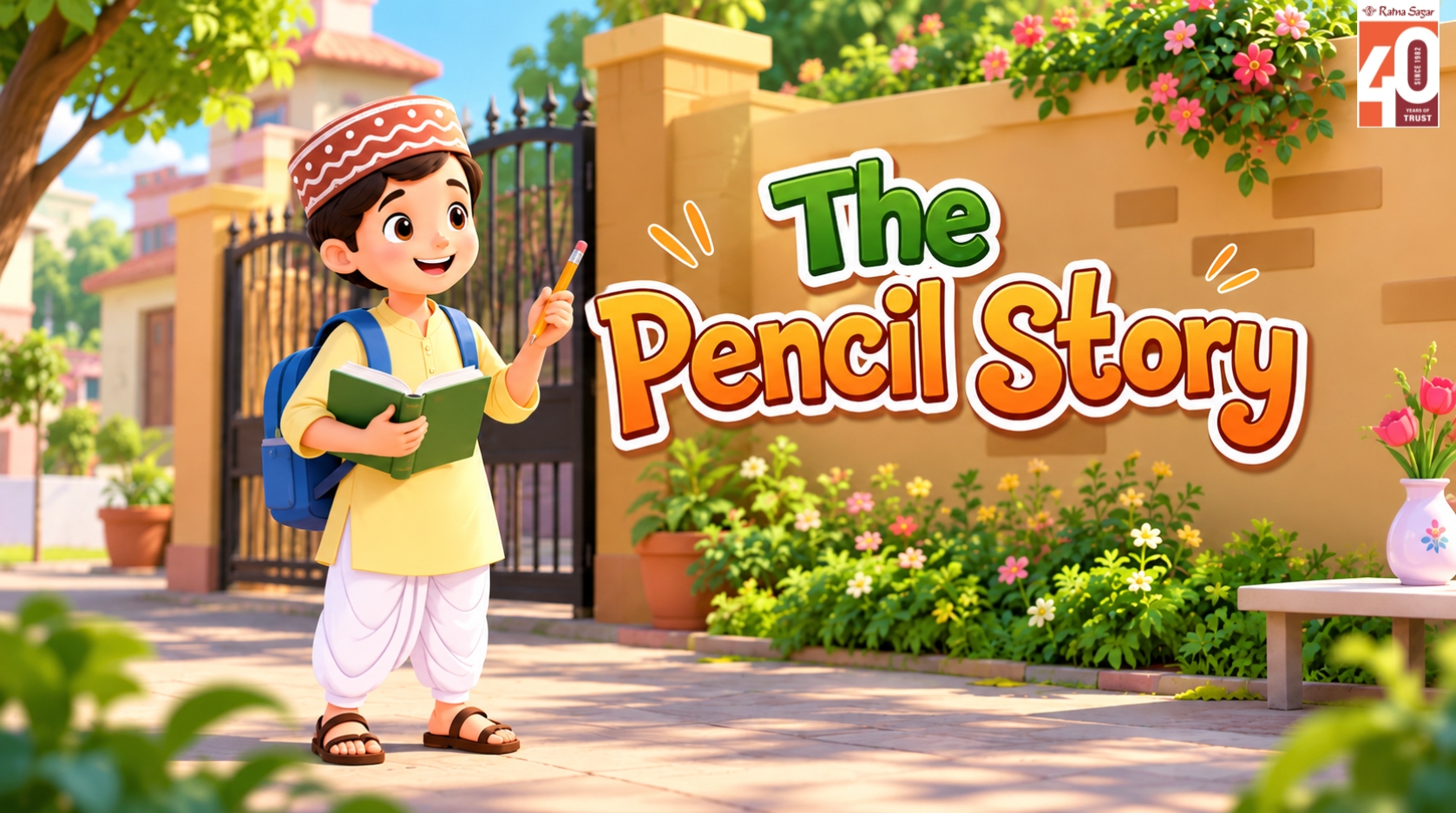
The Pencil Story: A Moral Story for Kids About Kindness and Learning from Mistakes
Have you ever looked at your pencil and wondered what it could teach you?
We use pencils every day to write words, solve sums and draw pictures. But did you know that a simple pencil can also teach us important lessons about life?
The Pencil Story, featured in ICSE Focus English Book 2 by Ratna Sagar, encourages young learners to think about kindness, patience, learning from mistakes and doing good things for others.
Through this English story for kids, children can discover how even the smallest things can teach us something valuable.
So, sharpen your pencils, get comfortable and explore the wonderful lessons hidden inside an ordinary pencil!
The Pencil Story: A Small Pencil with Big Lessons
A pencil may look small and simple, but it has many special qualities.
Think about what happens when you use a pencil. It helps you write beautiful sentences, draw colourful pictures and complete your schoolwork.
Sometimes, its point breaks. Sometimes, you make a mistake while writing. But does that mean your pencil is no longer useful?
Of course not!
You can sharpen it, erase your mistakes and begin again.
The Pencil Story helps us understand that we can do the same in our lives. We may make mistakes, face difficulties or feel upset when something goes wrong. However, with patience and practice, we can always try again.
Just like a pencil, every child has the ability to learn, improve and make a positive difference.
Watch The Pencil Story: An Animated Story for Kids
Stories become even more exciting when we can see the characters, colours and actions come alive!
Watch The Pencil Story, an animated learning video connected with ICSE Focus English Book 2 by Ratna Sagar.
Watch the video here: The Pencil Story | Ratna Sagar
This animated story for kids offers an enjoyable way to explore important values while practising English listening and comprehension skills.
While watching, think about what a pencil teaches us and how you can use those lessons at school and at home.
What Can We Learn from The Pencil Story?
The most interesting part of a moral story is discovering how its message connects with our everyday lives.
Here are five wonderful lessons we can learn from a pencil.
1. Everyone Makes Mistakes
Imagine you are writing a sentence in your notebook and spell a word incorrectly.
What would you do?
You would use an eraser, correct the word and continue writing.
In the same way, making mistakes is a natural part of learning.
Whether you get an answer wrong or forget something important, you can learn from the experience and try again.
Remember: A mistake is not the end. It is a chance to learn something new!
2. Patience Helps Us Improve
A pencil becomes blunt after being used for some time.
To make it useful again, we sharpen it.
Learning a new skill can be similar. Reading difficult words, solving maths problems or learning to ride a bicycle may take several attempts.
You may not succeed immediately, but regular practice can help you improve.
Be patient with yourself and keep trying.
Every small effort brings you closer to your goal.
3. Kindness Makes a Difference
A pencil helps us create wonderful things. We can use it to write a thank-you note, draw a picture for a friend or share a kind message.
Our words and actions can also make others happy.
You can show kindness by helping a classmate, sharing your stationery or comforting someone who feels sad.
Even a small act of kindness can brighten another person's day.
Remember: You do not need to do something big to make someone smile.
4. What Is Inside Matters
A pencil has an important part inside it: the graphite core.
Without this core, it cannot write.
Similarly, what makes you special is not just how you look. Your kindness, honesty, courage and helpful nature are important too.
A caring heart and a willingness to help others can make you a wonderful friend.
5. Everyone Can Leave a Positive Mark
When we write with a pencil, it leaves marks on paper.
Our actions also leave an impression on the people around us.
When we speak politely, help others or share something, we create happy memories.
Try to leave a positive mark wherever you go through your good behaviour and thoughtful actions.
Why Are Moral Stories Important for Children?
Short moral stories are a fun way to learn important values.
They help us understand the difference between good and unkind behaviour. They also encourage us to think about our choices and how those choices affect others.
Reading and watching stories can help children:
Learn new English words and improve vocabulary.
Develop reading and listening skills.
Understand emotions and feelings.
Build confidence while expressing ideas.
Practise kindness, patience and honesty.
Stories also help us connect what we learn in books with situations we experience every day.
Let's Learn Some New Words!
Here are five useful words connected with The Pencil Story.
Try this: Choose any two words and make your own sentences.
Think and Answer: Questions for Young Readers
After watching The Pencil Story, answer these simple questions.
What do you use a pencil for every day?
What can you do when you make a mistake?
Why is patience important when learning something new?
How can you show kindness to a classmate?
What positive difference would you like to make?
You can discuss your answers with your teacher, parents or friends.
Fun Activity: My Pencil Promise
Are you ready for a creative activity?
Take a sheet of paper and draw a large pencil.
Inside your pencil, write three promises you want to follow.
For example:
I will learn from my mistakes.
I will be kind and helpful.
I will keep trying, even when something is difficult.
Colour your pencil and display it near your study table.
Look at it whenever you need a little encouragement!
Learn English with ICSE Focus Book 2 by Ratna Sagar
At Ratna Sagar, learning English is about more than reading words. It is also about understanding stories, sharing ideas and developing communication skills.
The ICSE Focus English series is designed to help students develop listening, speaking, reading and writing skills.
For young learners, ICSE Focus English Book 2 supports reading comprehension, vocabulary development and conversation practice.
Stories such as The Pencil Story give students opportunities to connect language learning with important life values.
Conclusion: Be Like a Pencil and Keep Learning!
The next time you pick up a pencil, remember that it is more than just a writing tool.
It can remind you to correct your mistakes, practise patiently, be kind to others and keep improving.
Every day brings a new opportunity to learn something and do something good.
A small pencil can create a beautiful picture, and a small act of kindness can make someone's day beautiful!
Continue exploring educational stories and learning activities with Ratna Sagar.
Watch The Pencil Story on YouTube and discover how small things can teach us big lessons!
Recent Posts
The Pencil Story: A Moral Story for Kids
24/11/2026
Guru Nanak Jayanti 2026: Date, Significance & Celebrations
20/11/2026
Chhath Puja: Significance, Traditions and Lessons Children Can Learn
17/11/2026
Children's Day 2026: Importance, History & Fun Activities
12/11/2026
Bhai Dooj: Celebrating the Special Bond Between Siblings
10/11/2026
National Education Day 2026: Importance of Education in India
10/11/2026
Diwali: Festival of Lights, Stories, Traditions & Activities for Kids
06/11/2026
C. V. Raman Birth Anniversary: Celebrating India's Great Scientist and His Discoveries
05/11/2026
Unity in Diversity: India's Strength, Culture & Unity
03/11/2026Recommended Books