National Education Day 2026: Importance of Education in India
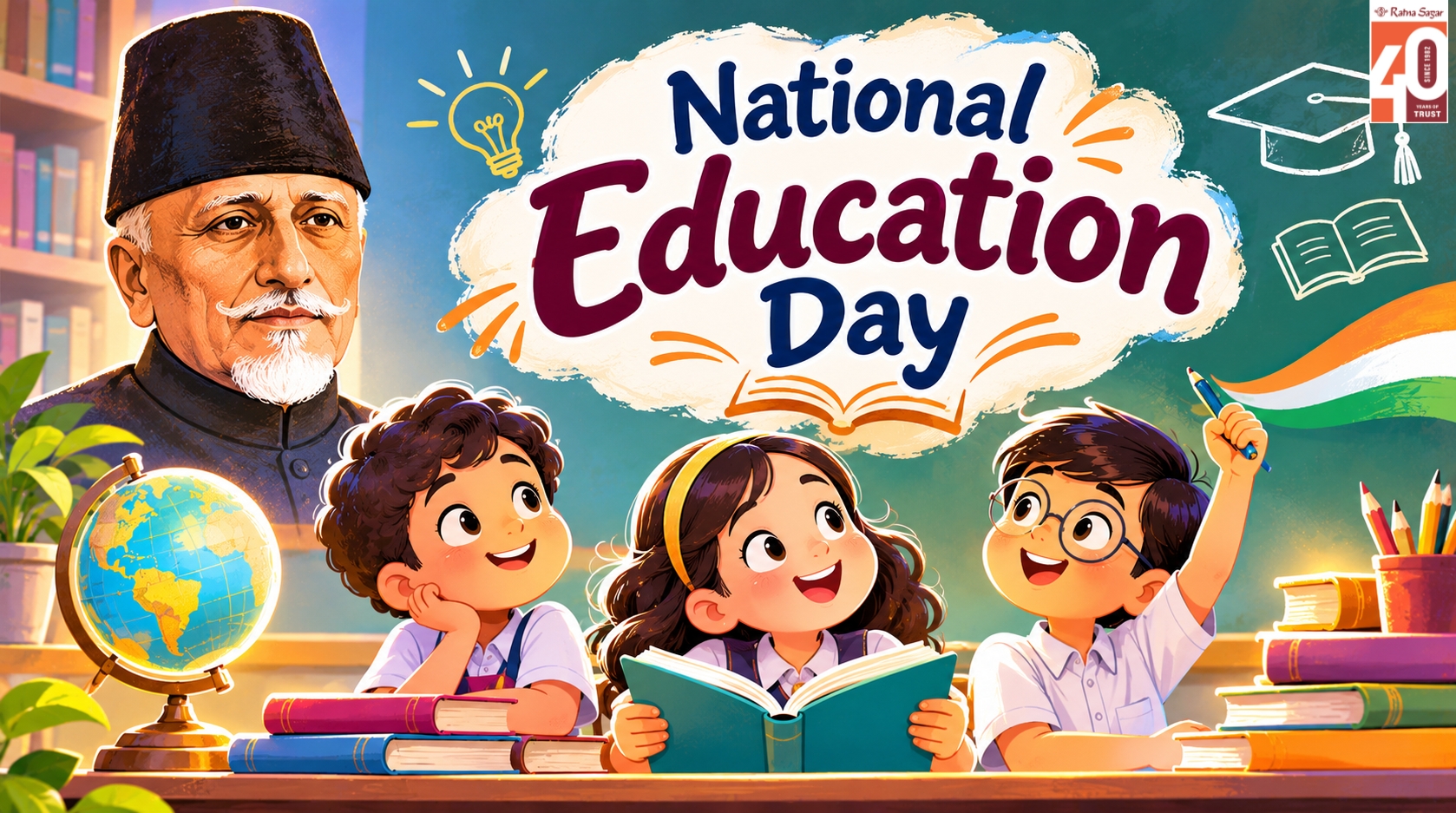
National Education Day: Celebrating the Power of Education
Have you ever wondered how education can change someone's life? Every new word we learn, every question we ask and every discovery we make brings us closer to understanding the world around us. Education helps us dream bigger, think better and build a brighter future.
Every year, India celebrates National Education Day on 11 November to recognise the importance of education and honour one of the country's greatest educational thinkers, Maulana Abul Kalam Azad.
This special day reminds us that education is not just about textbooks, examinations or marks. It is about gaining knowledge, developing skills, understanding values and becoming responsible individuals who can make a positive difference in society.
Why Is National Education Day Celebrated on 11 November?
National Education Day in India is observed every year on 11 November to commemorate the birth anniversary of Maulana Abul Kalam Azad, the first Education Minister of independent India.
Born on 11 November 1888, Maulana Azad was a freedom fighter, scholar, writer and educational reformer. He firmly believed that education was essential for building a strong, independent and progressive nation.
In 2008, the Government of India declared his birth anniversary as National Education Day to honour his remarkable contributions to educational development.
The day encourages schools, teachers and students to reflect on the value of education and the importance of making quality learning opportunities available to everyone.
Who Was Maulana Abul Kalam Azad?
Maulana Abul Kalam Azad played an important role in India's struggle for independence and the development of the Indian education system.
He served as India's first Education Minister from 1947 to 1958. During this period, he worked towards improving educational opportunities and strengthening institutions that would support the country's progress.
He believed that every child deserved access to education, regardless of their background or circumstances.
His contributions included:
Promoting primary education and literacy across India.
Encouraging scientific and technical education.
Supporting educational opportunities for girls and women.
Helping develop important higher education institutions.
Promoting culture, literature and the arts as essential parts of learning.
His efforts helped lay the foundation for institutions such as the University Grants Commission (UGC) and the Indian Institutes of Technology (IITs).
His vision continues to inspire generations of students, teachers and educators.
The Importance of Education in Our Lives
Education is one of the most powerful tools for personal growth and social progress. It helps us understand ourselves, discover our abilities and prepare for future challenges.
But why is education so important?
1. Education Builds Knowledge and Confidence
Learning introduces us to new ideas and experiences. Whether we are solving a mathematics problem, conducting a science experiment or reading a story, every activity adds to our understanding.
As our knowledge grows, we become more confident in expressing our thoughts and making decisions.
2. Education Develops Critical Thinking
Good education teaches us to ask questions, examine information and find solutions.
For example, when students investigate why plants need sunlight or how rainfall occurs, they develop curiosity and scientific thinking.
These skills help us solve problems both inside and outside the classroom.
3. Education Teaches Important Values
The value of education extends beyond academic achievements.
Schools help children understand honesty, kindness, respect, teamwork and responsibility.
Through classroom discussions, group projects and everyday interactions, students learn how to cooperate with others and contribute positively to society.
4. Education Creates Opportunities
Education helps individuals discover their interests and prepare for different careers.
A child who enjoys science may become a researcher. Someone who loves drawing may become an artist or designer. A student interested in helping people may choose teaching or medicine.
Every dream begins with an opportunity to learn.
The Role of Education in Building a Better India
Education plays a vital role in the growth and development of a nation.
When children receive quality education, they develop the knowledge and skills needed to contribute to their communities.
A well-educated society can encourage innovation, improve healthcare, protect the environment and create more opportunities for everyone.
India's educational development also depends on improving literacy and learning, strengthening schools and supporting teachers.
Modern education increasingly focuses on creativity, problem-solving, communication and practical knowledge alongside traditional subjects.
By making education more inclusive and meaningful, the Indian education system can help students become responsible citizens and confident lifelong learners.
Teachers and Students: Partners in the Learning Journey
Behind every successful student is often a teacher who encouraged them to keep trying.
Teachers do much more than explain lessons. They inspire curiosity, guide students through difficulties and help them recognise their strengths.
Students also play an important role in their learning journey.
Asking questions, participating in classroom activities, reading regularly and learning from mistakes are simple habits that support continuous improvement.
When teachers and students work together, classrooms become spaces where curiosity grows and learning becomes enjoyable.
Ratna Sagar: Making Learning Meaningful
At Ratna Sagar, we believe that education should inspire curiosity, encourage creativity and help children become confident learners.
As an educational publisher, Ratna Sagar develops learning resources for different school levels, including English, Mathematics, Science, Social Science and Value Education.
Our educational books are designed to make learning engaging, meaningful and enjoyable, helping students understand concepts while developing essential skills.
Through carefully developed content and learning activities, we aim to support teachers and students in creating enriching classroom experiences.
The spirit of National Education Day reflects our belief that learning should encourage children to explore, question, discover and grow.
Students can explore more educational resources through the Ratna Sagar website and discover interesting articles on the Ratna Sagar educational blog.
How Can Students Celebrate National Education Day?
National Education Day is an opportunity to appreciate learning and make education more meaningful.
Students can celebrate by:
Reading something new: Explore a book that introduces an unfamiliar subject.
Thanking a teacher: Express gratitude to someone who has inspired your learning.
Sharing knowledge: Help a friend understand a challenging topic.
Participating in activities: Join quizzes, debates, storytelling sessions or essay-writing competitions.
Setting learning goals: Choose a new skill or subject to explore.
Even small actions can create a lifelong love for learning.
Conclusion: Education Is the Key to a Brighter Tomorrow
National Education Day reminds us that learning is a lifelong journey filled with possibilities.
Maulana Abul Kalam Azad's vision teaches us that education is not simply a means of achieving personal success. It is also a powerful way to build a knowledgeable, compassionate and progressive society.
Every lesson learned, every question answered and every new idea explored brings us closer to a better future.
At Ratna Sagar, we celebrate the power of education and the endless possibilities it creates for young minds.
This National Education Day, let us promise to remain curious, value our teachers, share knowledge and never stop learning.
Because every great future begins with the joy of learning!
Explore educational books and learning resources at www.ratnasagar.com
Recent Posts
National Education Day 2026: Importance of Education in India
10/11/2026
Diwali: Festival of Lights, Stories, Traditions & Activities for Kids
06/11/2026
C. V. Raman Birth Anniversary: Celebrating India's Great Scientist and His Discoveries
05/11/2026
Unity in Diversity: India's Strength, Culture & Unity
03/11/2026
The Night Sky for Kids | Class 1 English Animated Story
26/10/2026
My Family Animated Story for Kids | Ratna Sagar
22/10/2026
Dussehra Across India: Traditions, Stories & 10 Lines and a Short Essay on Dusshera
15/10/2026
Did Mani Take a Bath? | Personal Hygiene for Kids
15/10/2026
Planning a Picnic: Class 1 English Learning
13/10/2026Recommended Books