World Oceans Day: Essay, 10 Lines & Importance for Students
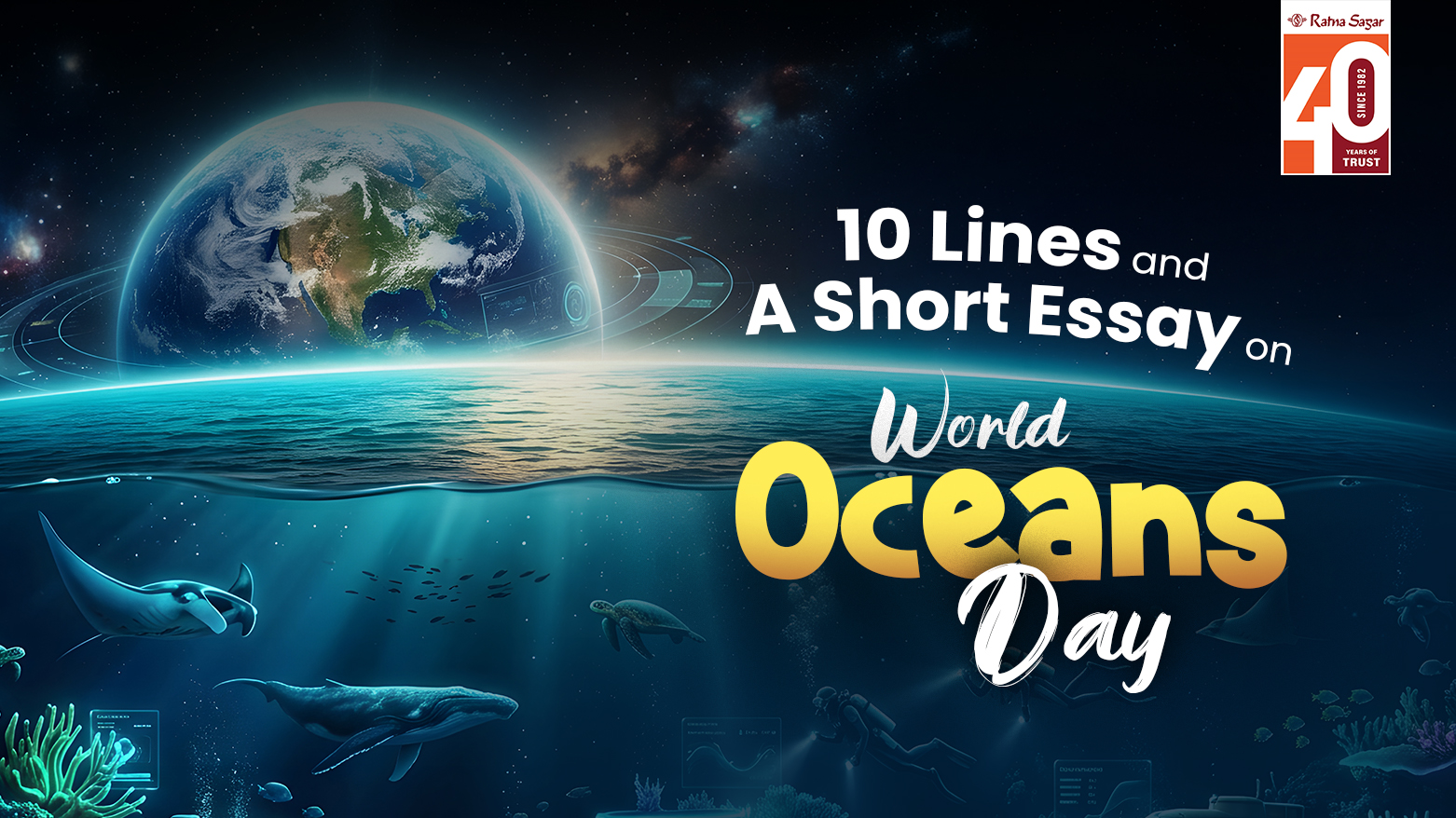
World Oceans Day: Why We Must Save Our Oceans
Every year on 8 June, the world comes together to celebrate World Oceans Day — a global reminder of how deeply our lives are connected to the seas. From the air we breathe to the food we eat, oceans play a central role in sustaining life on Earth. Yet, today, our oceans are under serious threat. As students, teachers, and responsible citizens, it is important for us to understand what oceans mean to our planet and why we must act now to protect them.
What Are Oceans?
Oceans are vast bodies of salt water that cover approximately 71% of the Earth's surface. There are five major oceans — the Pacific, Atlantic, Indian, Southern, and Arctic. Together, they hold about 97% of all water on Earth. Oceans are not just large bodies of water; they are living, breathing ecosystems teeming with millions of species of plants, animals, and microorganisms.
The ocean is often called the "lungs of the Earth" because it produces more than 50% of the world's oxygen — more than all the forests combined. It also absorbs around 30% of the carbon dioxide produced by human activities, helping to regulate our climate.
Why Are Oceans Important?
Oceans are vital to human survival in more ways than one. Here is why they matter:
- Source of Oxygen Tiny ocean plants called phytoplankton produce the majority of the oxygen we breathe. Without healthy oceans, this oxygen supply would be severely reduced.
- Regulating Climate Oceans absorb heat from the sun and distribute it around the globe through ocean currents. This natural system helps regulate weather patterns and keeps our climate stable.
- Food Security Millions of people around the world, especially in coastal communities, depend on the sea for their daily food and livelihood. Fish, shellfish, and seaweed are vital sources of protein for billions of people.
- Biodiversity Oceans are home to an incredible variety of life — from microscopic bacteria to the blue whale, the largest animal ever known to have lived on Earth. Coral reefs alone are home to about 25% of all marine species.
- Economic Importance Oceans support shipping, tourism, and fishing industries that are worth trillions of rupees to economies worldwide. In India, our coastline of over 7,500 kilometres is a major source of livelihood for millions of fishermen and coastal communities.
Threats Facing Our Oceans
Despite their enormous importance, our oceans are in serious danger. Here are some of the biggest threats:
Plastic Pollution Every year, millions of tonnes of plastic waste end up in the sea. Plastic bags, bottles, and packaging are mistaken for food by marine animals, causing injury and death. Microplastics — tiny plastic particles — have now been found in fish, shellfish, and even in drinking water.
Climate Change and Rising Sea Temperatures As global temperatures rise, ocean temperatures increase too. This leads to coral bleaching, where corals lose their colour and die. Warmer oceans also contribute to more intense cyclones and storms.
Overfishing: Many fish species are being caught far faster than they can reproduce. This destroys the natural balance of marine ecosystems and threatens the food supply of millions of people.
Oil Spills: Industrial accidents and illegal dumping lead to oil spills that coat the ocean surface, block sunlight from reaching marine plants, and poison animals and birds.
Ocean Acidification: When oceans absorb too much carbon dioxide, the water becomes more acidic. This harms shellfish, corals, and other creatures that rely on calcium to build their shells and skeletons.
World Oceans Day: History and Theme
World Oceans Day was first proposed at the Earth Summit in Rio de Janeiro in 1992. It was officially recognised by the United Nations in 2008 and has been observed on 8 June every year since then.
Each year, World Oceans Day is celebrated with a special theme that highlights a key issue facing our seas. Past themes have focused on topics such as ocean pollution, marine biodiversity, and sustainable fishing. The day serves as a global platform to raise awareness, share knowledge, and inspire action for the health of our oceans.
10 Lines on Oceans
Here are 10 important lines on oceans that are useful for students writing essays or preparing for school activities:
- Oceans cover about 71% of the Earth's surface and are the largest ecosystems on our planet.
- There are five major oceans: the Pacific, Atlantic, Indian, Southern, and Arctic.
- Oceans produce more than 50% of the oxygen we breathe, mainly through phytoplankton.
- They regulate the Earth's climate by absorbing heat and distributing it through ocean currents.
- More than 3 billion people worldwide depend on oceans for their food and livelihood.
- Oceans are home to millions of species, including whales, dolphins, sharks, corals, and countless fish.
- Plastic pollution is one of the greatest threats to ocean health, with millions of tonnes entering the sea every year.
- Climate change is causing rising sea temperatures and ocean acidification, harming marine life.
- World Oceans Day is celebrated on 8 June every year to raise awareness about ocean conservation.
- Every individual can help by reducing plastic use, saving water, and supporting ocean-friendly choices.
How Can We Save Our Oceans?
Saving the oceans may seem like a big task, but small actions by many people can make a tremendous difference. Here is what each one of us can do:
Reduce Plastic Use Say no to single-use plastics such as straws, plastic bags, and disposable cutlery. Carry a cloth bag and a reusable water bottle whenever you go out.
Participate in Beach and River Clean-ups Many schools and community groups organise clean-up drives near rivers, lakes, and coastlines. Joining such initiatives directly removes harmful waste from waterways that eventually lead to the ocean.
Be Mindful of What Goes Down the Drain Chemicals, medicines, and non-biodegradable waste that are flushed down drains often end up in the ocean. Dispose of such materials responsibly.
Choose Seafood Wisely Encourage your family to buy fish and seafood from sustainable sources. Avoiding overfished species helps allow marine populations to recover.
Spread Awareness Education is one of the most powerful tools for change. Talk to your friends and family about ocean conservation. Write about it in school, share information, and be an ambassador for the sea.
Support Ocean-Friendly Policies As future citizens, it is important to be aware of environmental policies and to support leaders and organisations that are committed to protecting the ocean.
The Ocean and Us: A Bond Worth Protecting
India has a rich and ancient relationship with the sea. Our coastal states have traditions, cuisines, and livelihoods deeply tied to the ocean. From the fishing communities of Kerala and Tamil Nadu to the salt farmers of Gujarat, millions of Indians live in harmony with the sea. Protecting our oceans means protecting our culture, our economy, and our future.
For young learners, World Oceans Day is the perfect opportunity to connect what is taught in the classroom — about ecosystems, climate, geography and sustainability — with the real world. The ocean is not just a chapter in a science or social studies textbook; it is a living system that needs our care.
Conclusion
Our oceans have given us life, food, oxygen, and wonder. Now, it is our turn to give back. This World Oceans Day, let us make a commitment — however small — to be kinder to our seas. Whether it is refusing a plastic straw, picking up litter from a park, or simply learning more about marine life, every action counts.
As the famous oceanographer Jacques Cousteau once said, the sea, once it casts its spell, holds one in its net of wonder forever. Let us protect that wonder for generations to come.
Save the oceans. Save the planet. Start today.
Recent Posts
Planning a Picnic: Class 1 English Learning
13/10/2026
International Day of the Girl Child: 10 Lines & Essay
09/10/2026
R K Narayan Birth Anniversary: Malgudi, Books & Legacy
06/10/2026
Gandhi Jayanti: Truth, Non-Violence and Its Relevance Today
01/10/2026
Earth and Its Shapes: Facts for Kids | Classes 2–4
24/09/2026
International Sign Language Day: 10 Lines & Short Essay
18/09/2026Recommended Books