World Day Against Child Labour: 10 Lines & Short Essay for Students
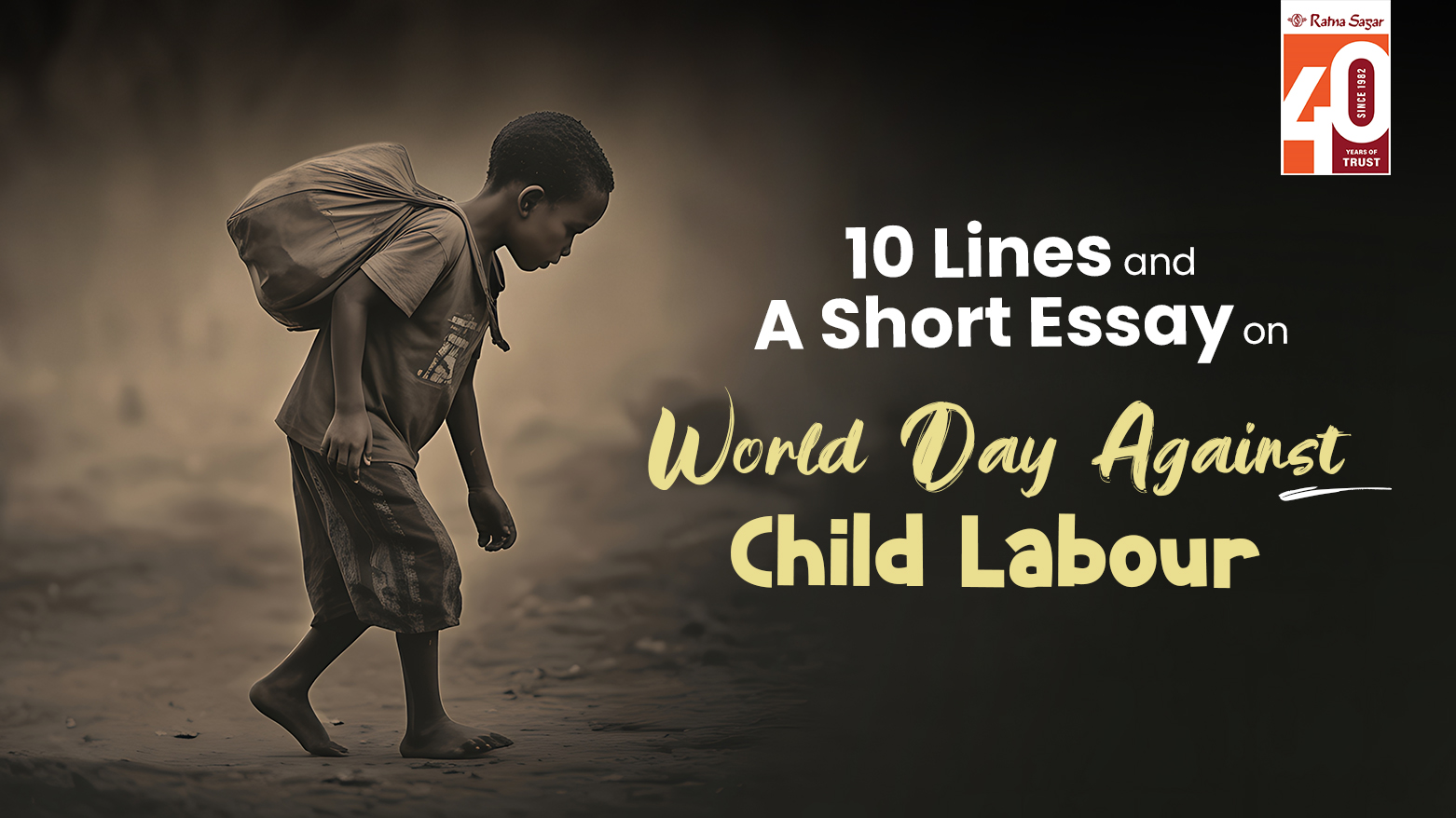
10 Lines and a Short Essay on World Day Against Child Labour
Introduction
Imagine waking up every morning, not to go to school, but to work long hours in a factory, field, or on the streets — with no time to play, learn, or simply be a child. For millions of children around the world, this is not imagination. This is reality.
Every year on 12 June, the world observes World Day Against Child Labour — a day established by the International Labour Organization (ILO) to raise awareness about the harsh reality of child labour and to call for action to end it. This day is a reminder that every child has the right to education, safety, and a happy childhood — and that these rights must be protected.
What Is Child Labour?
Child labour refers to work that deprives children of their childhood, their potential, and their dignity. It is work that is harmful to their physical and mental health, prevents them from attending school, and is exploitative in nature.
Not all work done by children is considered child labour. Helping at home, assisting a family business for a short while, or doing small tasks that do not affect their education or wellbeing is generally acceptable. However, when children are made to work full-time — often in dangerous conditions, for very little or no pay — it becomes child labour, which is both unethical and illegal.
According to the ILO, the minimum working age in most countries is 15 years. In India, the Child Labour (Prohibition and Regulation) Amendment Act, 2016 prohibits children below 14 years from working in any occupation or process.
Child Labour: The Facts
Child labour remains a serious global problem. Here are some important facts every student should know:
- According to the ILO, approximately 160 million children worldwide are engaged in child labour — that is nearly 1 in 10 children on the planet.
- Child labour is most common in agriculture, followed by services and industry.
- Around 79 million children are engaged in hazardous work that directly endangers their health and safety.
- Sub-Saharan Africa has the highest number of child labourers, followed by Central and Southern Asia.
- In India, though significant progress has been made, millions of children are still found working in brick kilns, carpet factories, roadside dhabas, and domestic households.
These numbers represent real children — children who are missing out on education, friendship, play, and the chance to build a better future.
Why Does Child Labour Happen?
Understanding the causes of child labour is important for finding solutions. The main reasons include:
Poverty Poverty is the single biggest driver of child labour. When families cannot afford basic necessities, they may send children to work to supplement the household income. This creates a vicious cycle — children who work instead of studying are more likely to remain in poverty as adults.
Lack of Access to Education In many regions, quality schools are either too far away, too expensive, or simply unavailable. When education is not accessible, children are far more likely to end up working.
Social Norms and Attitudes In some communities, it is considered normal or even necessary for children to work from a young age. Changing these attitudes requires sustained awareness and education.
Weak Law Enforcement Where laws against child labour exist but are poorly enforced, employers continue to exploit children because there are no consequences.
Family Crises Natural disasters, conflicts, and the death or illness of a parent can push families into crisis, making children vulnerable to exploitation.
The Impact of Child Labour on Children
Child labour does not just steal a child's time — it steals their entire future. Its effects are wide-ranging and deeply damaging:
Physical Harm: Children working in mines, factories, or fields are exposed to toxic chemicals, heavy machinery, extreme temperatures, and physical strain. Their bodies, still growing, suffer serious and often permanent damage.
Mental and Emotional Harm: Being denied play, education, and family time takes a heavy toll on a child's emotional development. Many child labourers suffer from anxiety, depression, and low self-esteem.
Loss of Education: A child who drops out of school to work is less likely to return. Without education, their opportunities remain severely limited throughout their life.
Cycle of Poverty: Child labour perpetuates poverty across generations. Uneducated children grow into unskilled adults with fewer employment options, keeping their families trapped in the same difficult conditions.
10 Lines on Child Labour
Here are 10 important lines on child labour for students writing an essay or preparing a speech:
- Child labour refers to any work that deprives children of their childhood, education, and basic rights.
- World Day Against Child Labour is observed every year on 12 June to raise awareness and take action.
- The International Labour Organization (ILO) established this day in 2002.
- Approximately 160 million children around the world are engaged in some form of child labour.
- Poverty, lack of education, and social attitudes are the main causes of child labour.
- Child labour harms children physically, mentally, and emotionally, and denies them a better future.
- In India, the Child Labour (Prohibition and Regulation) Amendment Act, 2016 bans children under 14 from working.
- Education is the most powerful tool to end child labour and break the cycle of poverty.
- Every child has the right to education, play, safety, and a happy, healthy childhood.
- Each one of us can fight child labour by raising awareness and reporting cases in our communities.
Child Labour in India: Progress and Challenges
India has made meaningful strides in addressing child labour over the decades. Government schemes such as the Mid-Day Meal Scheme, Right to Education Act (2009), and various child protection programmes have helped keep more children in school and out of the workforce.
Yet challenges remain. Children are still found working in hazardous industries, in domestic service, and on the streets of our cities. The problem is often invisible — hidden behind closed doors or normalised by communities where poverty runs deep.
The most effective weapon against child labour in India, and across the world, is universal quality education. When every child has access to a safe school, a caring teacher, and the chance to learn, the temptation and necessity of sending children to work diminishes significantly.
What Can Students Do?
World Day Against Child Labour is not just for governments and organisations. Students have a powerful role to play in building a world free of child labour. Here is how:
Raise Awareness: Talk to your classmates, family, and community about what child labour is and why it must be stopped. Write about it in school debates, essays, and speeches.
Be Observant: If you notice a child of school-going age working somewhere instead of attending school, inform a trusted adult or teacher.
Support NGOs and Campaigns: Many non-governmental organisations work tirelessly to rescue child labourers and provide them with education. Supporting their campaigns, even by sharing information, helps spread the message.
Value Your Education: Perhaps the most powerful thing students can do is appreciate the education they receive and use it to build a more just and equal world.
Every child — regardless of where they are born, what family they come from, or how much money their parents earn — deserves the right to learn, to play, and to grow up safely. Child labour is not just a social problem; it is a violation of basic human rights.
This World Day Against Child Labour, let us commit ourselves to raising our voices, spreading awareness, and taking steps — however small — towards a world where no child is forced to trade their childhood for labour.
As Kailash Satyarthi, India's Nobel Peace Prize laureate and a lifelong crusader against child labour, has said: "If we want to end poverty and build prosperity, we must invest in our children."
Let every child go to school. Let every child be free.
Recent Posts
Planning a Picnic: Class 1 English Learning
13/10/2026
International Day of the Girl Child: 10 Lines & Essay
09/10/2026
R K Narayan Birth Anniversary: Malgudi, Books & Legacy
06/10/2026
Gandhi Jayanti: Truth, Non-Violence and Its Relevance Today
01/10/2026
Earth and Its Shapes: Facts for Kids | Classes 2–4
24/09/2026
International Sign Language Day: 10 Lines & Short Essay
18/09/2026Recommended Books