10 Lines and a Short Essay on Raja Ravi Varma | Life, Art & Legacy
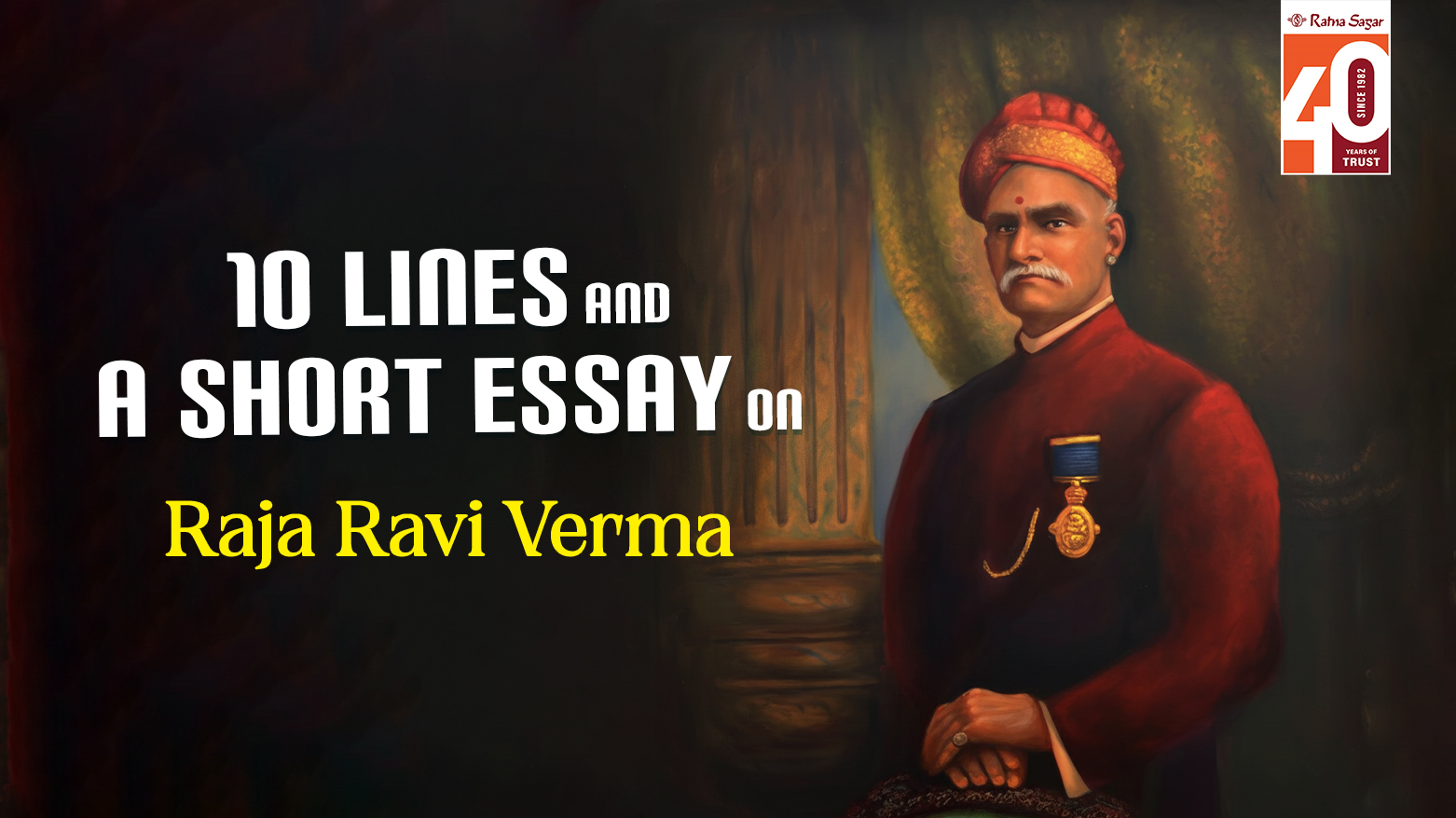
10 Lines and A Short Essay on Raja Ravi Varma
Raja Ravi Varma stands as one of India’s most renowned artists, celebrated for bringing Indian mythology and culture to life through vibrant, realistic paintings. His contributions to Indian art continue to inspire generations. This post shares 10 lines and a short essay on Raja Ravi Varma, perfect for students and learners.
10 Lines on Raja Ravi Varma
- Raja Ravi Varma was one of India’s greatest painters and artists of the 19th century.
- He was born on April 29, 1848, in Kilimanoor, Kerala.
- He is best known for his realistic portrayals of Indian gods and goddesses.
- Raja Ravi Varma combined Indian traditions with European painting techniques.
- His famous works include paintings of Saraswati, Lakshmi, and scenes from the Mahabharata and Ramayana.
- He made Indian mythological art more accessible to ordinary people through prints and lithographs.
- His use of perspective, light, and color brought a lifelike quality to Indian art.
- Raja Ravi Varma was awarded the Kaisar-i-Hind Gold Medal by the British Government in 1904.
- He established a lithographic press to reproduce his artworks on a mass scale.
- Raja Ravi Varma passed away on October 2, 1906, but his legacy continues to shape Indian art.
Short Essay on Raja Ravi Varma
Early Life and Background
Raja Ravi Varma was born into an aristocratic family in Kilimanoor, Kerala. From a young age, he showed a deep interest in drawing and painting. Encouraged by his family, he was introduced to traditional Indian art forms before receiving formal training in European techniques under the guidance of Theodor Jenson, a British painter.
Artistic Style and Major Works
Raja Ravi Varma’s distinctive style combined Western realism with Indian themes, making his work both relatable and revolutionary. He used oil paints—a medium uncommon in Indian art at the time—to create lifelike textures and expressions. His paintings of Hindu deities such as Lakshmi, Saraswati, and Lord Krishna depict divine figures with human charm and grace, bridging spirituality and accessibility.
- Shakuntala – searching for Dushyanta, portraying deep emotion and grace.
- The Birth of Shree Krishna – capturing mythology with realism.
- Lady in the Moonlight – reflecting his mastery over light and form.
Influence and Legacy
Recognition and Awards
In recognition of his artistic excellence, Raja Ravi Varma was honored by the British Government with the Kaisar-i-Hind Gold Medal in 1904. His artistic genius earned him national admiration, and scholars still study his works for their technical brilliance and cultural impact.
Recent Posts
International Day of the Girl Child: 10 Lines & Essay
09/10/2026
R K Narayan Birth Anniversary: Malgudi, Books & Legacy
06/10/2026
Gandhi Jayanti: Truth, Non-Violence and Its Relevance Today
01/10/2026
Earth and Its Shapes: Facts for Kids | Classes 2–4
24/09/2026
International Sign Language Day: 10 Lines & Short Essay
18/09/2026
Engineer's Day: 10 Lines, Short Essay & Facts About Sir M. Visvesvaraya
14/09/2026