10 Lines and A Short Essay on Diwali
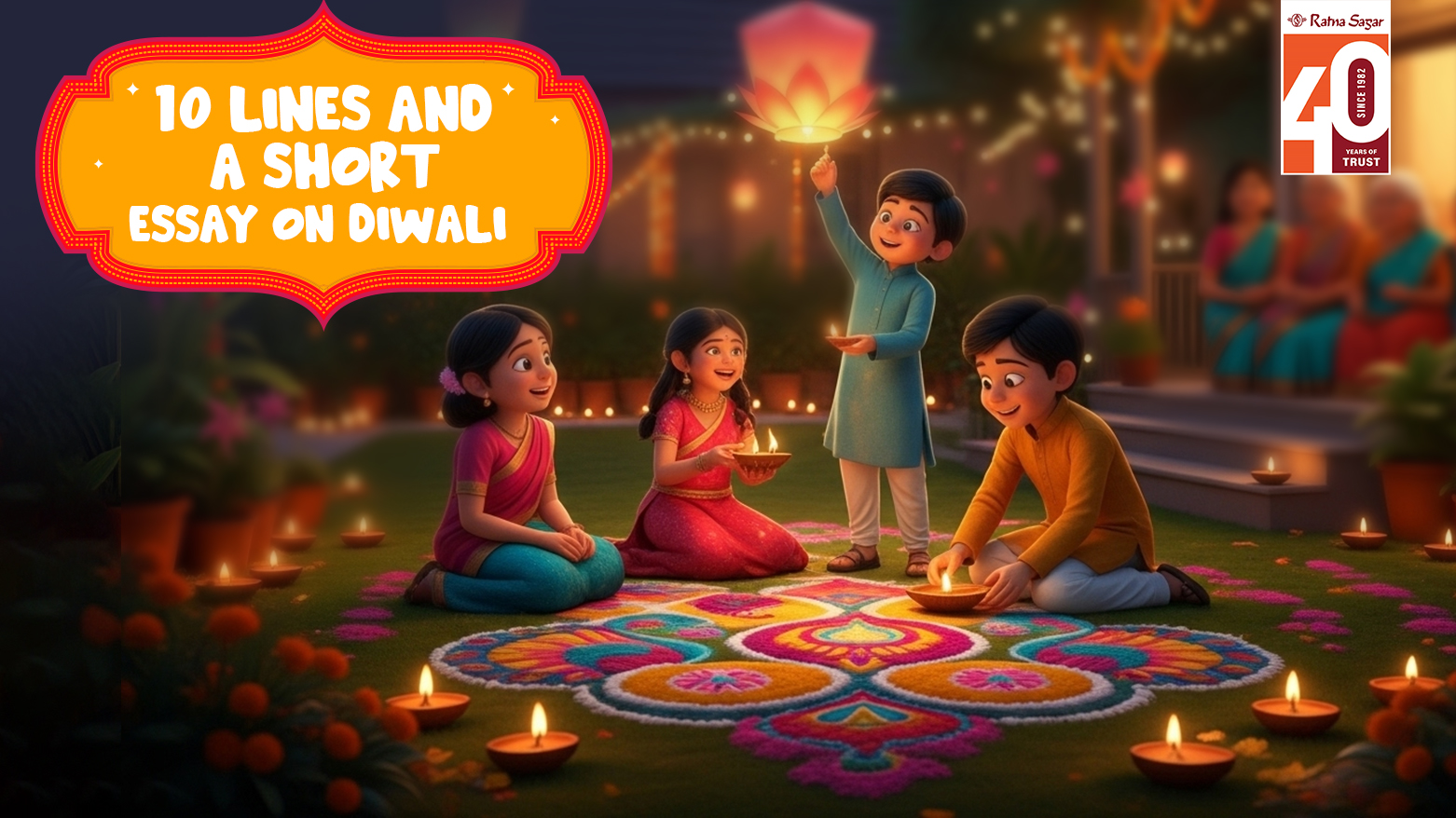
Diwali, also known as the Festival of Lights, is one of the most cherished festivals in India. Celebrated with joy, devotion, and togetherness, it symbolizes the victory of good over evil and light over darkness. This blog shares 10 Lines on Diwali for students to understand the festival easily, followed by a short essay that explains its history, cultural traditions, and deeper meaning.
10 Lines on Diwali for Students
Short Essay on Diwali
Diwali, or Deepavali, literally means “a row of lights.” It is one of the most important and widely celebrated festivals in India. Known for its dazzling decorations and heartwarming traditions, Diwali brings families and communities together in a spirit of joy, devotion, and new beginnings.
History and Significance of Diwali
The history of Diwali is deeply rooted in Indian culture and mythology. The most popular legend is associated with Lord Rama returning to Ayodhya after 14 years of exile and defeating the demon king Ravana. The people of the kingdom illuminated the streets with diyas to celebrate his victory and welcome him home, which is why lights are central to the festival.
In addition to the Ramayana story, Diwali also celebrates the worship of Goddess Lakshmi, the goddess of wealth and prosperity. In different regions of India, the festival is linked to different cultural beliefs. Northern India associates it with Lord Rama, Western India celebrates the homecoming of Lord Krishna after defeating Narakasura, while Eastern India worships Goddess Kali on this day. Despite the differences, the central theme remains the same: the triumph of good over evil and knowledge over ignorance.
How Diwali is Celebrated
The celebrations of Diwali usually last five days, with each day holding special importance. Dhanteras marks the beginning, when people purchase new utensils, gold, or household items as symbols of good fortune. The second day, Naraka Chaturdashi or Choti Diwali, reminds us of Lord Krishna’s victory over Narakasura. The third day is the main festival, when people worship Goddess Lakshmi, decorate their homes with diyas and rangolis, and enjoy family gatherings. The fourth and fifth days, Govardhan Puja and Bhai Dooj, reflect gratitude to nature and the bond between brothers and sisters.
Apart from the rituals, markets come alive with vibrant decorations, sweets, and festive shopping. Families prepare traditional sweets like laddoos, barfis, and kheer. Children eagerly wait to burst crackers, while everyone enjoys the atmosphere of lights and laughter. Communities also gather at temples, fairs, and cultural events, making Diwali a season of togetherness.
Eco-Friendly Celebrations
In recent years, awareness about eco-friendly Diwali has grown. Excessive use of firecrackers leads to pollution and health hazards. Many schools and communities encourage children to celebrate with diyas, candles, paper lanterns, and rangolis instead of noise-making firecrackers. Planting trees, exchanging handmade gifts, and sharing sweets with the underprivileged are meaningful ways to celebrate while caring for the environment. Choosing eco-friendly decorations and reducing waste helps keep the spirit of Diwali pure and positive.
Values of Togetherness and Light
Beyond the festivities, Diwali teaches valuable life lessons. It reminds us that goodness always wins over evil, and light always removes the darkness in life. Families come together, neighbors share joys, and communities celebrate as one, breaking social barriers. The glow of diyas not only brightens homes but also hearts, spreading the message of peace, love, and hope.
Diwali is not just about rituals but also about inner light. It inspires us to remove negativity from our lives and embrace truth, kindness, and compassion. These timeless values make Diwali relevant for people of all ages.
Conclusion
Diwali is more than a festival of lights; it is a celebration of goodness, unity, and hope. From its history to its vibrant customs, it teaches us to spread positivity and move towards a brighter future. By celebrating responsibly and with love, we keep the true spirit of Diwali alive.For more educational blogs, read our festive posts 10 Lines on Onam Festival and 10 Lines on Rakshabandhan.
Recent Posts
R K Narayan Birth Anniversary: Malgudi, Books & Legacy
06/10/2026
Gandhi Jayanti: Truth, Non-Violence and Its Relevance Today
01/10/2026
Earth and Its Shapes: Facts for Kids | Classes 2–4
24/09/2026
International Sign Language Day: 10 Lines & Short Essay
18/09/2026
Engineer's Day: 10 Lines, Short Essay & Facts About Sir M. Visvesvaraya
14/09/2026