10 Lines and A Short Essay on Onam Festival
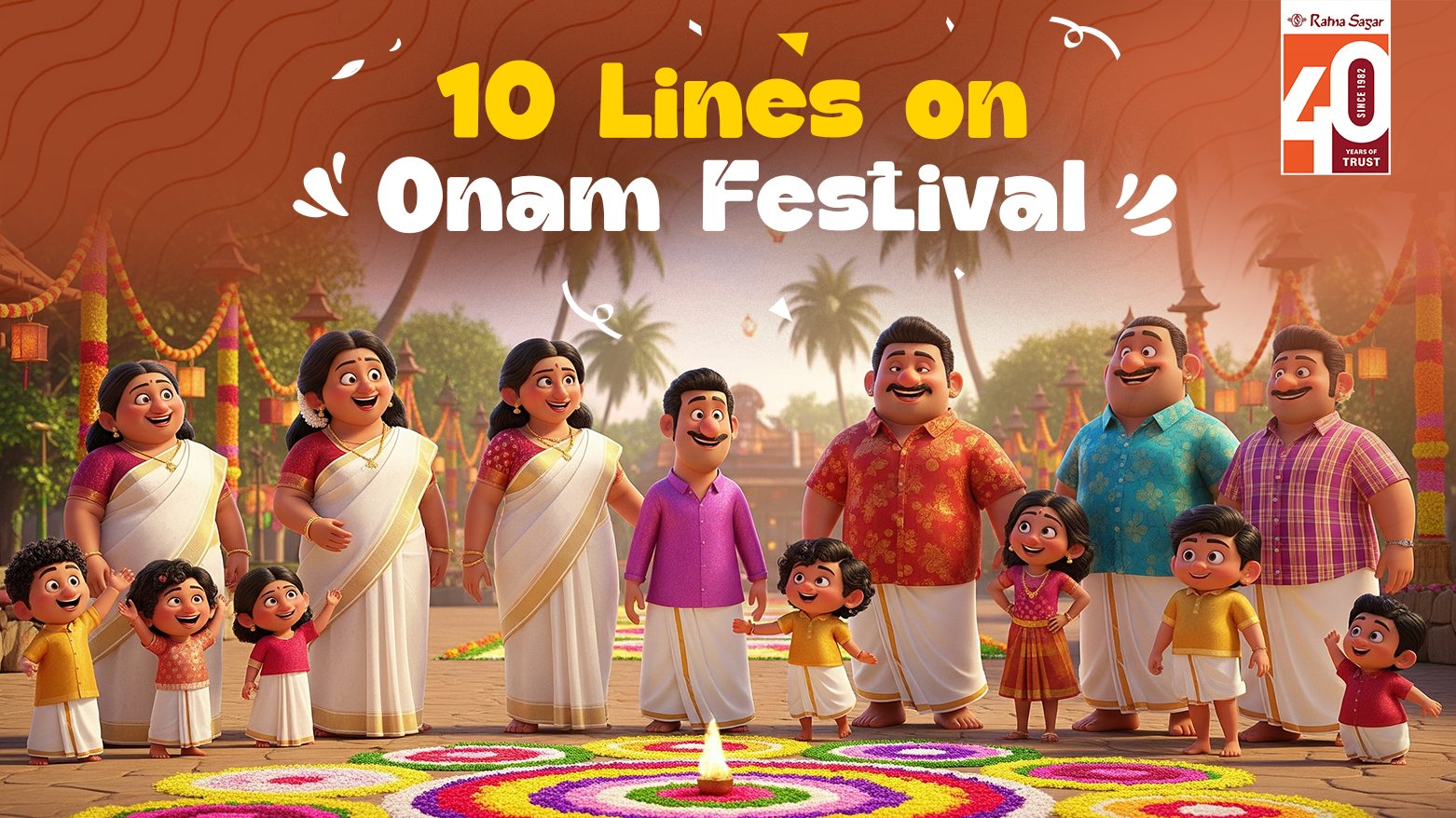
ONAM FESTIVAL
Onam is not just another festival in India—it is the heart of Kerala’s culture, a celebration that blends history, mythology, food, and art into ten unforgettable days. When schools ask students to write 10 lines on Onam festival, the aim is to make children aware of this tradition and its deeper meaning. To capture both the simplicity of those 10 lines and the richness of the festival, this blog combines them into a single flowing essay that is informative yet easy to understand.
Onam Festival – A Blend of 10 Lines and an Essay
If we were to sum up Onam in 10 simple lines, it would look like this:
- Onam is Kerala’s most famous and widely celebrated festival.
- It usually falls in August or September, during the Malayalam month of Chingam.
- The festival honors the legendary King Mahabali, remembered for his just rule.
- According to tradition, Mahabali visits his people once a year during Onam.
- It is also a harvest festival, marking prosperity and abundance.
- The celebration lasts ten days, from Atham to Thiruvonam.
- Families decorate their homes with Pookalam, beautiful floral rangolis.
- A grand vegetarian feast, called Onam Sadhya, is served on banana leaves.
- Vallam Kali (snake boat races) and Pulikali (tiger dances) are major attractions.
- Onam spreads joy, unity, and cultural pride among all Keralites.
Now, let’s expand these 10 lines on Onam festival into a short essay that captures the spirit of this grand occasion.
The Story Behind Onam
The story of Onam goes back to the legend of King Mahabali, a ruler beloved for his fairness and generosity. His reign is often described as a golden age where everyone lived in equality and prosperity. The gods, however, felt threatened by his growing influence and sent Lord Vishnu in the form of Vamana, a dwarf Brahmin, to test him. Even when tricked, Mahabali’s humility stood out, and he was granted permission to visit his people once every year. Onam celebrates this annual return of their king—a symbol of love and devotion between a ruler and his subjects.
How Onam Is Celebrated
Onam is not a one-day affair but a ten-day extravaganza. Each day has its own charm, but the last day, Thiruvonam, is the grandest. Homes are swept clean and decorated with Pookalam, intricate floral carpets that grow larger each day. These vibrant designs are not just decorations; they represent prosperity and serve as a warm welcome to King Mahabali.
Families gather to prepare the Onam Sadhya, a vegetarian feast that can have more than 20 dishes served on banana leaves. From spicy curries to crispy banana chips and the famous sweet payasam, the Sadhya is as much about togetherness as it is about food.
The festival also bursts with performances and games. Snake boat races, known as Vallam Kali, see hundreds of men rowing in perfect rhythm as crowds cheer from riverbanks. Dancers take to the streets in colorful costumes, performing Kathakali and Pulikali (tiger dance), which fill the atmosphere with energy and joy.
Onam’s Relevance Today
What makes Onam so special is that it has outgrown religious boundaries. People of all communities in Kerala celebrate it with equal enthusiasm, proving that festivals can unite rather than divide. In a modern world where people often get caught up in fast-paced lives, Onam serves as a reminder to slow down, celebrate nature’s bounty, and spend time with loved ones.
For students, writing 10 lines on Onam festival or preparing a short essay is more than just a school exercise—it’s a way of connecting with this legacy and understanding values of gratitude, unity, and cultural pride.
Conclusion
Onam is Kerala’s way of saying that joy multiplies when shared. From the legend of Mahabali to the fragrance of fresh flowers in Pookalam, from the laughter around a Sadhya meal to the adrenaline of Vallam Kali, every part of Onam tells a story of togetherness. Whether you capture it in 10 lines on Onam festival or narrate it in an essay, the essence remains the same: Onam is a celebration of prosperity, harmony, and cultural richness that continues to inspire generations.
Recent Posts
R K Narayan Birth Anniversary: Malgudi, Books & Legacy
06/10/2026
Gandhi Jayanti: Truth, Non-Violence and Its Relevance Today
01/10/2026
Earth and Its Shapes: Facts for Kids | Classes 2–4
24/09/2026
International Sign Language Day: 10 Lines & Short Essay
18/09/2026
Engineer's Day: 10 Lines, Short Essay & Facts About Sir M. Visvesvaraya
14/09/2026