Independence Day: 10 Lines & Short Essay for Students
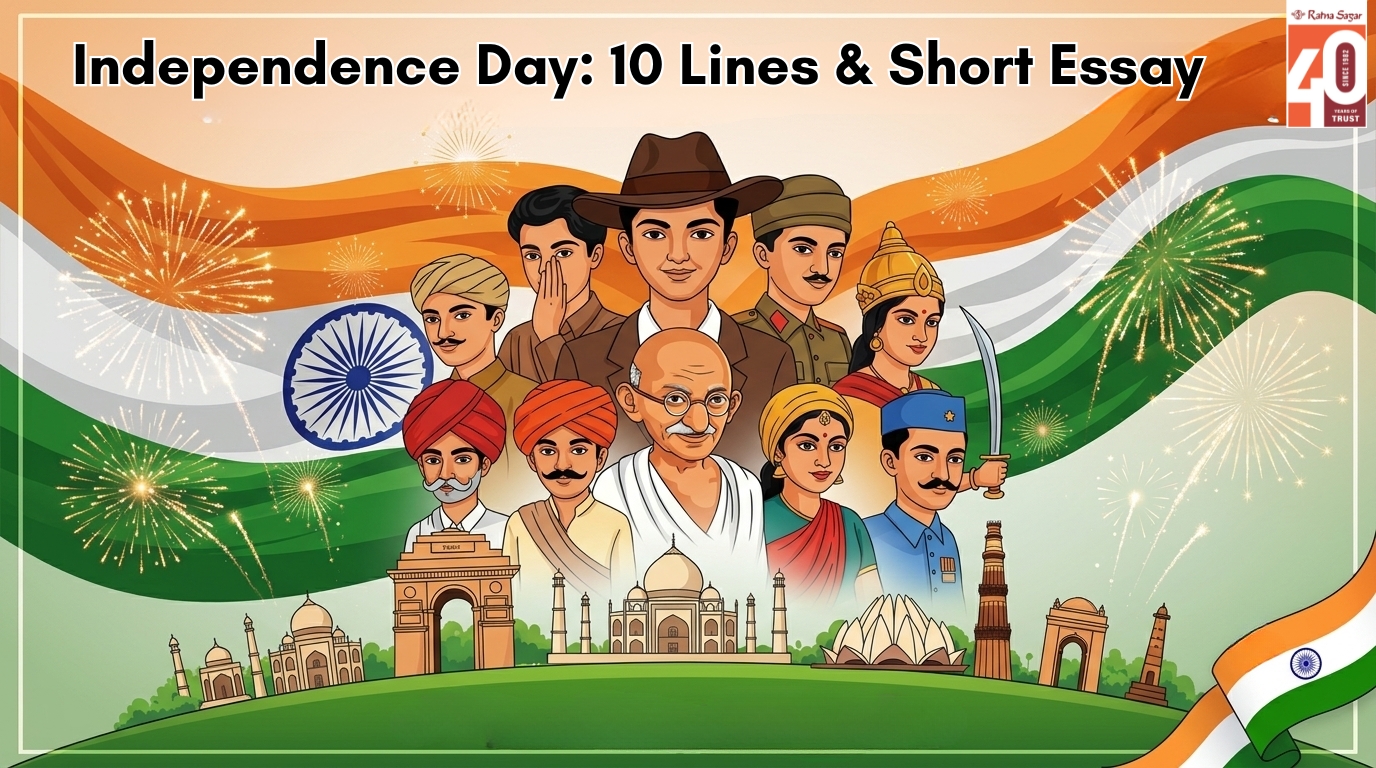
Independence Day: 10 Lines and a Short Essay
Every year on August 15, India celebrates Independence Day, marking the moment the country finally broke free from over two centuries of British colonial rule. It is a day filled with pride, patriotism, and gratitude towards the countless freedom fighters who sacrificed their lives so that future generations could live free.
For students preparing for school assignments, speeches, or essay competitions, we have put together 10 simple lines on Independence Day, followed by a short essay that explores its history and significance in greater detail.
10 Lines on Independence Day
- India celebrates Independence Day every year on August 15 to mark its freedom from British rule in 1947.
- On this day in 1947, India's first Prime Minister, Jawaharlal Nehru, hoisted the national flag at the Red Fort in Delhi.
- Independence Day commemorates the end of nearly 200 years of British colonial rule in India.
- The freedom struggle involved the sacrifices of countless leaders, including Mahatma Gandhi, Bhagat Singh, Subhas Chandra Bose, and many others.
- Every year, the Prime Minister of India hoists the national flag at the Red Fort and addresses the nation.
- Schools, colleges, and government offices across the country celebrate the day with flag hoisting ceremonies, cultural programs, and patriotic songs.
- The national tricolour — saffron, white, and green with the Ashoka Chakra — is proudly displayed on buildings, homes, and vehicles across the country.
- Independence Day is a national holiday, celebrated with great enthusiasm in every corner of India.
- The day serves as a reminder of the values of unity, freedom, and sacrifice that shaped modern India.
- Independence Day inspires citizens, especially the younger generation, to work towards building a stronger and more prosperous nation.
Short Essay on Independence Day
The Road to Freedom
India's journey to independence was long and difficult, marked by decades of struggle against British colonial rule. The British East India Company first established its foothold in India in the 17th century, and by the mid-19th century, the British Crown had taken direct control of the country. For nearly two hundred years, Indians lived under foreign rule, facing economic exploitation, social injustice, and the suppression of their basic rights.
The fight for freedom gathered momentum in the late 19th and early 20th centuries with the formation of the Indian National Congress and the rise of numerous freedom movements. Leaders such as Mahatma Gandhi championed the path of non-violence and civil disobedience through movements like the Non-Cooperation Movement, the Civil Disobedience Movement, and the Quit India Movement of 1942. At the same time, revolutionaries like Bhagat Singh, Chandrashekhar Azad, and Subhas Chandra Bose took bolder approaches, inspiring the youth to rise against colonial oppression. Together, these varied streams of the freedom struggle created unstoppable momentum toward independence.
The Historic Day
After years of protests, sacrifices, and negotiations, India finally achieved independence on August 15, 1947. At the stroke of midnight, as the rest of the world slept, India awoke to freedom. Jawaharlal Nehru, India's first Prime Minister, delivered his iconic "Tryst with Destiny" speech, capturing the historic significance of the moment for a nation stepping into a new era. The Indian tricolour was hoisted for the first time as a symbol of a free and sovereign India, replacing the flag of the British Empire that had flown over the country for generations.
However, independence also came with the pain of Partition, which divided the country into India and Pakistan. This period saw large-scale migration and immense human suffering, reminding us that freedom came at a heavy cost, both in terms of sacrifice and hardship.
How Independence Day is Celebrated
Independence Day is celebrated with immense enthusiasm across the country every year. The main ceremony takes place at the Red Fort in Delhi, where the Prime Minister of India hoists the national flag and addresses the nation, reflecting on the country's achievements and future goals. This is followed by a 21-gun salute and the singing of the national anthem.
Across India, schools, colleges, offices, and housing societies organise their own flag hoisting ceremonies, cultural programs, and patriotic performances. Children participate in essay writing, painting, and speech competitions centered on the themes of freedom and patriotism. Homes and public places are decorated with tricolour flags, balloons, and lights, while patriotic songs and films create an atmosphere of celebration and reflection throughout the day.
Significance for Today's Generation
Independence Day is not just a celebration of the past; it is also a reminder of ongoing responsibilities. It encourages citizens, especially students and young people, to reflect on the values of unity, equality, and freedom that the nation's founders fought so hard to secure. It is a day to honour the sacrifices of freedom fighters while also thinking about how each individual can contribute to the growth and progress of the nation.
For students, learning about Independence Day goes beyond memorising dates and facts. It helps build an understanding of history, instills a sense of national pride, and encourages a spirit of responsibility towards the country's future.
Conclusion
Independence Day stands as one of the most significant days in Indian history, symbolising freedom, unity, and the countless sacrifices made by those who fought for the nation. As India celebrates another year of independence, it is important for every citizen, especially the younger generation, to remember and honour this legacy while striving to build a better future for the country.
For more well-researched essays, study material, and educational resources to help students learn about important days and events in Indian history, visit Ratna Sagar, a trusted name in educational publishing for schools across India.
Recent Posts
Independence Day: 10 Lines & Short Essay for Students
07/08/2026.jpg)
Quit India Movement Day (August Kranti): 10 Lines & Short Essay for Students
04/08/2026
Guru Purnima: 10 Lines & Short Essay for Students
31/07/2026
National Parents Day 10 Lines & Short Essay for Students
24/07/2026
Kargil Diwas: 10 Lines & Short Essay for Students
17/07/2026
Rath Yatra: 10 Lines & Short Essay for Students
10/07/2026