The Role of Technology in Education Today
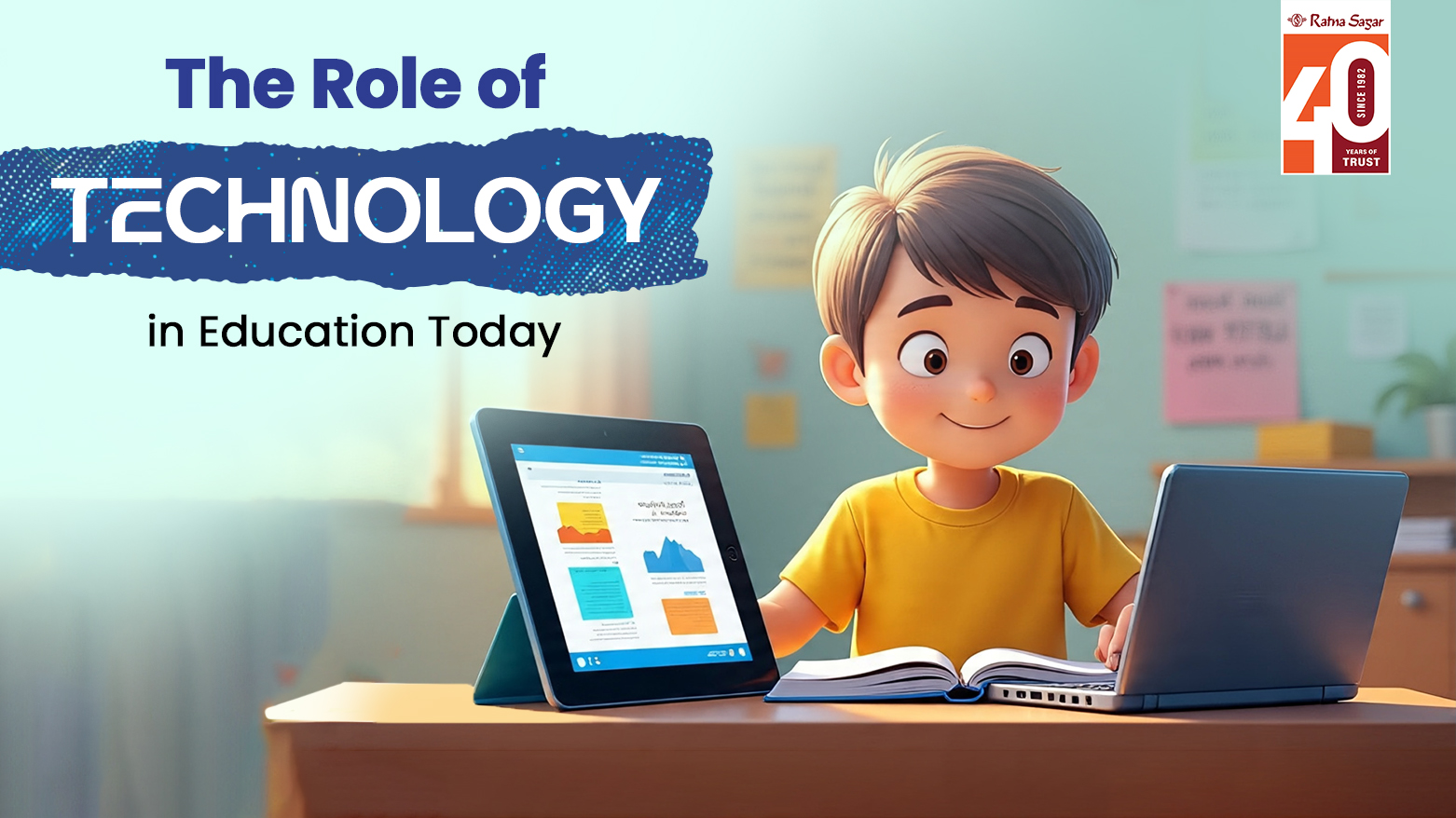
It goes without saying that most of us can not picture our day-to-day lives without using technology in some form. Technology plays an increasingly important role in our lives today, and has had a big impact on the education sector. Whether this is through increasing access to education, creating tools or helping in sharing knowledge, technology has made learning more interesting, flexible and personalised for students everywhere.
Beyond books and blackboards, the internet has played a significant role in increasing the access students have to knowledge. Self-initiated research through search engines, or access to tools like online science labs and simulations, calculators, repositories of information, doubt-solving platforms, videos explaining concepts, and more - students have the opportunity to learn about topics that interest them, now more than ever. A student having difficulties solving a math problem, can find a video. The same way, a student struggling to understand a chemistry experiment can use a 3D animation to explain it better. Technology has given students methods that make learning easier, fun and more visual.
One of the other advantages of technology in education is how it allows for personalised learning. Students can learn at their own pace through recorded lessons, learning apps, educational games, simulations and more, removing the nervous pressure that comes with traditional learning systems. This can also help students become more independent and responsible for their own knowledge.
Technology has also been extremely useful for teachers. Presentations, videos, and different online tools used by them, can make sessions more engaging and effective. With the rise of technology in education, online tutoring systems and other mediums for teachers to help their students have increased, making learning more accessible and widespread. When technology is used properly in schools, classrooms can feel more lively and energetic, with students getting more involved. With the help of technology, during the COVID-19 pandemic, schools were able to continue online. This also showed us how technology is a game-changer for education, by acting as a useful and powerful tool for when we need it.
However, it is important to remember that technology should be used, but not relied upon. With the rise of artificial intelligence, chatbots and other mediums, students may get distracted easily and take advantage of these tools to avoid learning. It is important to encourage balanced usage of technology, so that students continue learning, but more effectively.
It is also necessary to remember that while technology, specifically with the advancements in virtual reality, artificial intelligence and smart devices, may become more commonplace in schools and in the education system, it can not take the place of teachers and educators. Teachers provide us with the personalised guidance, care and emotional support that can never be mimicked by technology.
Ultimately, technology can be used in education to make learning more interesting and effective. When used wisely, it helps students improve their knowledge and gives teachers increased tools to help do the same. With balanced usage, the education sector can be transformed for the better.
Role of techonology in education today
- Technology plays a big role in education by making learning more accessible and interesting.
- It helps students learn through different tools like videos, simulations, games, and apps.
- Students can study at their own pace using recorded lessons and online tools.
- Difficult topics can become easier with 3D animations and visual explanations.
- Teachers use technology to make lessons more engaging and effective.
- During the pandemic, online learning showed how useful technology can be.
- However, too much reliance on AI tools and devices can reduce actual learning.
- Students should use technology wisely, without losing focus.
- While technology can assist learning, it can’t replace the guidance of real teachers.
- When used in balance, technology can truly improve education for everyone.
- How Can Teenagers Use Social Media in a Positive Way?
Social media is a significant part of many teenagers' lives. These platforms are where students can form and maintain connections, share experiences, preserve memories and stay updated about current events. Social media has many critics, but it can be used positively, if teenagers are smart about how they use it.
For instance, teenagers can use social media wisely for learning. There are numerous news channels, and informative sites on various platforms that create content for students, or that share knowledge targeted towards teenagers in creative ways. Whether this is syllabus-oriented, or related to global and local news, students can use social media to expand their existing knowledge beyond the classroom. Along the same lines, students can send cold-emails, messages etc. to professionals and experts in industries they are interested in to help them with their career and networking.
Moreover, social media can be a formative tool for self-expression. Teenagers can share their talents in art, writing, music, or their opinions and values with their audiences. This can not only build character, but allow them to form relationships with those with similar interests. Whether this is starting an Instagram page to document photography projects, creating a music Youtube channel, or launching a podcast on Spotify - the opportunities are endless.
Teenagers today are more socially aware than ever. Many use their platforms to talk about issues they are passionate about like climate change, gender dynamics, political situations, mental health and more. This helps the youth participate in discussions that matter to them, and can help with supporting these causes. Social media can be a powerful tool to help teenagers become responsible and informed citizens.
Additionally, social media can be used to maintain relationships across continents. Staying in touch with friends and family, and sharing memories can help connections stay strong, despite distance.
Still, teenagers must be careful when accessing the internet. Social media can have several downsides for mental health by creating comparisons, competition, cyberbullying and anxiety. The key is to follow pages that make you feel positive, set screen-time limits, and not let strangers determine your worth. Parents and schools play a major role in guiding teenagers on how to use social media well - by discussing privacy settings, cyber etiquette, safety, and more.
In the end, social media can help teenagers learn, connect, express themselves and raise awareness. By being mindful of its usage, teenagers can use social media to create spaces that support them in their growth.
10 Lines Role of Technology in Education Today
- Social media is a big part of many teenagers’ lives today.
- It can help students stay informed and updated with the world.
- Many platforms offer learning content that supports schoolwork.
- Teenagers can use social media to explore career ideas and network.
- It’s also a great space for creative expression like music, writing, or art.
- Social media lets students speak up about issues they care about.
- It helps friends and family stay connected, even across continents.
- However, social media can also affect mental health if not used carefully.
- Setting screen-time limits and using privacy tools can make a big difference.
- Used wisely, social media can be a tool for learning, growth, and connection.
Recent Posts

R K Narayan Birth Anniversary: Malgudi, Books & Legacy
06/10/2026
Gandhi Jayanti: Truth, Non-Violence and Its Relevance Today
01/10/2026
Earth and Its Shapes: Facts for Kids | Classes 2–4
24/09/2026
International Sign Language Day: 10 Lines & Short Essay
18/09/2026
Engineer's Day: 10 Lines, Short Essay & Facts About Sir M. Visvesvaraya
14/09/2026