10 Lines and Short Essay on Independence Day
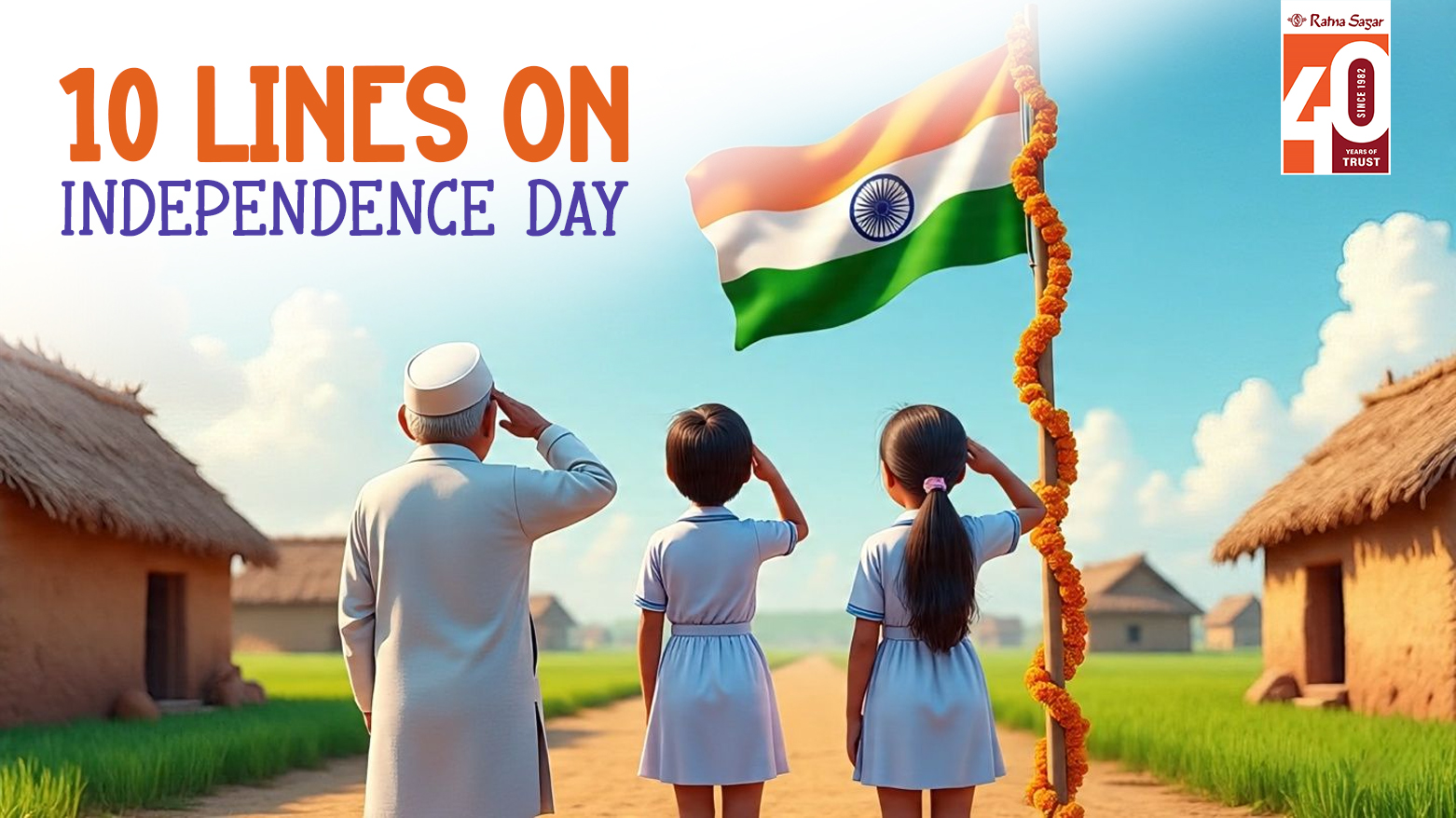
10 Lines and Short Essay on Independence Day – History, Importance, and Celebration
Introduction – Why Independence Day Matters
Independence Day is one of India’s most significant national events, celebrated every year on 15th August. It marks the historic moment in 1947 when India achieved freedom from British colonial rule. Beyond parades and flag-hoisting ceremonies, it’s also a day of reflection—a chance to appreciate the sacrifices that paved the way for our freedom.
For students and educators, writing 10 Lines and short essay on Independence Day has become a popular way to honor the occasion while learning about its history and values.
Historical Background of Independence Day
India’s road to independence was long and challenging. British control began with the arrival of the East India Company in the early 17th century and gradually expanded to full colonial rule. Over the years, India’s economy, culture, and political voice suffered under foreign dominance.
Key events shaped the freedom struggle, from the Revolt of 1857 to the Non-Cooperation Movement, the Civil Disobedience Movement, and the Quit India Movement. Each uprising, boycott, and protest brought the dream of freedom closer.
Finally, on 15th August 1947, India emerged as an independent nation. Pandit Jawaharlal Nehru, the country’s first Prime Minister, addressed the nation with his historic “Tryst with Destiny” speech, capturing the spirit of a new dawn.
Importance of Independence Day in Modern Times
Even after more than seven decades of independence, the day continues to unite millions across diverse languages, religions, and regions. Independence Day reminds us that democracy, equality, and unity are not just ideals of the past—they are ongoing responsibilities.
Writing 10 Lines and short essay on Independence Day encourages students to reflect on these values and connect them to the challenges and opportunities of today. It’s more than just a writing task—it’s an act of remembrance.
How India Celebrates Independence Day
From small villages to major cities, Independence Day celebrations follow a similar rhythm—flag hoisting, singing the national anthem, and honoring the tricolor. The Red Fort in New Delhi becomes the focal point of national celebrations, where the Prime Minister addresses the nation and outlines the path forward.
Schools and colleges organize cultural programs, patriotic songs, and historical reenactments. Many teachers incorporate 10 Lines and short essay on Independence Day assignments into their lessons to help students better understand the occasion’s significance.
Communities across India also mark the day with parades, social service activities, and exhibitions that showcase the nation’s achievements since independence.
10 Lines on Independence Day
- Independence Day is celebrated every year on 15th August.
- It marks the day India got freedom from British rule in 1947.
- Our first Prime Minister was Pandit Jawaharlal Nehru.
- The main celebration is held at the Red Fort in New Delhi.
- The Prime Minister hoists the national flag.
- Many freedom fighters sacrificed their lives for our country.
- People decorate their homes with the tricolor flag.
- Schools organize plays, songs, and essay competitions.
- We sing the national anthem with pride.
- Independence Day fills every Indian’s heart with patriotism.
This format is especially useful for school projects and can be expanded into a short essay.
Passing the Legacy to the Next Generation
Independence Day is not just about remembering history—it’s about ensuring the next generation carries its lessons forward. By encouraging children to write 10 Lines and short essay on Independence Day, we give them a personal connection to the nation’s journey. They learn about the courage of leaders like Mahatma Gandhi, Subhas Chandra Bose, Rani Lakshmi Bai, and Bhagat Singh, and understand that freedom came at a cost.
Conclusion –Freedom as a Responsibility
Independence Day is more than a date—it’s a national promise to protect and strengthen our democracy. Whether through grand celebrations or personal reflections like 10 Lines and short essay on Independence Day, the aim is to keep the flame of patriotism alive.
As we raise the tricolor each year, we’re reminded that freedom is not just about independence from foreign rule—it’s about the continued fight for justice, equality, and unity in the present and for generations to come.
Recent Posts
R K Narayan Birth Anniversary: Malgudi, Books & Legacy
06/10/2026
Gandhi Jayanti: Truth, Non-Violence and Its Relevance Today
01/10/2026
Earth and Its Shapes: Facts for Kids | Classes 2–4
24/09/2026
International Sign Language Day: 10 Lines & Short Essay
18/09/2026
Engineer's Day: 10 Lines, Short Essay & Facts About Sir M. Visvesvaraya
14/09/2026